Ad

Showing posts with label Christmas. Show all posts

Friday, 9 December 2016

Advent Carols

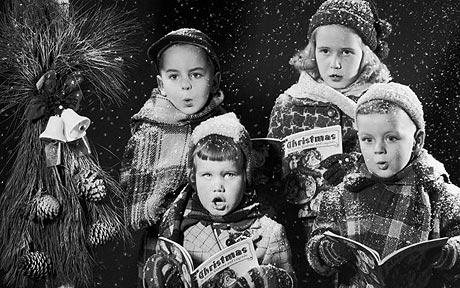
Singing Christmas Carols


Yes, we've heard them all our lives, but didn't think about them being for Advent.... 

I've listed some here and with the You Tube versions for your enjoyment...


O Come, O Come Emmanuel  https://youtu.be/RP4iyJqrPvY

O Come Divine Messiah  https://youtu.be/dzNiBdW4Le4

Maria Walks Amid the Thorn https://youtu.be/AZS0h7DZT5M

Gabriel’s Message  https://youtu.be/7AmWu2zLzrU

Creator of the Stars of Night  https://youtu.be/wc2vV-v802s

Saviour of the Nations Come Arranged by J.S. Bach.  https://youtu.be/ldb56S3ZQ7M

Lo! He Comes with Clouds Descending By Charles Wesley  https://youtu.be/Vj7F3P0rIfo

Wake, Awake, for night is flying A 16th century German hymn.  https://youtu.be/xjCJrNQsefc

Rorate Caeli A traditional latin hymn.  https://youtu.be/-EjHCYLukRY


Alma Redemptoris Mater  https://youtu.be/B7aWpB9cAnM


Friday, 2 December 2016

Lights at Christmas

Jesus Christ the Light of the World


Christmas is known as the "feast of light", 
as Jesus, the Light of the World, 
the Rising Dawn, the Light 
to be revealed to the Nations (Luke 2, 32), is born.


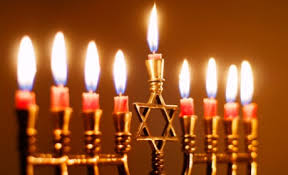
Those of the Jewish faith annually celebrate in December the anniversary of the Re-dedication of the Temple as a "feast of lights" (Hanukkah). Christians have made the Nativity their feast of lights in honor of Him who was born as a Light to illuminate the nations (Luke 2, 32).

In medieval times it was customary to represent Christ the Lord by a burning candle. This custom is still preserved in the liturgy of the Church, as for instance, the Easter candle, the last candle at the Tenebrae services of Holy Week. At Christmas, a large candle symbolizing the Lord used to be set up in the homes of the faithful on the eve of the Feast. It was placed in the center of a laurel wreath and kept burning through the Holy Night, and was lit, thereafter, every night during the holy season.

The custom of the Christmas candle is still kept in its original form in some countries. In Ireland, the mother or the father of the household lights a holly-bedecked large candle on Christmas eve while the entire family prays for all its dear ones, both living and departed. Among the Slavic nations (Poles, Ukrainians, Russians) the large Christmas candle is put on the table after it has been blessed by the priest in church. The Ukrainians do not use candlesticks but stick the candle in a loaf of bread.

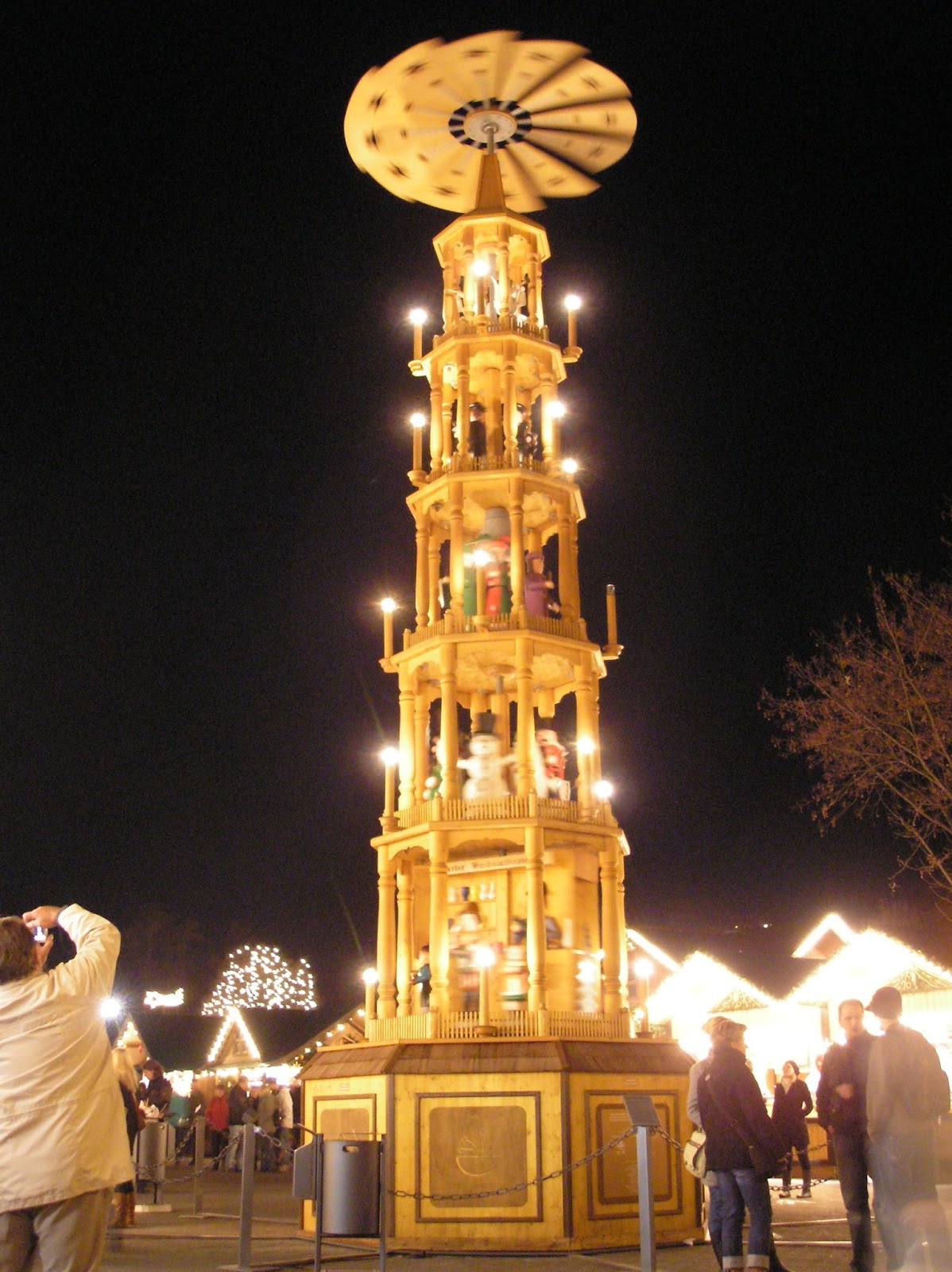
Weihnachtspyramide
In many sections of South America the candle is placed in a paper lantern with Christmas symbols and pictures of the Nativity decorating its sides. In England and France the Christmas light often consisted of three individual candles molded together at the base, in honor of the holy Trinity. 

In Germany the Christmas candle used to be placed on top of a wooden pole decorated with evergreens (Lichtstock), or sometimes many smaller candles were distributed on the shelves of a wooden structure made in the form of a pyramid, adorned with fir twigs or laurel, draped with glittering tinsel (Weihnachtspyramide). (During the seventeenth and eighteenth century this pyramid was replaced by our Christmas tree.)

In addition to the main candle, it later became a custom to set up other smaller candles all through the house in honor of the Feast:

Then be ye glad, good people,
This night of all the year,
And light ye up your candles:
His Star is shining near.

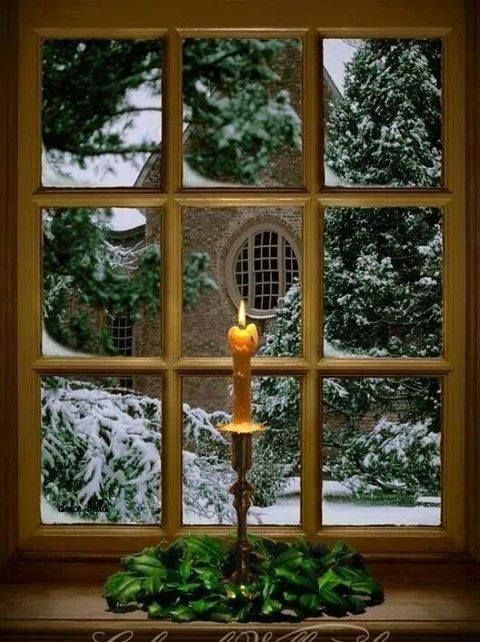
Candle in the window
The customs of placing lighted candles in the windows at Christmas was brought to America by the Irish. The historical background of this custom is interesting. When religion was suppressed through Ireland during the English persecution, the people had no churches. Priests hid in forests and caves and secretly visited the farms and homes to say Mass there during the night. It was the dearest wish of every Irish family that at least once in their lifetimes a priest would arrive at Christmas to celebrate the Divine sacrifice during Holy Night. For this grace they hoped and prayed all through the year. When Christmas came, they left their doors unlocked and placed burning candles in the windows so that any priest who happened to be in the vicinity could be welcomed and guided to their home through the dark night. Silently he entered through the unlatched door and was received by the devout with fervent prayers of gratitude and tears of happiness that their home was to become a church during Holy Night.

To justify this practice in the eyes of the English soldiers, the Irish people used to explain: "We burn the candles and keep the doors unlocked, that Mary and Joseph, looking for a place to stay, will find their way to our home and be welcomed with open doors and open hearts." The English authorities, finding this Irish "superstition" harmless, did not bother to suppress it. The candles in the windows have always remained a cherished practice of the Irish, although many of them have long since forgotten the earlier significance. The custom was brought to this country in the early nineteenth century and spread throughout the land, so much so that in recent years electric candles and lights of all kinds are used in homes and in public squares during the Christmas season. Business districts as well as suburban streets spend much time and money to make their decorations gay and bright with lights.

Feast of Lights Switzerland
An inspiring and colorful sight are the Christmas fires burned on the peaks of the Alps in Central Europe. Like flaming stars they hang in the dark heavens during Holy Night, burning brightly and silently, as the farmers from around the mountain-sides walk through the winter night down into the valley for midnight Mass. Each person carries a lantern, swinging it to and fro; the night seems alive with hundreds of glow-worms converging toward the great light at the foot of the mountain — the parish church — shining and sparkling, a "Feast of Lights," indeed. No one who has witnessed this scene on Christmas Eve in Austria, Bavaria, or Switzerland will ever forget it.

A seasonable Christmas in England and Northern Europe is a cold one. In past centuries it was even colder than it is now because the "old Christmas" — before Pope Gregory XIII corrected the Julian calendar in the sixteenth century — came eleven days later, on January fifth of the present calendar.

At a time when coal and other modern heating fuels were unknown, the firewood to be burned during Holy Night and on Christmas assumed special significance. A huge log was selected and brought to the house with great ceremony in preparation for the ceremony. It was called the "Christmas log" or "Yule log," as Herrick sings:


Yule Log

Come, bring with a noise,
My merrie, merrie boyes,
The Christmas Log to the firing. . . .

In some places the Yule log was the whole trunk of a tree, carefully selected on the preceding feast of Candlemas and stored away to dry out during the summer. Many popular customs and ceremonies were connected with the Christmas log. The unburnt parts, for instance, were put aside and preserved because the new log of next year had to be kindled with wood from the old one. The main purpose of the log, however, was to blaze and burn on the open hearth during Holy Night and on Christmas day.

In spite of modern heating today the Yule log has survived in many homes in England and America as an old and cherished Christmas tradition, though actually it originated among the Germanic tribes as a pagan celebration for the Yule-god Thor at the time of the solstice.


Activity Source: Christmas Book, The by Francis X. Weiser, S.J., Harcourt, Brace and Company, New York, 1952
Taken from website Catholic Culture
St. Francis and the First Nativity Scene


St. Francis and the Christmas Creche


by Fr. William Saunders

What is the origin of the Nativity Scene (creche)?

The story of the origin of the Christmas creche rests with the very holy man, St. Francis of Assisi.

In the year 1223, St. Francis, a deacon, was visiting the town of Grecio to celebrate Christmas. Grecio was a small town built on a mountainside overlooking a beautiful valley. The people had cultivated the fertile area with vineyards. 

St. Francis realized that the chapel of the Franciscan hermitage would be too small to hold the congregation for Midnight Mass. So he found a niche in the rock near the town square and set up the altar. However, this Midnight Mass would be very special, unlike any other Midnight Mass.

St. Bonaventure (d. 1274) in his Life of St. Francis of Assisi tells the story the best:

It happened in the third year before his death, that in order to excite the inhabitants of Grecio to commemorate the nativity of the Infant Jesus with great devotion, [St. Francis] determined to keep it with all possible solemnity; and lest he should be accused of lightness or novelty, he asked and obtained the permission of the sovereign Pontiff. 

Then he prepared a manger, and brought hay, and an ox and an ass to the place appointed. The brethren were summoned, the people ran together, the forest resounded with their voices, and that venerable night was made glorious by many and brilliant lights and sonorous psalms of praise. 

The man of God [St. Francis] stood before the manger, full of devotion and piety, bathed in tears and radiant with joy; the Holy Gospel was chanted by Francis, the Levite of Christ. 

Then he preached to the people around the nativity of the poor King; and being unable to utter His name for the tenderness of His love, He called Him the Babe of Bethlehem. 

A certain valiant and veracious soldier, Master John of Grecio, who, for the love of Christ, had left the warfare of this world, and become a dear friend of this holy man, affirmed that he beheld an Infant marvellously beautiful, sleeping in the manger, Whom the blessed Father Francis embraced with both his arms, as if he would awake Him from sleep. 

This vision of the devout soldier is credible, not only by reason of the sanctity of him that saw it, but by reason of the miracles which afterwards confirmed its truth. For example of Francis, if it be considered by the world, is doubtless sufficient to excite all hearts which are negligent in the faith of Christ; and the hay of that manger, being preserved by the people, miraculously cured all diseases of cattle, and many other pestilences; God thus in all things glorifying his servant, and witnessing to the great efficacy of his holy prayers by manifest prodigies and miracles.


Although the story is long old, the message is clear for us. Our own Nativity scenes which rest under our Christmas trees are a visible reminder of that night when our Savior was born. 


May we never forget 
to see in our hearts 
the little Babe of Bethlehem, 
who came to save us 
from sin. 


We must never forget that 
the wood of the manger 
that held Him so securely 

would one day give way to the wood of the cross. 


May we too embrace Him with all of our love 
as did St. Francis. 


The Christmas Tree - A Catholic Tradition

St. Boniface and the Christmas Tree

By Steve Weidenkopf (excerpts from article)

St. Boniface (680–754), known in Church history as the Apostle to the Germans. Boniface is regarded as “probably the greatest missionary since St. Paul” for his extensive travels and successful evangelization efforts in modern-day Germany] While he is well known as a great bishop and evangelizer, Catholic legend, based on actual historical events, also holds that Boniface is the founder of the use of a Christmas tree to celebrate the birth of the Christ Child.

. . . Boniface spent the rest of his life evangelizing the areas of modern Germany and parts of the Netherlands. He also became a friend of the Frankish court and helped reform and reorganized the Church in that area. From his missionary travels, Boniface knew that in winter the inhabitants of the village of Geismar gathered around a huge old oak tree (known as the “Thunder Oak”) dedicated to the god Thor. This annual event of worship centered on sacrificing a human, usually a small child, to the pagan god. Boniface desired to convert the village by destroying the Thunder Oak, which the pagans had previously boasted the God of Boniface could not destroy, so he gathered a few companions and journeyed to Geismar.
 
St. Boniface chopping down the Thunder Oak of Thor

His fellow missionaries were scared and fearful that the Germans might kill them, so they balked when they reached the outskirts of the village on Christmas Eve. Boniface steadied the nerves of his friends and as they approached the pagan gathering he said, “Here is the Thunder Oak; and here the cross of Christ shall break the hammer of the false god Thor.”

Boniface and his friends arrived at the time of the sacrifice, which was interrupted by their presence. In a show of great trust in God and born from a desire to enkindle the fire of Christ in the German pagans, Boniface grabbed an axe and chopped down the Thunder Oak of mighty Thor.

The Germans were astounded. The holy bishop preached the Gospel to the people and used a little fir tree that was behind the now felled oak tree as a tool of evangelization. Pointing to it he said,


“This little tree, 
a young child of the forest, 
shall be your holy tree tonight. 
It is the wood of peace…
It is the sign of an endless life, 
for its leaves are ever green. 

See how it points upward to heaven. 

Let this be called 
the tree of the Christ-child; 
gather about it, not in the wild wood, 
but in your own homes
there it will shelter no deeds of blood,
but loving gifts and rites of kindness.”


Awed by the destruction of the oak tree and Boniface’s preaching, the Germans were baptized.

The holy bishop Boniface can call himself father of all the inhabitants of Germany, for it was he who first brought them forth in Christ with the words of his holy preaching; he strengthened them with his example; and lastly, he gave his life for them; no greater love than this can be shown.”

In the centuries that followed, the Catholic tradition of using an evergreen tree to celebrate the birth of Jesus spread throughout Germany, and German immigrants in the eighteenth century brought the custom to the New World. 

Although there are many stories, legends, and myths surrounding the founding of the Christmas tree, including the claim that the custom originated with Martin Luther, there is only one story rooted in a real person and a real event: Boniface, converter of the Germans, who destroyed Thor's mighty oak.


Excerpts from St. Boniface and the Christmas Tree By Steve Weidenkopf
http://www.catholic.com/blog/steve-weidenkopf/st-boniface-and-the-christmas-tree

Monday, 28 November 2016

St. Nicholas Day - December 6th or December 19th

St. Nicholas Day

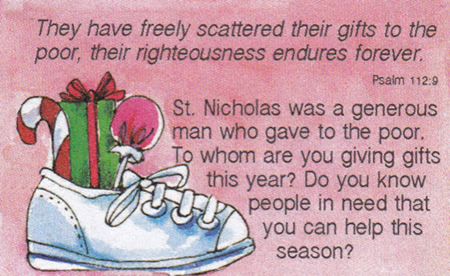
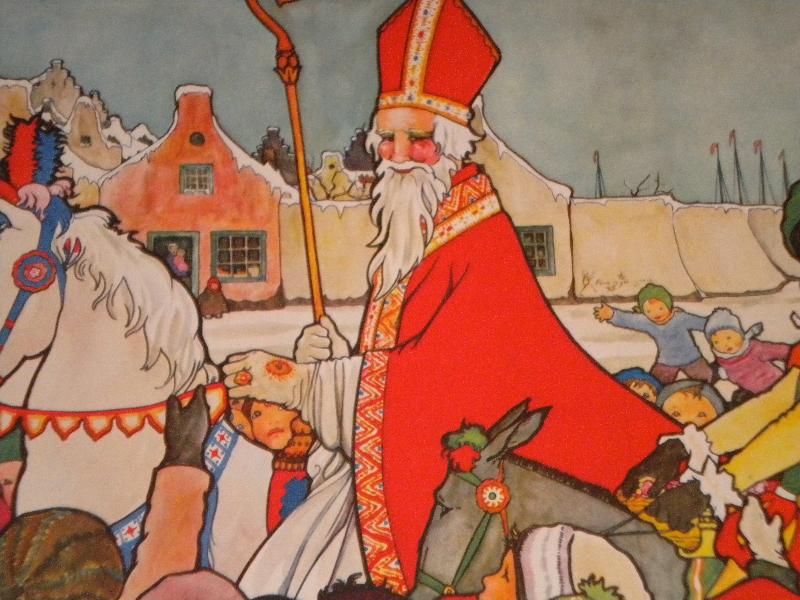
The legendary figure of St. Nicholas is derived from Nicholas of Myra who officiated as a bishop in 4th century Greece. During his lifetime he developed a reputation for gift-giving by putting coins in other people's shoes, which accounts for many of today's Christmas traditions that involve leaving gifts in shoes or boots.

Having inspired both the figure of the North American Santa Claus and the British Father Christmas, St. Nicholas has in some countries been more recently joined on his visits to children's homes by an evil companion who punishes the naughty ones: in Austria, Hungary, the Czech Republic and northern Italy, this personification of evil is called Krampus, in Germany Knecht Ruprecht, and in the Netherlands Zwarte Piet.

Why Celebrate St. Nicholas Day?

December 6 or December 19 on the Julian Calendar


St. Nicholas, a man of faith who lived his life in devotion to Christ

• To focus on giving more than receiving: St. Nicholas cared for the needy

• To emphasize small treats and family fun: St. Nicholas loved children

• To provide a bit of special festivity early in the waiting weeks of Advent: St. Nicholas points to Jesus, the heart of Christmas

• To offer a spiritual dimension to gift giving

• To tell the story of a Christian saint, whose model life inspires compassion and charity


• To honor St. Nicholas honors the Christ Child who selflessly gave the greatest gift of all—himself

St. Nicholas' feast day, December 6, is one of the highlights of the Advent season. It is on this eve that our children hang their stockings. From babyhood they learn to love the kind bishop with his mitre, staff and bag of gifts--whose name has become parodied as "Santa Claus" and whose memory is tarnished by commercialism.

In addition to the toys received on this feast, the Christ-Child and His angels bring other gifts on Christmas Eve; and the Magi a few more on Epiphany.

Placing less exclusive emphasis on December 25 as the day of presents and also curtailing its gifts somewhat makes it easier to place more emphasis on the religious aspects of that great holy day. 

Do other children think ours are queer? Not at all. If anything, they are a bit envious of children who receive Yule gifts so early and who enjoy such a happy feast as our traditional St. Nicholas Day party. Having an early gift day also makes it possible for the children to give some of these gifts as Christmas presents to other less fortunate children.

Treats of the St. Nicholas party are the exchange of gifts, genuine Dutch cookies and Bishopwyn (bishop's wine). For children the wine is grape juice. But the grownups who face the high December winds along the Hudson River to pick up their children at our house always welcome the mulled Bishopwyn. Its recipe is from our favorite cook book, "Cooking for Christ" by Florence Berger.

                      1 bottle of Claret        6 cloves       4 inches stick cinnamon

Break cinnamon into small pieces. Simmer wine and spices for about five minutes. Strain wine. Serve hot.

The Speculatius, a spice cookie from the Netherlands
The Speculatius, a spice cookie from the Netherlands, like all of Mrs. Berger's recipes, is foolproof.

1 cup butter                       4 tsp. cinnamon
1 cup lard                          1/2 tsp. nutmeg
2 cups brown sugar           1/2 tsp. cloves 
1/2 cup sour cream          4-1/2 cups sifted                                                              flour
1/2 tsp. soda                      1/2 cup chopped                                                               nuts

Cream the butter, lard and sugar. Add sour cream alternately with sifted dry ingredients. Stir in the nuts. Knead the dough into rolls. Wrap the rolls in wax paper and chill them in the refrigerator overnight. Roll the dough very thin and cut into shapes. Bake in moderate oven (375 degrees) for 10 to 15 minutes.

The dough may be cut into St. Nicholas shapes, or into the shape of birds, fish or animals. We also like to cut out stocking shapes and ice them in honor of St. Nicholas, patron of school boys.

During the party we light the Advent wreath candle, and the children sing Advent hymns. All classes at Corpus Christi School have wreaths, but some of the children do not have them at home. We have found that parents, enjoying their Bishopwyn, have become interested in the wreath and have integrated the Advent program of school and home as a result of the St. Nicholas Day party.

Excerpt taken from FAMILY ADVENT CUSTOMS by Helen McLoughlin


Get Kids Thinking of Advent


GIFTS FOR JESUS


On the first Sunday of Advent each child in our family receives an empty manger. An oatmeal box covered with bright paper will do as well. At bedtime the children draw straws for each kind deed performed in honor of Baby Jesus as His birthday surprise. The straws are placed in the child's manger or box daily. It is amazing how much love a child can put into Advent when he is preparing for His Redeemer's coming in grace.

On Christmas each child finds an Infant in his manger, placed on a small table or on a chair beside his bed. Usually it is a tiny doll, beautifully dressed; but one of our children receives a Hummel Infant year after year. This custom, which in no way interferes with the larger manger in the living room, fills the child with a longing in Advent, and gives him an image of his Redeemer as his first happy glance mornings and his last impression at night during the entire Christmas season.


As our youngsters grew older, they added the Hungarian custom of planting a grain of blessed wheat for each Advent sacrifice. They use small flower pots, especially decorated with Christmas symbols. By Christmas the tender green shoots of wheat are growing, each a reminder of some special, and of course secret, offering of love for "Little Jesus" on His birthday. The wheat is placed at the crib and usually lasts until Epiphany.


Excerpt taken from FAMILY ADVENT CUSTOMS by Helen McLoughlin


Christmas Pudding Tradition and Recipes


One of my most favorite Christmas traditions is watching the movie The Christmas Carol by Charles Dickens (actor Alastair Sim, he's the best Scrooge!)... When I was a child that was the first time I heard about the Christmas pudding.  Since then it has become a favorite dessert to look forward to as well.  

If you have watched the Christmas Carol movie or better yet read the book written by Charles Dickens, you will know that the Christmas pudding was part of the Christmas meal... To read The Christmas Carol by Dickens see http://gaslight.mtroyal.ca/carol.htm

An excerpt from the story: 

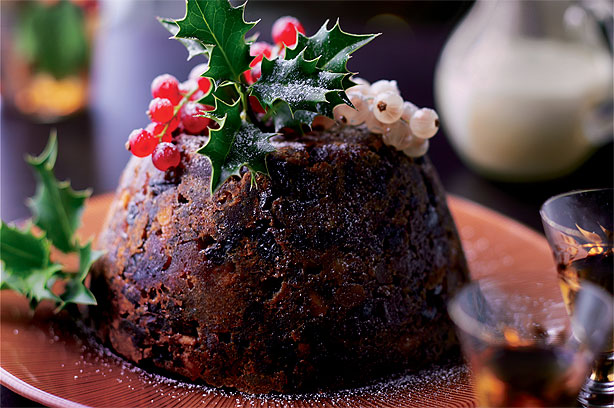
"Hallo! A great deal of steam! The pudding was out of the copper. A smell like a washing-day! That was the cloth. A smell like an eating-house and a pastry-cook's next door to each other with a laundress's next door to that! That was the pudding! In half a minute Mrs. Cratchit entered, -- flushed but smiling proudly, -- with the pudding, like a speckled cannon-ball, so hard and firm, blazing in half of half a quartern of ignited brandy, and bedight with Christmas holly stuck into the top.
 
1840s-1843-Charles-Dickens-Christmas Carol
O, a wonderful pudding I Bob Cratchit said, and calmly too, that he regarded it as the greatest success achieved by Mrs. Cratchit since their marriage. Mrs. Cratchit said that now the weight was off her mind, she would confess she had had her doubts about the quantity of flour. Everybody had something to say about it, but nobody said or thought it was at all a small pudding for a large family. Any Cratchit would have blushed to hint at such a thing."


Christmas pudding is a type of pudding traditionally served as part of the Christmas dinner in Britain, Ireland and in some other countries where it has been brought by British emigrants. It has its origins in medieval England, and is sometimes known as plum pudding or just "pud", though this can also refer to other kinds of boiled pudding involving dried fruit. 

Despite the name "plum pudding," the pudding contains no actual plums due to the pre-Victorian use of the word "plums" as a term for raisins. The pudding is composed of many dried fruits held together by egg and suet, sometimes moistened by treacle or molasses and flavoured with cinnamon, nutmeg, cloves, ginger, and other spices. The pudding is aged for a month, months, or even a year; the high alcohol content of the pudding prevents it from spoiling during this time.

History of the Christmas Pudding
Medieval Christmas
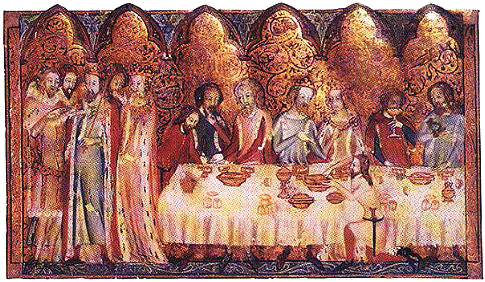
There is a popular myth that plum pudding's association with Christmas goes back to a custom in medieval England that the "pudding should be made on the 25th Sunday after Trinity, that it be prepared with 13 ingredients to represent Christ and the 12 apostles, and that every family member stir it in turn from east to west to honour the Magi and their journey in that direction"

However, recipes for plum puddings appear mainly, if not entirely, in the 17th century and later. Their possible ancestors include savoury puddings such as those in Harleian MS 279, crustades, malaches whyte, creme boiled (a kind of stirred custard), and sippets. 

Various ingredients and methods of these older recipes appear in early plum puddings.
One of the earliest plum pudding recipes is given by Mary Kettilby in her 1714 book A Collection of above Three Hundred Receipts in Cookery, Physick and Surgery.

There is a popular and wholly unsubstantiated myth that in 1714, King George I (sometimes known as the Pudding King) requested that plum pudding be served as part of his royal feast in his first Christmas in England. As techniques for meat preserving improved in the 18th century, the savoury element of both the mince pie and the plum pottage diminished as the sweet content increased. 

People began adding dried fruit and sugar. The mince pie kept its name, though the pottage was increasingly referred to as plum pudding. Although the latter was always a celebratory dish it was originally eaten at the Harvest festival, not Christmas. It was not until the 1830s that the cannonball of flour, fruits, suet, sugar and spices, all topped with holly, made a definite appearance, becoming more and more associated with Christmas. 

Christmas Pudding
The East Sussex cook Eliza Acton was the first to refer to it as "Christmas Pudding" in her bestselling 1845 book Modern Cookery for Private Families.

The pudding "had the great merit" of not needing to be cooked in an oven, something "most lower class households did not have".

The custom of eating Christmas pudding was carried to many parts of the world by British colonists, and beyond the United Kingdom, became a popular and common a dish in the Republic of Ireland, Australia, New Zealand, and South Africa.


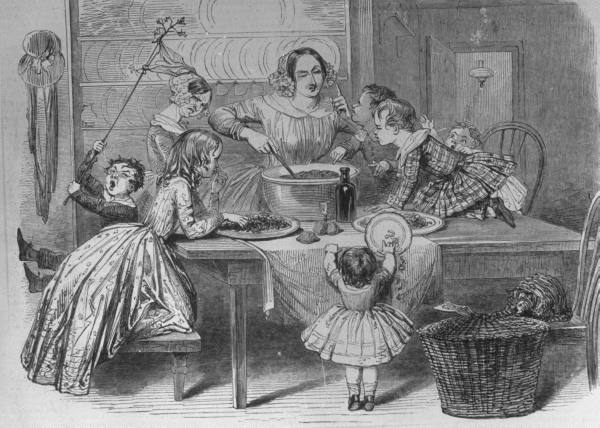
Stirring the Pudding
On the first Sunday of Advent we bring to the dinner table the "Stir-up" or traditional English plum pudding for family and guests to stir. Each makes a wish, as he or she stirs, and then prays the Collect from the Mass of the day:

"Stir up Thy might, we beg Thee, O Lord; and come so that we may escape through Thy protection and be saved by Thy help from the dangers that threaten us because of our sins. Who livest and reignest for ever and ever."

Afterwards the pudding is steamed and put away until the feast of Christmas. Then warmed brandy or rum is added and set ablaze; and the flaming pudding is brought to the dinner table to be served as soon as the flame burns out. Actually the pudding is prepared on the Saturday before "Stir-up" Sunday. Filled with the good things of the world, the pudding is supposed to represent Christ who will bring with Him on His birthday all the good things of heaven. Children love to work on the pudding, and the busy mother finds extra hands a great help in dicing, grating and juicing the fruits.


We use a recipe from "Jubilee," November 1953. The ingredients cost about three dollars and will make five pounds of pudding. Adolph Paganuzzi, chef of a well-known Greenwich Village, New York, pastry shop, reduced his famous recipe to family proportions for "Jubilee." With his kind permission we give it here:

               1/2 lb. beef suet, chopped                        1/4 lb. diced candied citron
               1/2 lb. all-purpose flour, sifted                1/4 lb. diced candied orange peels
               1/4 lb. bread crumbs                                1/4 lb. diced candied lemon peels
               3/4 lb. brown sugar                                  8 eggs, beaten
               2 teaspoons ground cinnamon                 2 lemons--grated rind and their juice
               1 teaspoon ground allspice                      2 oranges--grated rind and their juice
               1 teaspoon ground ginger                        1/2 pt. Sherry or Port wine
               1-1/4 lbs. raisins--any kind         

Into a bowl mix and work together all the ingredients one at a time, in the order in which they are listed above. 

When they have been well mixed, pour the mixture into a well-greased mold or can. Cover, and seal tight. Steam in large, covered kettle, roaster or similar utensil and let simmer for at least five hours. 

When done, the pudding can be stored away until Christmas. It may be kept a year and will improve with age. It may be served with any sauce desired, such as fruit, rum, brandy, raisin, vanilla or any other kind. Liquid sauces are better than semi-liquid.


               Rum Sauce

         1 pt. Sherry wine                                1 small stick cinnamon
         1/2 lb. brown sugar                            Rind of 1/2 orange
         2 bay leaves                                       1/2 pt. rum

Place all the ingredients in a glass jar and let stand together for a few days. Bring to a boil, strain and serve over the pudding.

Excerpt taken from FAMILY ADVENT CUSTOMS by Helen McLoughlin
https://www.ewtn.com/library/FAMILY/ADVCUST.TXT


Recipe for Christmas Plum-Pudding from Beeton’s Book of Household Management, 1861.
Taken from Mimi Matthews.com AUTHENTIC VICTORIAN CHRISTMAS PUDDING
https://mimimatthews.com/2015/12/21/authentic-victorian-christmas-pudding/


The Custom of the Advent Wreath


Advent Wreath preparing for Christmas
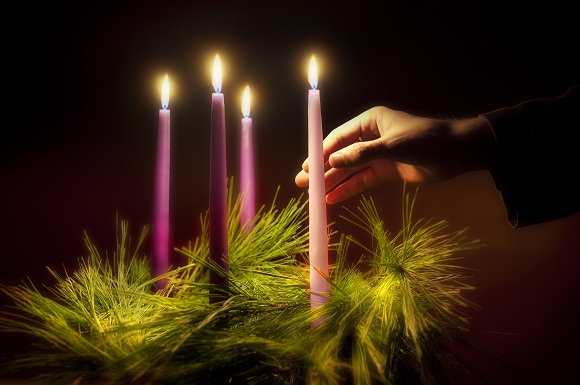
Most popular of the Advent customs handed down to us is the Advent wreath made of evergreens, bound to a circle of wire.

German in origin--it was taken, so we are told, from the pagan fire wheel--the wreath represents the cycle of thousands of years from Adam to Christ during which the world awaited the coming of a Redeemer. 

It also represents the cycle of years since then that bears four candles, equally spaced, three purple ones to be lighted on the "penitential" Sundays, and a rose-colored one for Gaudete, the joyful Sunday in Advent. Candles may be placed inside or outside the wreath.

Any kind of Christmas wreath such as those hung in windows may be used. It may be set on a kitchen or dining room table, on an end table in the living room, or in a child's bedroom. However, it is most appealing when suspended by four purple ribbons from a light fixture in the ceiling.

When our children were small we bought a large, permanently preserved pine wreath and used it year after year. Now that they are going to school they help to make a new one each Advent. Inexpensive and easy to assemble is the wreath we make from a bunch or two of laurel leaves bound to a circle of wire from coat hangers. The evergreens are secured by fine wire to the circle. Candles and ribbons are added as the wreath is put together. Laurel is practical because it does not shed when suspended over the dining room table. Moreover, laurel is a symbol of victory, and thus reminds us that Christ's coming means victory over sin and death. Loveliest of wreaths and fragrant, too, is one of fresh princess pine. When we use that type, we hang it in the living room and add a single silver star to it each evening in Advent when the candles are lighted for prayers. Stars are cut from metallic paper.

City dwellers may make an attractive wreath of fireproof green paper, while country folks will find a metal barrel hoop ideal as a frame for whatever evergreens are at hand. In our children's classrooms in Corpus Christi School, New York City, Advent greens are sometimes kept fresh in inexpensive plastic rings.

The home ceremony for use of the Advent wreath is simple. It consists of Collects, hymns and prayers proper to the Advent season.

We have put it together as follows. 

On the first Sunday of Advent, our family gathers for the blessing of the wreath by father, who begins:

Father: Our help is in the Name of the Lord.

All answer: Who made heaven and earth.

Father: Let us pray. O God, by whose word all things are sanctified, pour forth Thy blessing upon this wreath, and grant that we who use it may prepare our hearts for the coming of Christ and may receive from Thee abundant graces. Through Christ our Lord.

All: Amen.

He sprinkles the wreath with holy water. Then Myles, our youngest child, lights the first candle, and the prayer for the first week is said.

Father: Let us pray. Stir up Thy might, we beg Thee, O Lord, and come, so that we may escape through Thy protection and be saved by Thy help from the dangers that threaten us because of our sins. Who livest and reignest for ever and ever.

All: Amen.

During the first week one candle is left burning during the evening meal, at prayers or at bedtime.

Two candles are lighted on the second Sunday and allowed to burn as before. The prayer for the week is:

Father: Let us pray. O Lord, stir up our hearts that we may prepare for Thy only begotten Son, that through His coming we may be made worthy to serve Thee with pure souls. Through the same Christ our Lord.

All: Amen.

Three candles, including the rose candle, are lighted on Gaudete, the third Sunday, and during that week. The following prayer is said:

Father: Let us pray. We humbly beg Thee, O Lord, to listen to our prayers; and by the grace of Thy coming bring light into our darkened minds. Who livest and reignest for ever and ever.

All: Amen.

All four candles are lighted on the fourth Sunday and allowed to burn as before. The prayer said the fourth week is:

Father: Let us pray. Stir up Thy might, we pray Thee, O Lord, and come; rescue us through Thy great strength so that salvation, which has been hindered by our sins, may be hastened by the grace of Thy gentle mercy. Who livest and reignest for ever and ever.

All: Amen.

At the end of Advent, candles and ribbons are changed to white, evergreens renewed if necessary, and tiny Christmas balls added to decorate the wreath. We hang ours in the entrance hall where it adds a festive note to the house and gives us a chance to explain the wreath to neighbors and tradespeople who have not seen it previously. The wreath, unless it sheds, is kept until Epiphany.

Excerpt taken from FAMILY ADVENT CUSTOMS by Helen McLoughlin


Advent is Here!! Come Lord Jesus!


Sound the trumpets in Zion, 
summon the nations; 
call the people together and tell them the good news: 

Our God and our Saviour 
is coming!


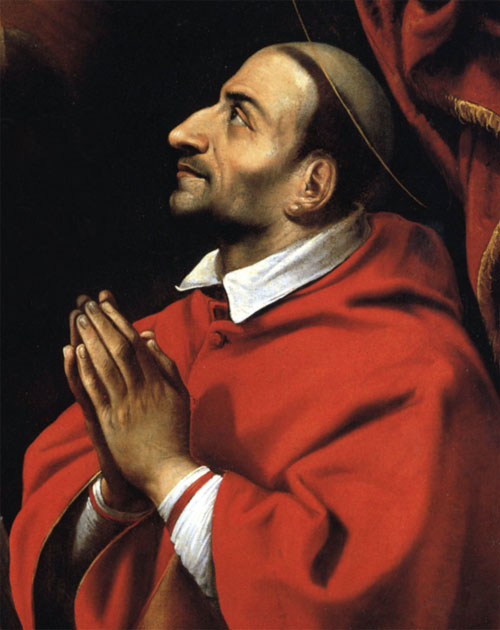
St. Charles Borromeo
The Season of Advent

From a pastoral letter from St. Charles Borromeo, bishop

Beloved, now is the acceptable time spoken of by the Spirit, the day of salvation, peace and reconciliation.  The great season of Advent.  

This is the time eagerly awaited by the patriarchs and prophets, the time that holy Simeon rejoice at last to see.  This is the season that the Church has always celebrated with special solemnity.  

We too should always observe it with faith and love, offering praise and thanksgiving to the Father for the mercy and love he has shown us in this mystery.  In his infinite love for us, though we were sinners, he sent his only Son to free us from the tyranny of Satan, to summon us to heaven, to welcome us into its innermost recesses, to show us truth itself, to train us in right conduct, to plant within us the seeds of virtue, to enrich us with the treasures of his grace, and to make us children of God and heirs of eternal life.

Every year, as the Church recalls this mystery, she urges us to renew the memory of the great love God has shown us.  This holy season teaches us that Christ’s coming was not only for the benefit of his contemporaries; his power has still to be communicated to us all.  We shall share his power, if, through holy faith and sacraments, we willingly accept the grace Christ earned for us and live by that grace and in obedience to Christ.

The Church asks us to understand that Christ, who came once in the flesh, is prepared to come again.  When we removed all obstacles to his presence he will come, at any hour and moment, to dwell spiritually in our hearts, bringing with him the riches of his grace.


In her concern for our salvation, our loving mother the Church uses this holy season to teach us through hymns, canticles and other forms of expression, of voice and ritual, used by the Holy Spirit.  She shows us how grateful we should be for so great a blessing, and how to gain its coming of Christ as if he were still to come into this world.  The same lesson is given us for our imitation by the words and example of the holy men of the Old Testament.

Lord, help me welcome You once again 
and make room for You in my daily life, 
that You may make Your home in my heart.


Advent is the beginning of the new liturgical year. 
It is a season of spiritual preparation, 
marked by eager longing for the
coming of the Saviour 
through grace at Christmas, 
and for His second and final coming.