Purgatory and the Paranormal
I work at a funeral home as a secretary. It is so sad to see
the number of people that just sign the papers and say look after the
cremation. There is no goodbye, no
service – nothing. Their reply is ‘they
didn’t want anything’.
Even deceased persons who were Catholic, are not given the Sacrament of the Sick while they lay dying or even a Catholic Mass after they died as their family does not believe in that.
How many countless souls are there abandoned by their families and friends with indifference, ignorance or unbelief in God!!
 All Soul’s Day A day to remember the Holy Soul's in Purgatory that are going through purification. Pray for your loved ones, but don’t forget
the ones who have no one to pray for them.
All Soul’s Day A day to remember the Holy Soul's in Purgatory that are going through purification. Pray for your loved ones, but don’t forget
the ones who have no one to pray for them. And don’t just pray on the Feast of All Souls – but every day!
One day we will undoubtfully find ourselves there!
The opening lines from Hungry Souls came home to the point of purgatory and the misinformation that is given in some religions as to what happens after death. Sin seems to be a dirty word nowadays. To mention sin is to live olden times… that’s ‘old school’ we are told, we don’t believe that anymore... and so on.
Well, I hate to break their fantasy bubble, but PURGATORY IS REAL AND SO IS HELL!
The following are a few quotes from the book (and other information I have come across) that I found interesting, enlightening and helpful. I hope that you will find that as well. --R.M., Blogger
 |
| Maccabees Martyrs |
“For those who (at death) find themselves in a condition of
being open to God, but still imperfectly, the journey towards full beatitude
requires a purification, which the faith of the Church illustrates in the
doctrine of purgatory.”
This is how St.
Pope John Paul II explains why Purgatory is necessary, for, he continues, we
are called “to be perfect like the heavenly Father during our earthly life…
sound and flawless before God the Father ‘at the coming of our Lord Jesus with
all his saints.’ (Thrss 3:12).”
 |
| St. Pope John Paul II |
"Purification means atonement for sins and their effects on
the soul. It is not a painless, automatic
process of “growing” the soul, of attaining full “self-realization” through the
acquisition of ever more insight after death, as is the soothing theory of some
spiritualists.
It is not an accumulation of learning, through a series of “reincarnations”, until some point of perfect wisdom is reached, as in the fantasy of some Western New Age disciples. Such are childish attempts to suppress man’s deep awareness that the basic dimension determining his destiny in the new world is not knowledge or experience but moral purity: sin, and the traces it leaves on the soul, versus holiness.
It is not an accumulation of learning, through a series of “reincarnations”, until some point of perfect wisdom is reached, as in the fantasy of some Western New Age disciples. Such are childish attempts to suppress man’s deep awareness that the basic dimension determining his destiny in the new world is not knowledge or experience but moral purity: sin, and the traces it leaves on the soul, versus holiness.
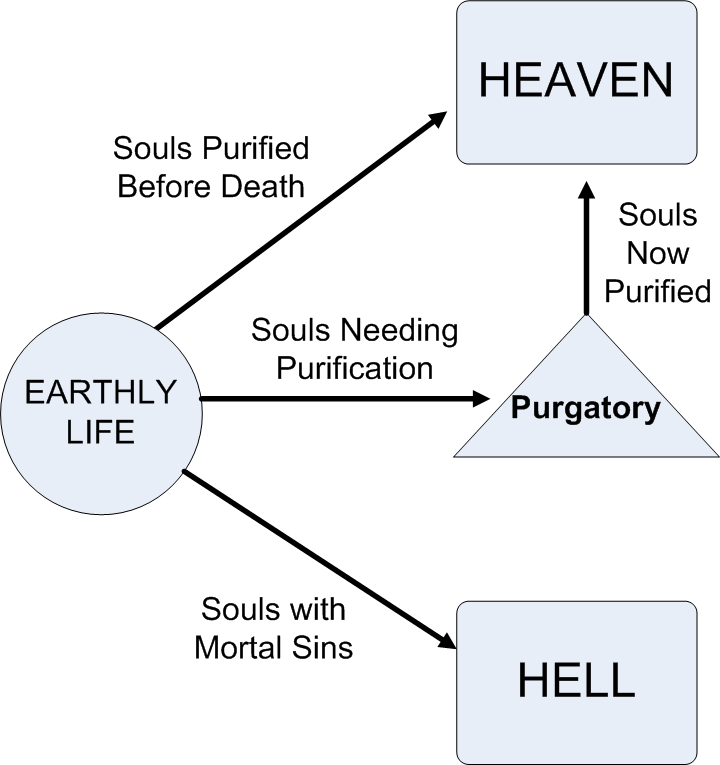
In our culture today, of the three destinations that
traditional Christian doctrine teaches may follow death and judgment—Heaven,
Hell, and Purgatory—only belief in Heaven or some such happy state has widely
survived.
The prevailing cheap optimism hold that (if there is anything at all across the threshold of death) the life of practically everybody automatically ends up in a state of bliss.
De-christianed and inwardly impoverished Western man may acknowledge having his imperfections and shortcomings but doesn’t look upon himself as sinful. To him, atonement for or purification from sin is a “medieval” idea.
The prevailing cheap optimism hold that (if there is anything at all across the threshold of death) the life of practically everybody automatically ends up in a state of bliss.
De-christianed and inwardly impoverished Western man may acknowledge having his imperfections and shortcomings but doesn’t look upon himself as sinful. To him, atonement for or purification from sin is a “medieval” idea.
…the truth is that man has to be “sound and flawless before
God the Father” when, after death, he appears before Him to render an account
of his life. Only holy souls have direct
access to the blissful abode where “nothing unclean shall enter.” Therefore, “every trace of attachment to evil
must be eliminated, every imperfection of the soul corrected.” The place for this correction of the soul’s
imperfections is Purgatory.”
….St. John Paul teaches us that penance and pain in
Purgatory are mitigated by the comfort of mercy. In the final analysis, Purgatory is the mercy
of Christ working through his Mystical Body, the Church.”
 |
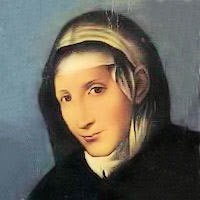
| St. Catherine of Genoa |
Excerpt above taken from: A Treatise on Purgatory by St. Catherine of Genoa
“...It is furthermore remarkable that the reports of
apparitions o souls from Purgatory are highly consistent in the course of the
centuries and vary but little from one historical period to another. Purgatory
has always been represented as a fierce fire, a burning away of all stains of
the soul, regardless of the century or cultural period the apparition took
place. And there is always proof of a
twofold suffering: namely the “pain of loss”, which is the soul’s painful
longing for God, and the “pain of sense”, which is felt as if the bodily senses
were still intact.
 |
| St. Faustina |
St. Ambrose said that the souls in purgatory pray for the
living so that they may recognize their sins.
Apparently, their suffering makes them most keenly aware that holiness
is by far the most important boon to implore for the ones they love—it means
less suffering in Purgatory and a quicker path to eternal bliss.
Other communications in the past from souls in purgatory say
they also pray for temporal needs of
the living: for their beloved, their family and benefactors.
 |
| St. Bridgett of Sweden |
The Council of Trent (1545 and 1563) dogmatized what had been believed by the
faithful all along. That although the
guilt of a penitent sinner may have been forgiven, that does not mean that
automatically all his “debt of temporal punishment” is discharged. In short, he may have to do penance in order
to be purified, whether in this life or in the next: in Purgatory.

The Council also dogmatized that the souls in Purgatory “are
helped by the suffrages of the faithful, but particularly by the Sacrifice of
the Altar.”
St. Catherine of Genoa’s explanation of the tormenting flames of Purgatory: “The greatest suffering of the souls in
purgatory, it seems to me, is the awareness that something in them displeases
God, that they have deliberately gone against His great goodness… I can also
see… that the divine essence is so pure and light-filled—must more than we can
imagaine—that the soul that has but the slightest imperfection would rather
throw itself into a thousand hells than appear thus before the divine presence.” Hence “the soul… aware that the impediment it
faces cannot be removed in any other way, hurls itself into purgatory… That is
why the soul seeks to cast off any and all impediments so that it can be lifted
up to God.”
“A fire like that of hell”: in the opinion of St. Thomas, the proper fires of Purgatory and Hell are one and the same –
“A fire like that of hell”: in the opinion of St. Thomas, the proper fires of Purgatory and Hell are one and the same –
St. Catherine explains that the difference between hell and
purgatory is that the souls in Purgatory
will themselves to suffer, the certainty that God has been most merciful to
them in the light of what they deserved… that (they) accept the ordinance of God and would not think of doing
otherwise. As well as a certain joy that
is never wanting and that, indeed, increases as they come closer to God....
 |
| Purgatory |
“...Poor souls told Ruth (one of many who have been visited by
the Souls of Purgatory) that they are often present around their living family
members and beloved without getting their help, sometimes for years. She transmits their complaints,
“You in the world have no inkling of what we have to suffer! Being abandoned and forgotten by those who have been nearest to us in the world: that is most bitter. Sometimes they stand at the tombs of our decayed bodies and don’t pray for us at all. They are as if we don’t exist anymore. God’s justice commands us to be silent. But we stand at the door of their houses, of our former dwellings, and wait. We stand there and wait. Days, years. We wait for them to give us a small sign of their love by prayer and sacrifices. But we stay there in vain. We cry in vain for love. For help! Tell them through the priest: Love should not die at death. We are still alive and we are hungry for love!! For your love!”
“You in the world have no inkling of what we have to suffer! Being abandoned and forgotten by those who have been nearest to us in the world: that is most bitter. Sometimes they stand at the tombs of our decayed bodies and don’t pray for us at all. They are as if we don’t exist anymore. God’s justice commands us to be silent. But we stand at the door of their houses, of our former dwellings, and wait. We stand there and wait. Days, years. We wait for them to give us a small sign of their love by prayer and sacrifices. But we stay there in vain. We cry in vain for love. For help! Tell them through the priest: Love should not die at death. We are still alive and we are hungry for love!! For your love!”
How can we help the Holy Souls? Since early Christianity there has been
unanimity that offering the Sacrifice of the Altar to the holy Trinity is the
most beneficial suffrage for the poor souls… St. Thomas held that only by holy
Mass could a soul be definitively delivered from Purgatory.
Poor souls indeed very often ask for holy
Masses; but an expiatory act of high value is also the offering up of holy
Communions, even of so-called spiritual Communions. Furthermore, prayers, alms, all acts of
charity and all and every ordinary daily work; all mortifications and
sacrifices that are offered to God for the relief or release of the suffering
souls…"
Excerpts from Hungry Souls: Supernatural Visits, Messages
and Warnings from Purgatory.

Devotion to the Poor Souls by Fr. John A. Hardon, S.J.
"It must seem strange to speak of devotion to the Poor Souls. But it is not really strange. Devotion to the Poor Souls has two sides: our side and the side of the souls in purgatory.
On their side, the Poor Souls are united with us in the one Kingdom of Christ. They can pray and obtain blessings for us here on earth. They are united, as the Second Vatican Council teaches, with the pilgrim Church in the Communion of Saints.
We are therefore encouraged to invoke their aid, with a confidence of being heard by those who understand our needs. They know from their own experience what it means to carry the cross here on earth.
On our side we are to do everything we can to help the Poor Souls in the Church Suffering. The sufferings in purgatory are not the same for all. They depend on each person's degree of sinfulness.
 |
| St. Thomas Aquinas |
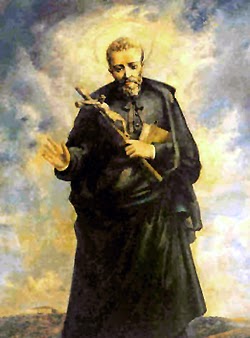
St. Thomas Aquinas held that -
the least pain in purgatory
is greater than
the worst pain
in this life....
...What does it mean to pray for the Poor Souls? It means everything that we can offer for the faithful departed
.
- We can offer our bodily pains in expiation for their sins.
- We can offer our spiritual sufferings, our disappointments and fears, our discouragement and estrangement from those we love.
- We can offer our vocal prayers, like the Rosary, the Memorare, the Angelus, the recitation of the Divine Office.
- We can offer our mental prayers, like the Way of the Cross, our daily meditation and examination of conscience.
- We can offer our mortifications, like giving up some delicacy at table, or performance of some unpleasant work.
 But the most effective offering
we can make for the Poor Souls
is the Holy Eucharist
at the Sacrifice of the Mass,
Holy Communion and
adoration of the Blessed Sacrament....
Fr. John A. Hardon, S.J. recommends that during the month of November, we make a list of all the deceased persons whom we wish to specially remember in our Masses, prayers and sacrifices for the repose of their souls.
Add to this list as those enter eternity whom you wish to specially commend to the mercy of God. This, by the way, is called a Necrology. Every Catholic diocese in the world has a Necrology of its deceased priests. Every family should have its own Necrology of deceased members whom we daily remember to our merciful Lord.
Every time you say the grace after meals, be sure to add the invocation, "May the souls of the faithful departed, through the mercy of God, rest in peace. Amen." In every Rosary you recite, do not forget to say after each decade, " O, my Jesus, forgive us our sins, save us from the fires of hell, and bring all souls to heaven, especially those who are in most need of thy mercy."
Remember that devotion
to the Poor Souls
is really a covenant
between them and us.
We pray and sacrifice for them,
They can pray and suffer for us.
They appreciate whatever help
we give them, to lessen their suffering
and to shorten their stay in Purgatory.
They will continue to show their appreciation
when we join them in a heavenly eternity."
http://www.therealpresence.org/chapel/poorsoul.htm
The Museum of Purgatory
(Museo del Purgatorio)
 |
| Little Museum of Purgatory in the Sacred Heart of Suffrage Church, Rome |
There is a place for which proof or evidence of supernatural origin of the reality of Purgatory are found in the “Little Museum of Purgatory” in Rome. “They bear the signature of souls who have appeared from Purgatory to ask for mercy, revealing something about themselves and their condition of suffering and doing penance.”
Documented paranormal evidence to be found in relation to contacts with the dead. The authenticity of the apparition stories linked to each of the specimens in the museum has been verified by critical priests, theologians, and trustworthy witnesses. There are many other examples as well that are not in the museum in which I will give some examples later on...

 |
| Face burned into wood (top left) |
 |
| Display of Objects from Museum of Purgatory in Rome |
Father Jouet began to collect testimonies, documents, and objects that could help to incite devotion to the poor souls. The pieces that are presently in this little museum span over two centuries. The oldest belongs to an apparition from 1696, the most recent from 1919.
There has been more documented cases of apparitions of souls from Purgatory in recent times, but they have not so far been added to the collection in the museum. The specimens shown are from western European countries; Germany, Belgium France, Austria, and Italy. Pope Pius X and Pope Benedict XV supported and patronized the work of the arch-confraternity founded by Father Jouet as well as the building of the church of the Sacred Heart of Suffrage.
 |
| Items showing burn marks from hands of souls in Purgatory |
Excerpts from Hungry Souls: Supernatural Visits, Messages and Warnings from Purgatory.