
Do you find life pretty darn hard? I do... things just seem some times to be hard to take...heartaches, challenges, disappointments, oppositions, sickness, betrayal... I wonder why is this happening to me?
What's the point? I've been struggling with this my whole life. I know I'm to do God's Will..but it's like I have been trying---but stuff keeps happening to me...

I didn't realize that the "stuff"
WAS GOD'S WILL.
I have constantly prayed -- help me Lord to do Your Will---but have fought against everything that does not go with what I think should happen... Thinking that this can't be it...this can't be what God wants.. why would He want things to go this way? Why????
I found this book that has answered some of my questions -- awakened spirit to see the deeper meanings of what I have gone through.... it's called Uniformity with God’s Will & the Practice
of the Love of Jesus Christ by St. Alphonsus Liguori.
Guess I am pretty dense...I have been fighting tooth and nail against what I now know to be His Will. The Lord must shake His Head at me. I guess I will never understand until I meet the Lord face to face...I must learn to accept everything with love and in peace that God knows what He is about. I learn through all the difficulties of life...everything is laid out for me...I must accept it with the knowledge that God will use it for my perfection.
It's hard to do...not having control..or wanting it (control). I'm going to be struggling with this for the rest of my life here on earth. Perfection is not going to be easy to obtain, but I am hoping the Lord will see the meager, imperfect efforts I am making to fulfill His Will in my life..,
I would like to recommend this book to you if you have been struggling as I have been. It's called:
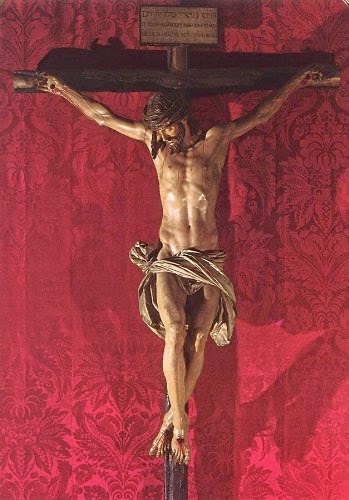
Uniformity with God’s Will
by St. Alphonsus Liguori
Edited by Paul A. Boer,
Sr. Veritatis Splendor Publications 2012
(Kindle edition is 90 cents on Amazon..or you can get the softcover for about $8.00)Excerpts from the book...
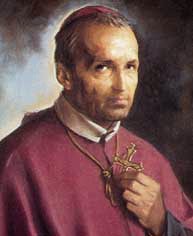 |
| St. AlphonsusLiguori |
“When, therefore, something adverse happens to
us, let us accept it from his hands, not only patiently, but even with
gladness, as did the apostles “who went form the presence of the council
rejoicing, that they were accounted worthy to suffer for the name of Jesus.”
What greater consolation can come to a soul than to know that by patiently bearing some tribulation, it gives God the greatest pleasure in its power?
Spiritual writers tells us that though the desire of certain souls to please God by their sufferings is acceptable to him, still more pleasing to him is the union of certain others with his will, so that their will is neither to rejoice not to suffer, but to hold themselves completely amenable to his will, and they desire only that his holy will be fulfilled.
What greater consolation can come to a soul than to know that by patiently bearing some tribulation, it gives God the greatest pleasure in its power?
Spiritual writers tells us that though the desire of certain souls to please God by their sufferings is acceptable to him, still more pleasing to him is the union of certain others with his will, so that their will is neither to rejoice not to suffer, but to hold themselves completely amenable to his will, and they desire only that his holy will be fulfilled.
If, devout soul, it is your will to please God
and live a life of serenity in this world, unite yourself always and in all
things to the divine will.
For the future, embrace Gods’ good pleasure and say to him in every happening: “Yea, Father, for so it hath seemed good in thy sight.”
When anything disagreeable happens, remember it comes from God and say at once, “This comes from God” and be at peace: “I was dumb and opened not my mouth, because thou hast done it.” Lord, since thous hast done this, I will be silent and accept it.
Direct all your thoughts and prayers to this end, to beg God constantly in meditation, Communion, and visits to the Blessed Sacrament that he help you accomplish his holy will.
Form
the habit of offering yourself frequently to God by saying,
“My God, behold me in thy presence; do with me and all that I have as thou pleasest.”
This was the constant practice of St. Teresa. At least fifty times a day she offered herself to God, placing herself at his entire disposition and good pleasure.
Reflect that
all the sins
of your past wicked life
happened because you
wandered from the
path of God’s will.
For the future, embrace Gods’ good pleasure and say to him in every happening: “Yea, Father, for so it hath seemed good in thy sight.”
When anything disagreeable happens, remember it comes from God and say at once, “This comes from God” and be at peace: “I was dumb and opened not my mouth, because thou hast done it.” Lord, since thous hast done this, I will be silent and accept it.
Direct all your thoughts and prayers to this end, to beg God constantly in meditation, Communion, and visits to the Blessed Sacrament that he help you accomplish his holy will.
 |
| St. Teresa of Avila |
“My God, behold me in thy presence; do with me and all that I have as thou pleasest.”
This was the constant practice of St. Teresa. At least fifty times a day she offered herself to God, placing herself at his entire disposition and good pleasure.
How fortunate you, kind reader, if you too act
thus! You will surely become a saint.
Your life will be calm and peaceful; your death will be happy. At death all our hope of salvation will come
from the testimony of our conscience as to whether or not we are dying resigned to God’s
will.
If during life we have embraced everything
as coming from God’s hands,
and if at death we embrace death
in fulfillment of
God’s will,
we shall certainly save our souls
and die the death of saints.
Let us then abandon everything to God’s good
pleasure, because being infinitely wise, he knows what is best for us; and being
all-good and all-loving – having given his life for us—he wills what is best
for us.
 |
| St. Basil the Great |
Let us, as St. Basil counsels
us,
"...rest secure in the conviction that beyond the possibility of a doubt, God
works to effect our welfare, infinitely better than we could ever hope to
accomplish or desire it ourselves.”
"...In external matters. In times of great heat, cold or rain; in times of famine, epidemics and similar occasions we should refrain from expressions like these: "What unbearable cold!" "What a tragedy!" In these instances we should avoid expressions indicating opposition to God's Will. We should want things to be just as they are, because it is God who thus disposes them...."
"Do thou build up or tear down, O Lord,
as seems good in thy sight.
I am content.
I wish only what thou dost wish."
ON SICKNESS....

Let's see what St. Ignatius says to this...
Do not weary yourself planning
what you would do it you were well,
but be content to be sick
for as long as God wishes...
We ought to make use of the ordinary remedies in time of sickness--such is God's will; but if they are not effective, let us unite ourselves to God's will and this will be better for us than would be our restoration to health...
Certainly, it is more virtuous not to repine in times of painful illness, still and all, when our sufferings are excessive, it is not wrong to let our friends know what we are enduring, and also to ask God to free us from our sufferings....that the sufferings here referred to are actually excessive.
It often happens that some, on the occasion of a slight illness, or even a slight indisposition, want the whole world to stand still and sympathize with them in their illnesses.
But where it is a case of real suffering, we have the example of our Lord, who, at the approach of his bitter passion, made known his state of soul to his disciples, saying: "My soul is sorrowful even until death" and besought his eternal Father to deliver him from it: "Father, if it be possible, let this chalice pass from me."
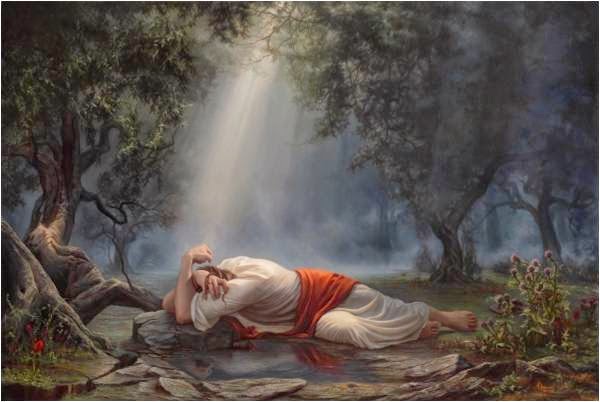
But our Lord likewise taught us what we should do when we have made such a petition, when he added:
"Nevertheless, not as I will, but as thou wilt."
 |
| St. John of Avila, Doctor of the Church |
"If you are seeking to carry out God's will,
what difference should it make to you
whether you are sick or well?"
St. John of Avila
Excerpt from Uniformity with God's Will --
'Finally we should consider the events which are happening to us now and which will happen to us in the future, as coming from the hands of God. Everything we do should be directed to this one end: to do the will of God and to do it solely for the reason that God wills it. To walk more securely on this road we must depend on the guidance of our superiors in external matters, and on our directors in internal matters, to learn from them God’s will in our regard, have great faith in the words of our Lord:”He that heareth you, heareth me.”
 |
| Daydreaming |
Above all, let us bend all our energies to serve God in the way he wishes. This remark is made so that we may avoid the mistake of him who wastes his time in idle day-dreaming. Such a one says, “If I were to become a hermit, I would become a saint” or “If I were to enter a monastery, I would practice penance” or “If I were to go away from here, leaving friend and companions, I would devote long hours to prayer.” If, If, If—all these ifs! In the meantime such a person goes from bad to worse. These idle fancies are often temptations of the devil, because they are not in accord with God’s will. Hence we should dismiss them summarily and rouse ourselves to serve God only in that way which he has marked out for us. Doing his holy will, we shall certainly become holy in those surroundings he has placed us.
Let us will always and ever
only what God wills;
for so doing,
he will press us to his heart.
To this end let us familiarize ourselves with certain texts of sacred scripture that invite us to unite ourselves constantly with the divine will: “Lord, what wilt thou have me to do? Tell me, my God, what thou wilt have me do, that I will it also, with all my heart. “I am thine, save thou me.” I am no longer my own, I am thine, O Lord, do with me as thou wilt.
If some particularly crashing misfortune comes upon us, for example, the death of a relative, loss of goods, let us say: “Yea, Father, for so it hath seemed good in thy sight.” Yes, my God and my Father, so be it, for such is thy good pleasure. Above all, let us cherish that prayer of our Lord, which he himself taught us: "Thy will be done on earth as it is in heaven.”
 |
| St. Catherine of Genoa |
St. Catherine of Genoa
to make a notable pause at these words
whenever she said the Our Father,
praying that God’s holy will be fulfilled on earth
with the same perfection with which
the saints do in heaven.
Let this be our practice also,
and we shall certainly become saints.

Uniformity with God’s Will & the Practice
of the Love of Jesus Christ by St. Alphonsus Liguori Edited by Paul A. Boer,
Sr. Veritatis Splendor Publications 2012


