Ad

Showing posts with label Christian prayer. Show all posts

Friday, 17 March 2017

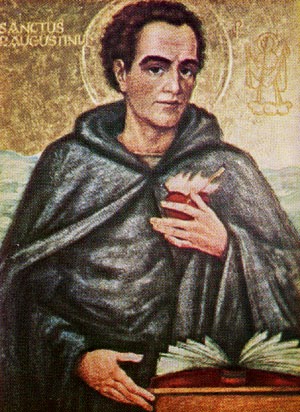
St. Augustine commentary on the Passion of Christ


The Passion of the Whole Body of Christ

From the commentary on the Psalms 
by Saint Augustine, bishop


Lord, I have cried to you, hear me. This is a prayer we can all say.  This is not my prayer, but that of the whole Christ.  Rather, it is said in the name of His Body.

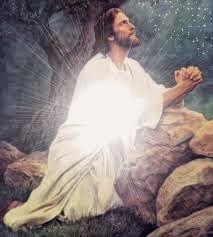
Christ's Agony in the Garden
When Christ was on earth He prayed in His human nature, and prayed to the Father in the name of His Body, and when He prayed drops of blood flowed from His whole body.  So it is written in the Gospel: Jesus prayed with earnest prayer, and sweated blood.  What is this blood streaming from His whole body but the martyrdom of the whole Church?


Lord, I have cried to you, hear me; listen to the sound of my prayer, when I call upon you.

Did you imagine that crying was over when you said: I have cried to you? You have cried out, but do not as yet feel free from care.  

If anguish is at an end, crying is at an end; 

but if the Church, the Body of Christ, 
must suffer anguish until the end of time, 

it must not say only: 
I have cried to you, hear me; 

it must also say: 
Listen to the sound of my prayer, when I call upon You.

Prayer rises to heaven as incense
Let my prayer rise 
like incense in your sight; 
let the raising of my hands 
be an evening sacrifice.

This is generally understood of Christ, the head, as every Christian acknowledges.  When day was fading into evening, the Lord laid down His life on the cross, to take it up again; He did not lose His life against His Will.  

Here, too, we are symbolized.  What part of Him hung on the cross if not the part He had received from us?  

How could God the Father ever cast off and abandon His only Son, Who is indeed one God with Him?  


Yet Christ, nailing our weakness to the cross (where, as the Apostle says: Our old nature was nailed to the cross with Him), cried out with the very voice of our humanity: humanity: My God, my God, why have You forsaken Me?

The evening sacrifice is then the passion of the Lord, the cross of the Lord, the oblation of the victim that brings salvation, the holocaust acceptable to God.  In His resurrection He made this evening sacrifice a morning sacrifice.  

Prayer offered 
in holiness 
from a 
faithful heart 
rises 
like incense 
from a holy altar.  


Nothing is more fragrant 
than the fragrance of the Lord.  

May all who believe share in this fragrance.


Therefore, our old nature, in the words of the Apostle, was nailed to the cross with Him, in order, as he says, to destroy our sinful body, so that we may be slaves to sin no longer.

Taken from the Liturgy of the Hours Tuesday, 2nd Week of Lent

 
St. Augustine,  354 –  430 AD

Tuesday, 19 July 2016

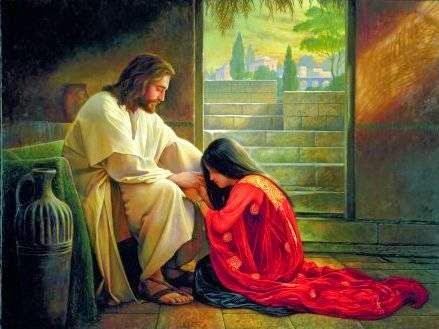
Prayer of Contrition

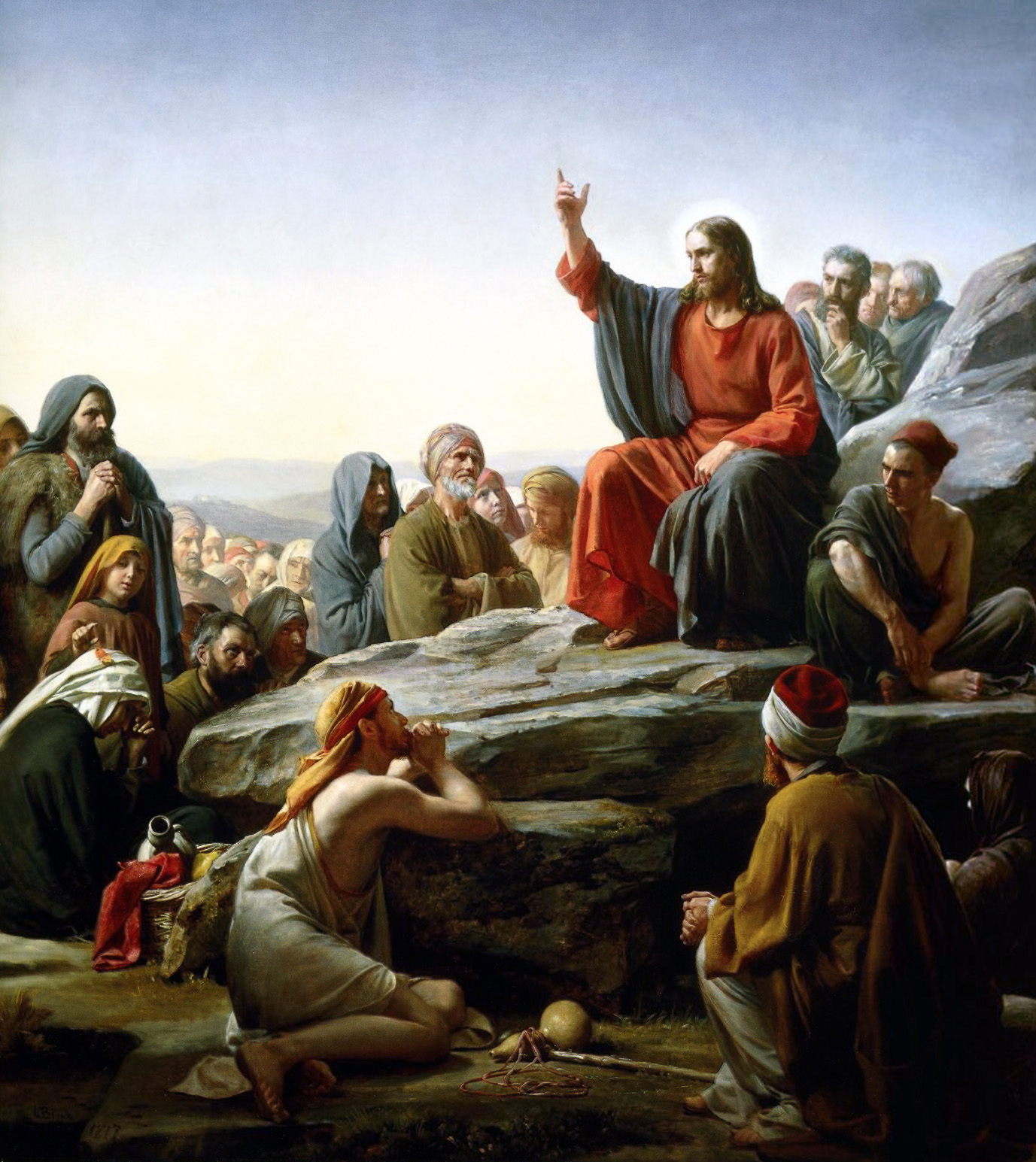
Christ Teaching - Sermon on the Mount


Jesus, Forgive me!

O Eternal Word!  
You have spent three-and-thirty years in labors and fatigues; 

You have given Your life and Your blood for man’s salvation; 
in short, You have spared nothing to make men love you; 

and how is it possible that there should be those who know this, and yet do not love You?

O God, amongst these ungrateful ones I also may be numbered!  


I see the wrong I have done You; 
O my Jesus, have pity upon me!  

I offer You this ungrateful heart ungrateful it is true, but penitent.


Yes, I repent of every evil, 
O my dear Redeemer, for having despised You!  

I repent, and I am sorry with my whole heart.  

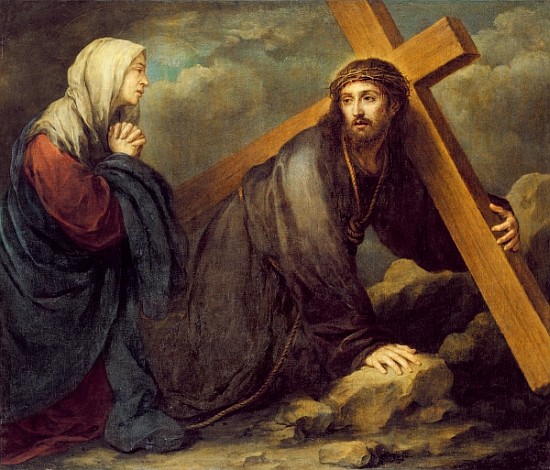
O my soul, love a God Who is bound like a criminal for you; 

a God scourged like a slave for you; 

a God made a mocking for you;  

a God, in short, dead upon a cross, as the vilest outcast for you!

Yes, My Saviour, let me remember, I beseech You, all that You have suffered for me that I may never more forget to love You!


O cords that bound my Jesus, 
bind me to Jesus; 

thorns that crowned my Jesus, 
pierce me with the love of Jesus;

nails that transfixed my Jesus, 
nail me to the Cross of Jesus  

O blood of Jesus, 
inebriate me with His Holy Love!  

O death of Jesus, 
make me die to every earthly affection!  

Pierced feet of my Lord, 
I embrace you; 

deliver me from hell, which I have deserved; 

my Jesus, in hell I could no more love You, 
and yet I desire to love You always.  

Save me, my dearest Saviour; 
bind me to Yourself, that I may never again lose You.


O Mary, refuge of Sinners, and Mother of my Saviour!  

Help a sinner who wishes to love God, and who recommends himself to you; help me for the love you bear for Jesus Christ.

Thursday, 3 March 2016

Prayer to the Sacred Heart of Jesus by St. Alphonsus Liguori


          Sacred Heart of Jesus

O Sacred Heart of Jesus, 
living and life-giving fountain of eternal life, infinite treasure of the Divinity, 
and glowing furnace of love, 
You are my sanctuary.

O Adorable and Glorious Savior, 
consume my heart with that burning fire 
that ever inflames Your Heart.

Pour down on my soul those graces 
which flow from Your Love.  
Let my heart be one with, 
and in all things conformed to Yours.

May Your Will 
be the rule of both my desires and my actions.

Amen

St. Alphonsus Liguori

Monday, 15 September 2014

Our Father Explained by St. Louis de Montfort

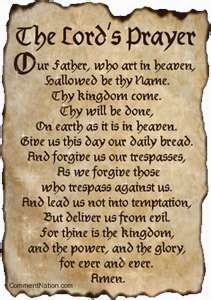
The Our Father
Excerpts taken from the 
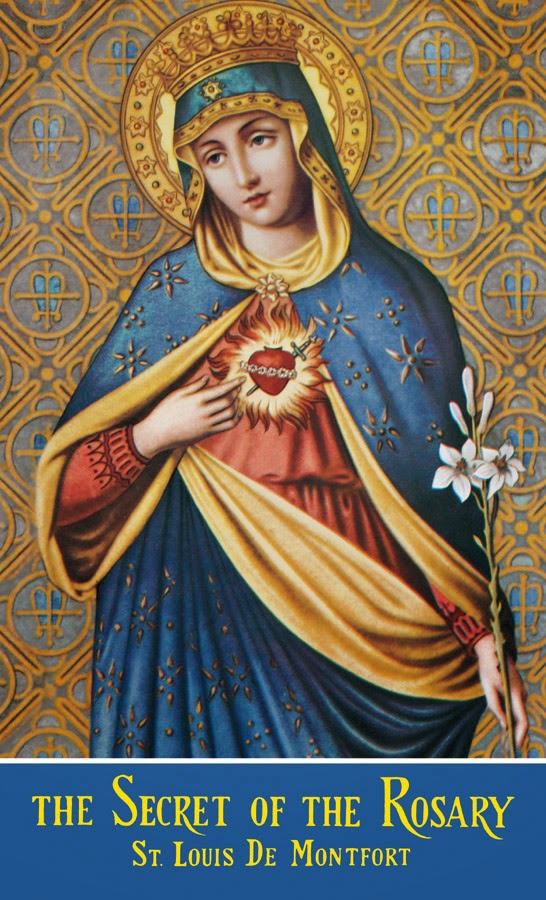
Secrets of the Rosary by St. Louis de Monfort

The Our Father or the Lord’s Prayer derives its great value above all from its author, who is neither a man nor an angel, but the King of angels and of men, our Lord Jesus Christ.  St. Cyprian says it was necessary that he who came to give us the life of grace as our Saviour should teach us the way to pray as our heavenly Master.

St. Louis de Montfort
The beautiful order, the tender forcefulness and the clarity of this divine prayer pay tribute to our divine Master’s wisdom.  It is a short prayer but can teach us so very much, and it is well within the grasp of uneducated people, while scholars find it a continual source of investigation into the mysteries of God.  The Our Father contains all the duties we owe to God, the acts of all the virtues and the petitions for all our spiritual and corporal needs. 

Tertullian says that the Our Father is a summary of the New Testament.  Thomas a Kempis says that it surpasses all the desires of all the saints; that it is a condensation of all the beautiful sayings of all the psalms and canticles; that in it we ask God for everything that we need, that by it we praise him in the very best way; that by it we lift up our souls from earth to heaven and unite them closely to God.

St. John Chrysostom
St. John Chrysostom says that we cannot be our Master’s disciples unless we pray as he did and in the way that he showed us.  Moreover, God the Father listens more willingly to the prayer that we have learned from his Son rather than those of our own making, which have all our human limitations.  

We should say the Our Father with the certitude that the eternal Father will hear us because it is the prayer of his Son, who he always hears, and because we are his members.  God will surely grant our petitions made through the Lord’s Prayer because it is impossible to imagine that such a good Father could refuse a request couched in the language of so worth a Son, reinforced by his merits, and made at his behest.

St. Augustine assures us that whenever we say the Our Father devoutly our venial sins are forgiven.  The just man falls seven times, and the Lord’s Prayer he will find seven petitions which will both help him to avoid lapses and protect him from his spiritual enemies.  Our Lord, knowing how weak and helpless we are, and how many difficulties we endure, made his prayer short and easy to say, so that is we say it devoutly and often, we can be sure that God will quickly come to our aid. . .
St. Augustine


. . . People who say the Lord’s Prayer carefully, weighing every word and meditating on them, may indeed call themselves blessed, for they find therein everything that they need or can wish for.  When we say this wonderful prayer, we touch God’s heart at the very outset by calling him by that sweet name of Father. . .

We have God for our Father, so we are all brothers, and heaven is our homeland and our heritage.

. . . So we ought to love our heavenly Father and say to him over and over again:
God the Father

“Our Father who art in heaven” – Thou who dost fill heaven and earth with the immensity of thy being.  Thou who art present everywhere: Thou who art in the saints by thy glory, in the damned by they justice, in the good by thy grace, in sinners by the patience with which thou dost tolerate them, grant that we may always remember that we come from thee; grant that we may live as thy true children; that we may direct our course towards thee alone with all the ardour or our soul. 

“Hallowed be thy name”  The name of the Lord is holy and to be feared, said the prophet-king David, and heaven, according to Isaiah, echoes with the praises of the seraphim who unceasingly praise the holiness of the Lord, God of hosts.  We ask her that all the world may learn to know and adore the attributes of our God, who is so great and so holy.  We ask that he may be known, loved and adored by pagans, Turks, Jews, barbarians and all infidels; that all men may serve and glorify him by a living faith, a staunch hope, a burning charity, and by the renouncing of all erroneous beliefs.  In short, we pray that all men may be holy because our God himself is holy.

“Thy kingdom come”  That is to say; May your reign in our souls by your grace, during life, so that after death we may be found worthy to reign with thee in thy kingdom, in perfect and unending bliss; that we firmly believe in this happiness to come; we hope for it and we expect it, because God the Father has promised it in his great goodness, and because it was purchased for us by the merits of God the Son; and it has been made known to us by the light of the Holy Ghost. 

Thy Will be Done
“Thy will be done on earth as it is in heaven”  As Tertullian says, this sentence does not mean in the least we are afraid of people thwarting God’s designs, because nothing whatsoever can happen without divine Providence having foreseen it and having made it fit into his plans beforehand.  No obstruction in the whole world can possibly prevent the will of God from being carried out.  Rather, when we say these words, we ask God to make us humbly resigned to all that he has seen fit to send us in this life.  We also ask him to help us to do, in all things and at all times, his holy will, made known to us by the commandments, promptly, lovingly, and faithfully, as the angels and the blessed do in heaven.

“Give us this day our daily bread”  Our Lord teaches us to ask God for everything that we need, whether in the spiritual or the temporal order.  By asking for our daily bread, we humbly admit our own poverty and insufficiency, and pay tribute to our God, knowing that all temporal goods come from his Providence.  When we say bread we ask for that which is necessary to live; and, of course that does not include luxuries.  We ask for this bread today, which means that we are concerned only for the present, leaving the morrow in the hands of Providence.  And when we ask for our daily bread, we recognize that need God’s help every day and that we are entirely dependent upon him for his help and protection.
 
“Forgive us our trespasses as we forgive those who trespass against us”  Every sin, says St. Augustine and Tertullian, is a debt which we contract with God, and he in his justice requires payment down to the last farthing.  Unfortunately we all have these sad debts.  No matter how many they may be, we should go to God with all confidence and with true sorrow for our sins, saying, “Our Father who art in heaven, forgive us our sins of thought and those of speech, forgive us our sins of commission and of omission which make us infinitely guilty in the eyes of thy justice.  “We dare to ask this because thou art our loving and merciful Father, and because we have forgiven those who have offended us out of obedience to you and out of charity.  “Do not permit us, in spite of our infidelity to thy graces, to give in to the temptations of the world, the devil, and the flesh.

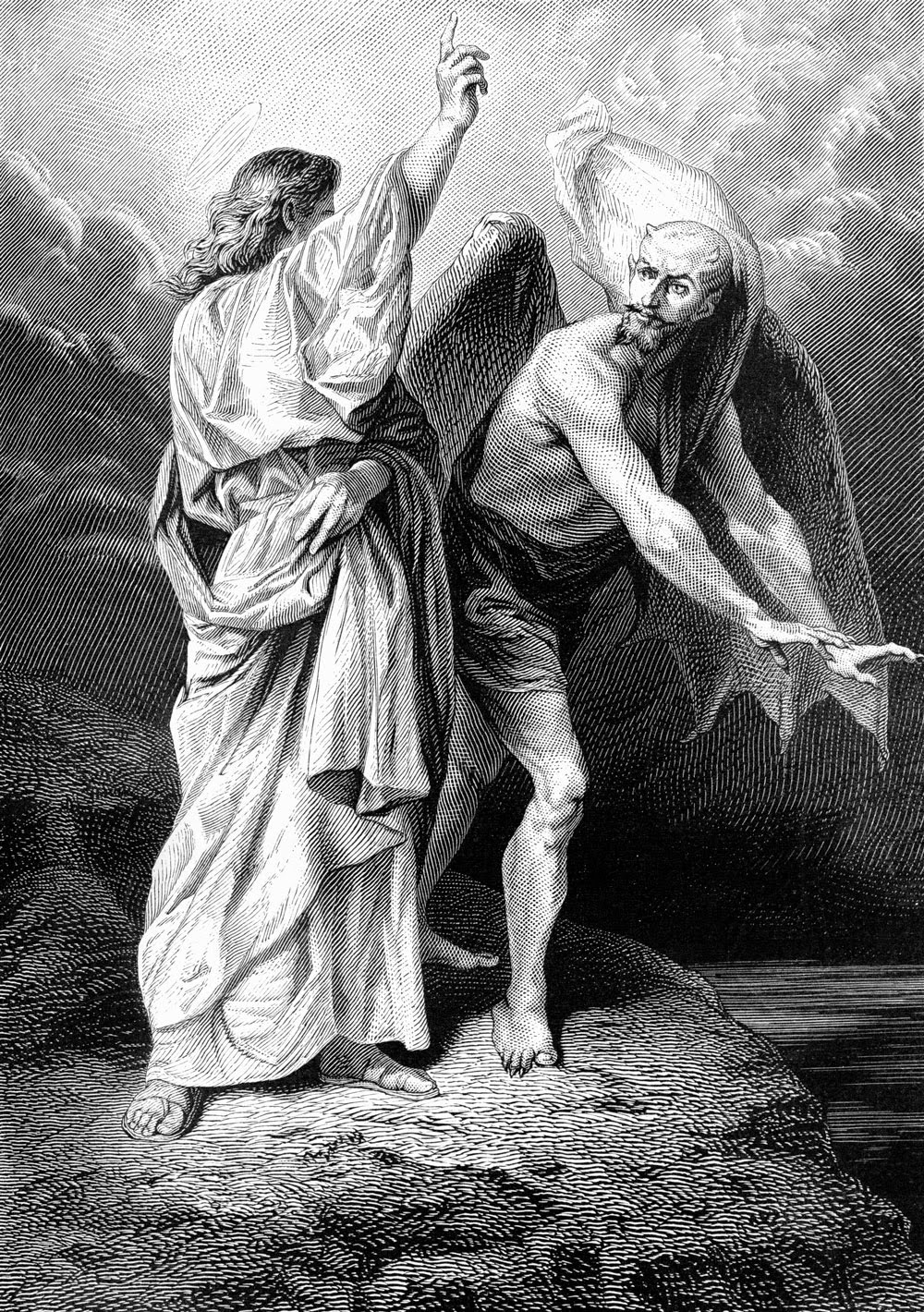
Temptation of Christ
“But deliver us from evil” The evil of sin, from the evil of temporal punishment and of everlasting punishment, which we have rightly deserved. 

“Amen”  This word at the end of the Our Father is very consoling, and St. Jerome says that it is a sort of seal of approbation that God puts at the end of our petitions to assure us that he will grant our requests, as though he himself were answering: “Amen, May it be as you have asked, for truly you have obtained what you asked for.”  That is what is meant by this word: Amen.

. . . Each word of the Lord’s Prayer is a tribute we pay to the perfections of God.  We honour his fecundity by the name of Father.  Father, thou who throughout eternity dost beget a Son who is God like thee, eternal, consubstantial with thee, who is of the very same essence as thee; and is of like power and goodness and wisdom as thou art… Father and Son, who, from our mutual love, produce the Holy Ghost, who is God like unto you; three persons but one God.  Our Father.  

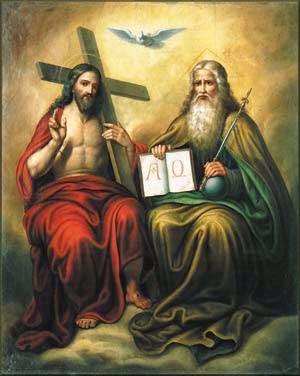
The Holy Trinity
This means that he is the Father of mankind, because he has created us and continues to sustain us, and because he has redeemed us.  He is also the merciful Father of sinners, the Father who is the friend of the just, and the glorious Father of the blessed in heave.  When we say Who art, we honour by these words the infinity and immensity and fullness of God’s essence.  

God is rightly called “He who is;” that is to say, he exists of necessity, essentially, and eternally, because he is the Being of beings and the cause of all beings, and he is in all of them by his essence, by his presence and by his power, but without being bounded by their limitations.  

We honour his sublimity and his glory and his majesty by the words Who art in heaven, that is to say, seated as on thy throne, holding sway over all men by thy justice. . .

. . . It is our duty, therefore, to say it often, with attention, and the same spirit as he composed it.

Louis de Montfort has must more to say in his book, “The Secret of the Rosary”, you should get a copy.