Ad

Showing posts with label Salvation. Show all posts

Tuesday, 6 December 2016

The Five Fatima Prayers

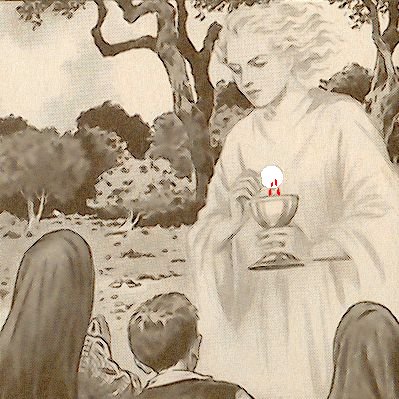
Angel of Fatima
The two prayers taught by the Angel:

My God, I believe, I adore, I hope in and I love You. I ask pardon for all those who do not believe in You, do not hope in You, do not love You.

Most Holy Trinity, Father, Son and Holy Spirit, I adore You profoundly, and I offer You the Most Precious Body, Blood, Soul and Divinity of the same Son Jesus Christ, present in the Tabernacles of the world, in reparation for all the sacrileges, outrages and indifferences by which He Himself is offended.  And by the infinite merits of His Most Sacred Heart and through the Immaculate Heart of Mary, O beg of You the conversion of poor sinners.


Our Lady of Fatima
The three prayers taught 

by Our Lady:

O Most Holy Trinity, I adore Thee; my God, I love Thee in the Most Blessed Sacrament.

O my Jesus, forgive our sins, save us from the fires of Hell, lead all souls to Heaven, especially those most in need.

O my Jesus, it is for love of Thee, for the conversion of sinners and in reparation for sins committed against the Immaculate Heart of Mary, I offer this sacrifice to Thee.


Wednesday, 14 September 2016

Triumph of the Cross

Triumph of the Cross
Feast Day September 14th
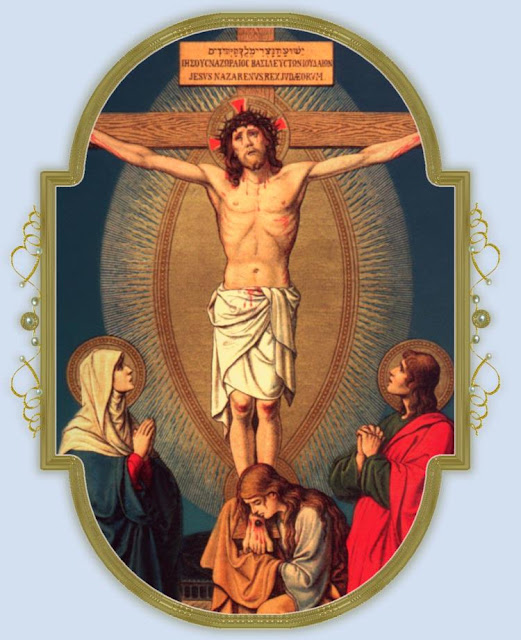
Exaltation of the Cross

From a discourse by Saint Andrew of Crete, bishop

The Cross is Christ’s 
Glory and Triumph

We are celebrating the feast of the cross which drove away the darkness and brought in the light.  As we keep this feast, we are lifted up with the crucified Christ, leaving behind us earth and sin so that we may gain the things above.  So great and outstanding a possession is the cross that he who wins it has won a treasure.  Rightly could I call this treasure the fairest of all fair things and the costliest, in fact as well as in name, for on it and through it and for its sake the riches of salvation that had been lost were restored to us.


Had there been no cross, 

Christ could not 
have been crucified.  
Had there been no cross, 
life itself could not have been nailed to the tree.  
And if life and had not been nailed to it, 
there would be no streams 
of immortality pouring from Christ’s side, 
blood and water for 
the world’s cleansing.  


The legal bond of our sin would not be canceled, we should not have obtained our freedom, we should not have enjoyed the fruit of the tree of life and the gates of paradise would not stand open.  Had there been no cross, death would not have been trodden underfoot, nor hell despoiled.

Therefore, the cross is something wonderfully great and honorable.  It is great because through the cross the many noble acts of Christ found their consummation—very many indeed, for both his miracles and his sufferings were fully rewarded with victory.  
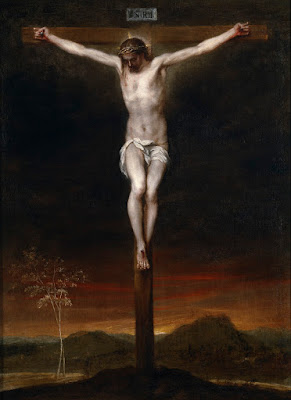
Christ on the Cross Salvation of Mankind
The cross is honorable 

because it is both 
the sign of Gods suffering 
and the trophy of his victory.  
It stands for his suffering 
because on it 
he freely suffered unto death.  
But is also his trophy 
because it was the means 
by which the devil was 
wounded and death conquered, 
the barred gates of hell 
were smashed, 
and the cross became 
the one common salvation
 of the whole world.


The cross is called Christ’s glory; it is saluted as his triumph.  We recognized it as the cup he longed to drink and the climax of the sufferings he endured for our sake.  

As to the cross being Christ’s glory, listen to his words: 
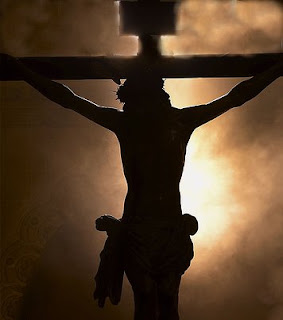
Christ Crucified
Now is the 

Son of Man glorified, 
and in him 
God is glorified, 
and God will glorify 
him at once.  
And once more: 
Father, 
glorify your name.  

Then a voice came from heaven: 
I have glorified it and will glorify it again. 


Here he speaks of the glory that would accrue to him through the cross is Christ’s triumph, hear what he himself also said: When I am lifted up then I will draw all men to myself.  Now you can see that the cross is Christ’s glory and triumph.

St.Andrew of Crete

Wednesday, 18 March 2015

God's Mercy for Sinners


Remember to pray the Divine Mercy Chaplet at least on Good Friday through to 2nd Sunday of Easter (Divine Mercy Sunday) 
as Christ requested.

Divine Mercy article separate. But here is the link to the Chaplet that I spoke of

http://thedivinemercy.org/message/devotions/praythechaplet.php


The Mercy of God to the Penitent
From a letter by Saint Maximus the Confessor, abbot


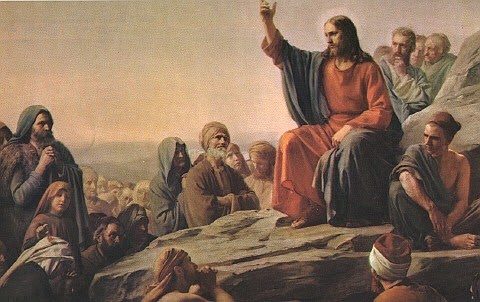
Christ forgives sinner
God’s will is to save us, and nothing pleases him more than our coming back to him with true repentance.  The heralds of truth and the ministers of divine grace have told us this form the beginning, repeating it in every age. Indeed, God’s desire for our salvation is the primary and preeminent sign of his infinite goodness.  It was precisely in order to show that there is nothing closer to God’s heart that the divine Word of God the Father, with untold condescension lived among us in the flesh, and did, suffered, and said all that was necessary to reconcile us to God the Father, when we were at enmity with him, and to restore us to the life of blessedness from which we had been exiled.  He healed our physical infirmities by miracles; he freed us from our sins, many and grievous as they were, by suffering and dying, taking them upon himself as if he were answerable for them, sinless though he was.  He also taught using many different ways that we should wish to imitate him by our own kindness and genuine love for one another.
So is was that Christ proclaimed that he had come to call sinners to repentance, not the righteous, and that it was not the healthy who required a doctor, but he sick.  He declared that he had come to loof for the sheep that was lost, and that is was to the lost sheep of the house of Israel that he had been sent.  Speaking more obscurely in the parable of the silver coin, he tells us that the purpose of his coming was to reclaim the royal image, which had been coated with the filth of sin.  You can be sure there is joy in heaven, he said, over one sinner who repents.

To give the same lesson he revived the man who, having fallen into the hands of the brigands, had been left stripped and half-dead from his wound; he poured wine and oil on the wounds, bandaged them, placed the many on his own mule and brought him to an inn, where he left sufficient money to have him cared for, and promised to repay any further expense on his return.

Again, he told of how the Father, who is goodness itself, was moved with pity for his profligate son who returned and made amends by repentance; how he embraced him, dressed him once more in the fine garments that befitted his own dignity, and did not reproach him for any of his sins.

So too, when he found wandering in the mountains and hills the one sheep that had strayed from God’s flock of a hundred, he brought it back to the fold, but he did not exhaust it by driving it ahead of him.  Instead, he placed it on his own shoulders and so, compassionately, he restored it safely to the flock.

So also he cried out: Come to me, all you that toil and are heavy of heat.  Accept my yoke, he said, by which he meant his commands, or rather, the whole way of life that he taught us in the Gospel.  He then speaks of a burden, but that is only because repentance seems difficult.  In fact, however, my yoke is easy, he assures us, and my burden is light.

Then again he instructs us in divine justice and goodness, telling us to be like our heavenly Father, hold, perfect and merciful.  


Forgive, he says, and you will be forgiven.  
Behave toward other people 
as you would wish them 
to behave toward you.


taken from the Liturgy of the Hours Wednesday, 3rd Week of Lent