Showing posts with label faith. Show all posts
Showing posts with label faith. Show all posts
Thursday, 14 April 2022


Friday, 21 January 2022
Saturday, 15 January 2022
Friday, 17 March 2017
St. Patrick a great man of faith
 |
| Saint Patrick, Great Evangelizer |
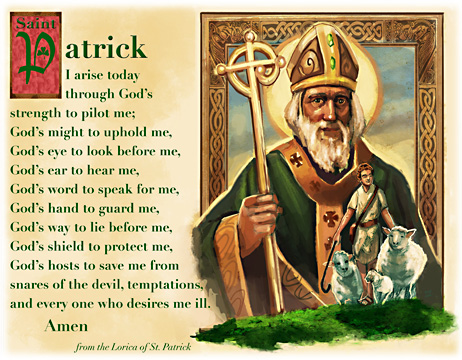
St. Patrick
Lived 385 - 461
From the Confessions of Saint Patrick
Through
me
many peoples
have been reborn
in God
I give unceasing thanks to God, who kept me faithful in the day of my testing. Today I can offer Him sacrifice and
confidence, giving myself as a living
victim to Christ, my Lord, who kept
me safe through all my trails.
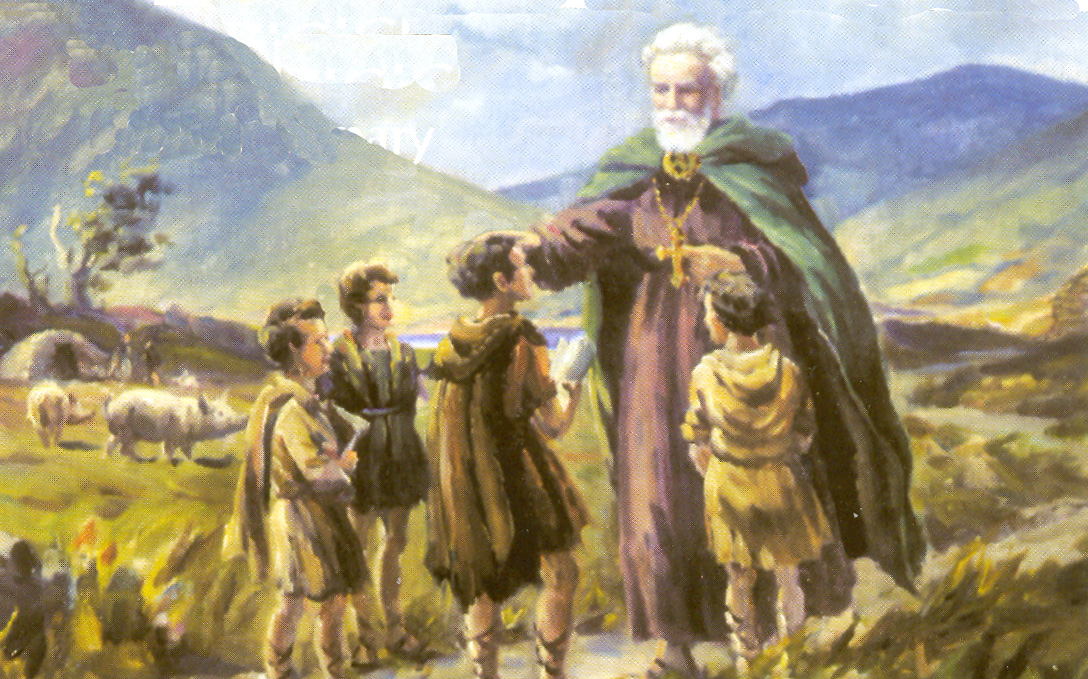 |
| St. Patrick proclaiming Christ to Ireland |
I
can say now: Who am I, Lord, and what
is my calling, that you worked through me with such divine power? You did all this so that today among the Gentiles I might constantly rejoice and glorify Your Name wherever I may be, both in prosperity and in
adversity.
You did it so that, whatever
happened to me, I might accept good and evil equally, always giving thanks to
God. God showed me how to have faith in
Him forever, as one who is never to be doubted.
He answered my prayer in such a way that in the last days, ignorant though I am I might be bold enough to
take up so holy and so wonderful a task, and imitate in some degree those who
the Lord has so long ago foretold as heralds of His Gospel, bearing witness to all nations.
How did I get this wisdom,
that was not mine before? I did not
know the number of my days, or have knowledge of God.
How did so great and salutary a gift come to
me, the gift of knowing and loving God, though at the cost of homeland and
family?
I came to the Irish peoples to
preach the Gospel and endure the taunts of unbelievers, putting up with
reproaches about my earthly pilgrimage, suffering many persecutions, even bondage, and losing my birthright
of freedom for the benefit of others.
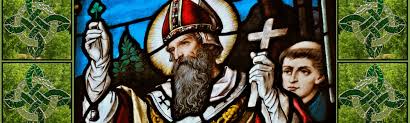 |
| St. Patrick Apostle and Patron of Ireland |
If I am worthy, I am
ready also to give up my life,
without hesitation and most willingly, for His
name.
I want to spend myself in that country,
even
in death,
if the Lord should grant me this favor.
I am deeply in His debt, for He gave me this
favor.
I am deeply in His debt, for He
gave me that great grace that through me many peoples should be reborn in God,
and then made perfect by confirmation and everywhere among them clergy ordained
for a people so recently coming to believe, one people gathered by the Lord from the ends of the earth.
As God had prophesied of old through the
prophets. The nations shall come to you from the ends of the earth, and say: “How
false are the idols made by our fathers: they are useless.” In another prophesy he said, I have set you as a light among the nations, to bring salvation to the ends of
the earth.
It is among that people
that I want to wait for the promise
made by Him,
who assuredly never tells a
lie.
He makes this promise in the
Gospel: They shall come from the east and
west, and sit down with Abraham, Isaac and Jacob. This is our faith: believers are to come
from the world.
The Confessions of St. Patrick … I Patrick …. http://www.confessio.ie/etexts/confessio_english#01
Wednesday, 22 February 2017
One Church, One Faith, One Lord Hymn
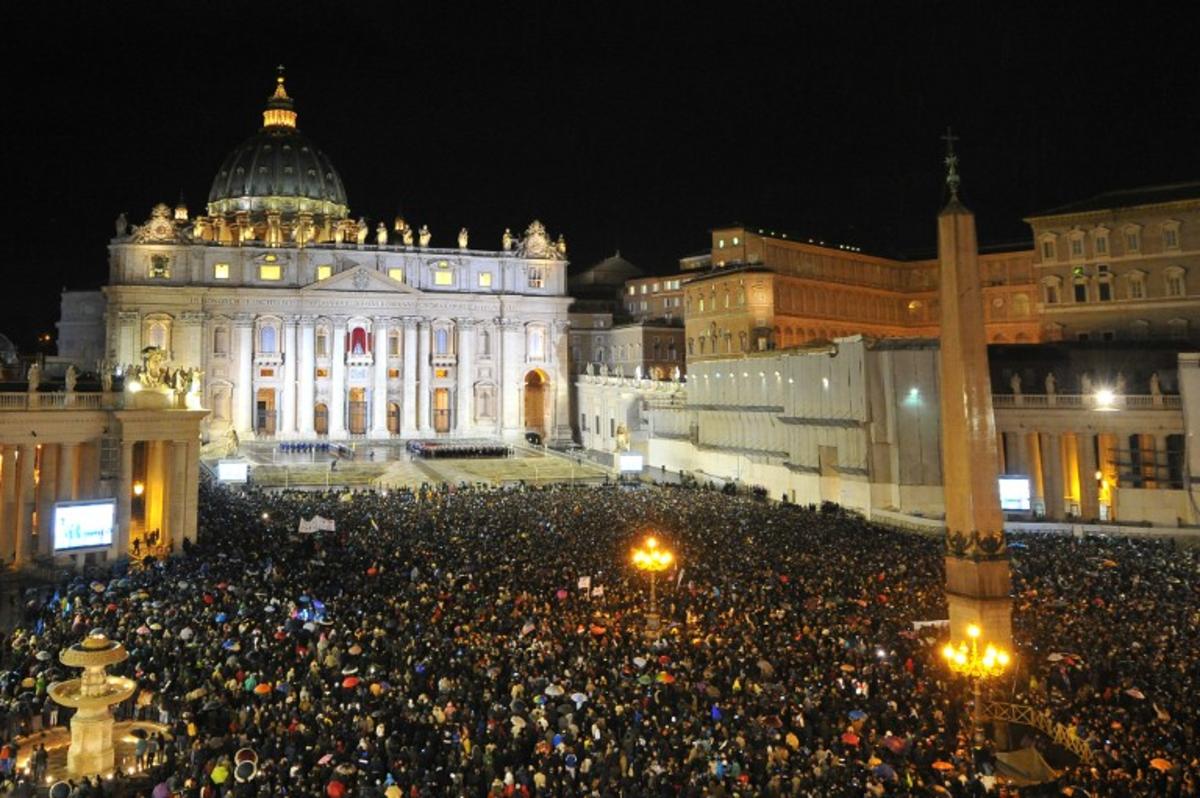 |
| The Vatican, Rome |
One Church
One Faith One Lord
by Edward H. Plumptre
Your hand, O
Lord, has guided
Your Church
from age to age;
The wondrous
tale is written
So clearly
on each page;
Our fathers
praised your goodness,
And we their
deeds record;
And both to
this bear witness;
One Church,
One Faith, One Lord.
Your heralds
brought glad tidings
To greatest
and to least;
They told
all men to hasten
To share the
great King’s feast;
And this was
all their teaching
In every
deed and word,
To all alike
proclaiming:
One Church,
One Faith, One Lord.
Through many
days of darkness,
Through many
scenes of strife,
The faithful
few fought bravely
To guard the
Christian life;
Their gospel
of redemption,
Sin
pardoned, man restored,
Was all in
this enfolded:
One Church,
One Faith, One Lord.
Your mercy
will not fail us,
Nor leave
your work undone;
With all
your strength to help us,
The vict’ry
shall be won;
And then by
men and angels
Your name
shall be adored,
And this
shall be their anthem:
One Church,
One Faith, One Lord.
Written by
Edward H. Plumptre, 1821-1891
See Youtube https://youtu.be/SCmtpyck-oQ
See Youtube https://youtu.be/SCmtpyck-oQ
Performed at St. Francis Xavier Catholic Church, Buffalo, MN
Tuesday, 18 August 2015


Belief is NOT a matter of Taste

St. Augustine
 |
| St. Augustine |
St. Augustine of Hippo is the patron of brewers because of his conversion from a former life of loose living, which included parties, entertainment, and worldly ambitions. His complete turnaround andconversion has been an inspiration to many who struggle with a particular vice or habit they long to break.
This famous son of St. Monica was born in Africa and spent many years of his life in wicked living and in false beliefs. Though he was one of the most intelligent men who ever lived and though he had been brought up a Christian, his sins of impurity and his pride darkened his mind so much, that he could not see or understand the Divine Truth anymore. Through the prayers of his holy mother and the marvelous preaching of St. Ambrose, Augustine finally became convinced that Christianity was the one true religion. Yet he did not become a Christian then, because he thought he could never live a pure life. One day, however, he heard about two men who had suddenly been converted on reading the life of St. Antony, and he felt terrible ashamed of himself. "What are we doing?" he cried to his friend Alipius. "Unlearned people are taking Heaven by force, while we, with all our knowledge, are so cowardly that we keep rolling around in the mud of our sins!"
Full of bitter sorrow, Augustine flung himself out into the garden and cried out to God, "How long more, O Lord? Why does not this hour put an end to my sins?" Just then he heard a child singing, "Take up and read!" Thinking that God intended him to hear those words, he picked up the book of the Letters of St. Paul, and read the first passage his gaze fell on. It was just what Augustine needed, for in it, St. Paul says to put away all impurity and to live in imitation of Jesus. That did it! From then on, Augustine began a new life.
He was baptized, became a priest, a bishop, a famous Catholic writer, Founder of religious priests, and one of the greatest saints that ever lived. He became very devout and charitable, too. On the wall of his room he had the following sentence written in large letters: "Here we do not speak evil of anyone." St. Augustine overcame strong heresies, practiced great poverty and supported the poor, preached very often and prayed with great fervor right up until his death. "Too late have I loved You!" he once cried to God, but with his holy life he certainly made up for the sins he committed before his conversion. His feast day is August 28th.

Wednesday, 23 July 2014
Storms of Life -- Trusting in God
Letting Jesus Sleep
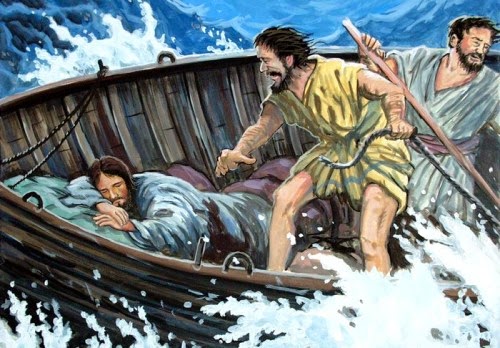
Matthew 8:23-27
by Father Eamonn Shelly, LC | Source: Catholic.net
As Jesus got into the boat, his disciples followed him. A
windstorm arose on the sea, so great that the boat was being swamped by the
waves; but he was asleep. And they went and woke him up, saying, "Lord,
save us! We are perishing!" And he said to them, "Why are you afraid,
you of little faith?" Then he got up and rebuked the winds and the sea;
and there was a dead calm. They were amazed, saying, "What sort of man is this,
that even the winds and the sea obey him?"
Introductory Prayer:
Lord, I come to you in this meditation
ready to do whatever it is you ask. Left to myself I often take the easy and
convenient path, yet I know the way of a Christian is through the narrow gate.
In you I find the reason to abandon the easy path for a more perfect mission of
love. I’m ready to learn the meaning of your command: “Follow me.” Lord as
worries tug at my heart, let me learn to rise above them and trust in you.
Master of my life, I love the goods you have placed in my hands: my health,
family, mission in life…. Grant me faith that can pass through the worst of
storms and come through it profoundly enriched, humanly stronger, and more
deeply united to you, my protector and guide.
We can imagine ourselves in the place of the
apostles, in this poor boat tossed by the turbulent waves. The situation
instantly speaks to our worst of fears; yet Jesus sleeps. Our temptation is to
wake him…and too many souls do so through incessant complaining incessantly,
despairing attitudes, withdrawal withdrawing from prayer, or unloaded unloading
anger on others. When in a moment of trial we find life is no longer under our
complete control, the option of meltdown is always at hand. But I we mustn’t
take that route; instead I we must contemplate the power that emanates from the
sleeping Christ. Trials are intended by God to draw us closer to him and
increase our dependence on him. I We have to live from faith; otherwise all
that reigns is fear, insecurity and bitterness. The “Silence of Christ” is
powerful. To pass over its meaning lightly is to abandon some of the deepest
lessons of Christ’s heart. The “Silence of Christ” must teach us.
What is Christ’s sleep like? As a young mother, Mary watched
Jesus sleep many times. Archbishop Martinez writes:
 “Jesus was exceedingly beautiful when he spoke the words of
eternal life, accomplished wonders, looked with love, pardoned with mercy, and
caressed with tenderness. But I would like to have seen him while he was
sleeping because I could have contemplated him to my heart’s content, without
the fascination of his gaze distracting me, without the perfection of his
beauty and the glory of his splendor dazzling my eyes and enrapturing my soul.
The beauty of Jesus awake is far too great for my smallness. Who could support
it? I felt it more suited to me veiled by sleep, as the glory of the sun is
more adapted to my eyes when I look at it through a translucent lens” (When
Jesus Sleeps, p.15).
“Jesus was exceedingly beautiful when he spoke the words of
eternal life, accomplished wonders, looked with love, pardoned with mercy, and
caressed with tenderness. But I would like to have seen him while he was
sleeping because I could have contemplated him to my heart’s content, without
the fascination of his gaze distracting me, without the perfection of his
beauty and the glory of his splendor dazzling my eyes and enrapturing my soul.
The beauty of Jesus awake is far too great for my smallness. Who could support
it? I felt it more suited to me veiled by sleep, as the glory of the sun is
more adapted to my eyes when I look at it through a translucent lens” (When
Jesus Sleeps, p.15).
May I trust the power of Christ
just as much
when He chooses
not to act -- as when He does.
Water, a boat , the apostles, and Christ… this scene repeats
itself over and over again in the Gospel. Water is a symbol of the experiences
of life taken on a human level; the boat is the experience of faith on a
supernatural level -- it is our life with Christ. Christ’s message is that I we
can never let my our experiences of life overwhelm my our experience of faith.
I/We have to live not from the surface level of impressions of the moment, but
open myself up to/from the deep channel of faith that reveals the action of God,
the wisdom of his Providence, and the ultimate destiny of eternity.
Faith is
what reveals Christ’s presence in our boat;
faith is what makes us believe that
every wave and wind
gust are blessed invitations to confide in the One who
rules all.
Faith is what permits God to console our hearts, calm our fears, and
preserve our joy in the midst of many problems and difficulties that may take
months or years to run their course.
Conversation Dialogue with Christ:
Lord, I know belief makes me vulnerable. To
believe is to push out from shore with you in my boat, leaving behind the
security I find in my talents and plans, my friends and relatives, my financial
and social standing But I know. I will not know your power if I do not know how
to truly leave my whole life in your hands. that I will not know your love if I
do not believe that you can make me happier than I could can be by myself. I
will not know your victory if I do not face the enemies of my soul and my
mission with and abandonment myself to your grace, I will not know your
victory.
Today I
will take a recent problem and, with complete trust and confidence in him,
leave it totally in God’s hands today with complete trust and confidence in
him.
 |
| Jesus Calms the Sea |
Thursday, 16 January 2014
Baptism the Great Sacrament

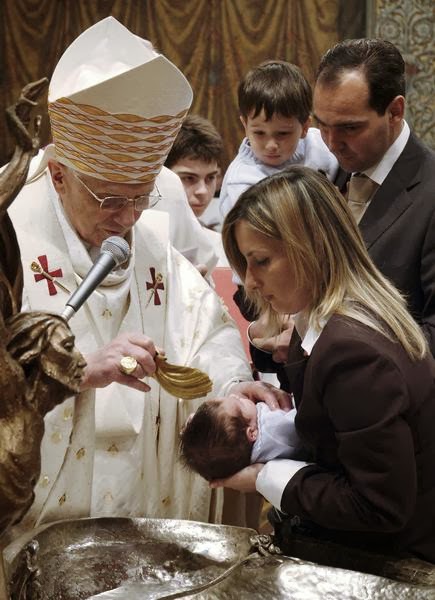
We celebrated the Feast of the Baptism of the Lord last
Sunday. Baptism is one of the most
important Sacraments …actually needed to receive the other Sacraments of the
Church.
I wanted to write something
regarding this great Sacrament, what I have learned—what the Church says about
it and why it’s so important.
The first question that comes to mind is WHY DID JESUS HAVE
TO BE BAPTIZED?

The Catechism of the Catholic
Church states “Our Lord voluntarily submitted himself to the baptism of St. John,
intended for sinners, in order to "fulfill all righteousness."19 Jesus' gesture is a manifestation of his
self-emptying.20 The Spirit who had hovered over the waters of the first
creation descended then on the Christ as a prelude of the new creation, and the
Father revealed Jesus as his "beloved Son."21”
Okay, what does that mean--exactly? I had often wondered about this same question
over the years and have discovered through my research an answer that made it
easier to understand so I thought that I would share my findings with you.
"…. Christ is
baptized, not that he may be sanctified in the waters, but that he himself may sanctify the waters, and by
his own purification may purify those streams which he touches.”
"For the
consecration of Christ is the greater consecration of another element. For
when the Savior is washed, then already for our baptism all water is cleansed
and the fount purified, that the grace of the laver may be administered to the
peoples that come after. Christ
therefore takes the lead in baptism, so that Christian peoples may follow after him with confidence." (St. Maximus of Turin, 423) Excerpts
from: http://www.catholic.org/hf/faith/story.php?id=44333AD

“…In submitting
Himself humbly to the baptism of St. John the Baptist, however, Christ provided
the example for the rest of us. If even He should be baptized, though He
had no need of it, how much more should the rest of us be thankful for this
sacrament, which frees us from the darkness of sin and incorporates us into the
Church, the life of Christ on earth! His Baptism, therefore, was
necessary--not for Him, but for us.
Many of the Fathers of
the Church, as well as the medieval Scholastics, saw Christ's Baptism as the institution of the sacrament. His Flesh
blessed the water, and the descent of the Holy Spirit (in the form of a dove)
and the voice of God the Father announcing that this was His Son, in Whom He
was well pleased, marked the beginning of Christ's public ministry.” http://catholicism.about.com/od/holydaysandholidays/p/Baptism_of_Lord.htm
Here are the Readings for this
Feast of the Baptism of the Lord:

Isaiah 42:1-4, 6-7, or
Isaiah 40:1-5, 9-11;
Psalm 29:1-2, 3-4, 3, 9-10, or Psalm 104:1b-2, 3-4, 24-25,
27-28, 29-30;
Acts 10:34-38 or Titus 2:11-14; 3:4-7;
Luke 3:15-16, 21-22
“What a wonderful God
is our God” as Mother Angelica has said… Yes, He IS wonderful!!
Let me now share with
you more about this sacrament—it’s definition and it’s effects on the soul.
1213 Holy Baptism is the
basis of the whole Christian life, the gateway to life in the Spirit (vitae
spiritualis ianua),4 and the door which
gives access to the other sacraments. Through Baptism we are freed from sin and reborn as sons of God; we become
members of Christ, are incorporated into the Church and made sharers in her
mission: "Baptism is the sacrament
of regeneration through water in the word."5 Catechism of the Catholic
Church, http://www.vatican.va/archive/ccc_css/archive/catechism/p2s2c1a1.htm

Pope Francis had this to say about the Sacrament. “This sacrament constitutes a true immersion
in the death of Christ, to rise with him in a new life. It is a bath of regeneration
by water and the Spirit and that illuminates us with the grace of Christ,”
the Pope expressed in his Nov. 13 (2013) address. Read more: http://www.ncregister.com/daily-news/pope-francis-baptism-is-a-bath-of-regeneration#ixzz2qaYokoFq
The Effects of the Sacrament of Baptism:
Baptism
has six primary effects, which are all supernatural graces:
1. The removal of the guilt of
both Original Sin (the sin imparted to all mankind by the Fall of Adam and
Eve in the Garden of Eden) and personal sin (the sins that we have
committed ourselves).
2. The remission of all punishment that we owe because of sin, both temporal (in this world and in Purgatory) and eternal (the punishment that we would suffer in hell).
3. The infusion of grace in the form of sanctifying grace (the life of God within us); the seven gifts of the Holy Spirit; and the three theological virtues.(see below)
4. Becoming a part of Christ.
5. Becoming a part of the Church, which is the Mystical Body of Christ on earth.
6. Enabling participation in the sacraments, the priesthood of all believers, and the growth in grace.
 The Catechism of the Catholic Church notes, "They (the 7 Gifts of the Holy Spirit) complete and perfect
the virtues of those who receive them." When we are infused with the
gifts of the Holy Spirit, we respond to the promptings of the Holy
Spirit as if by instinct...
The Catechism of the Catholic Church notes, "They (the 7 Gifts of the Holy Spirit) complete and perfect
the virtues of those who receive them." When we are infused with the
gifts of the Holy Spirit, we respond to the promptings of the Holy
Spirit as if by instinct...1. Wisdom ~ Not from Books...
The Wisdom that we receive through the Sacrament of Baptism is not one to help us with science, chemistry, math.... It's a more profound Wisdom of the Spirit....
Wisdom is the perfection of faith. As Fr. John A. Hardon, S.J., notes in his Modern Catholic Dictionary,
"Where faith is a simple knowledge of the articles of Christian belief,
wisdom goes on to a certain divine penetration of the truths
themselves." ... Thus wisdom, the Catholic Encyclopedia notes, "by
detaching us from the world, makes us relish and love only the things of
heaven." Through wisdom, we judge the things of the world in light of
the highest end of man—the contemplation of God.

Such
detachment, however, is not the same as renunciation of the world—far
from it. Rather, wisdom helps us to love the world properly, as the
creation of God, rather than for its own sake. The material world,
though fallen as a result of the sin of Adam and Eve, is still worthy of
our love; we simply need to see it in the proper light, and wisdom
allows us to do so.
Knowing the proper ordering of the material and spiritual worlds
through wisdom, we can more easily bear the burdens of this life and
respond to our fellow man with charity and patience. http://catholicism.about.com/od/beliefsteachings/p/Wisdom.htm
2. Understanding ~ of the Divine
Understanding is the second gift of the Holy Spirit, behind only wisdom. ...Wisdom is the desire to contemplate the things of God, while understanding allows us,... become certain of the truth of the doctrine of the Trinity. Such certitude moves beyond faith, which "merely assents to what God has revealed."

Understanding rises above natural reason, which is concerned only with the things we can sense in the world around us. Thus, understanding is both speculative—concerned with intellectual knowledge—and practical, because it can help us to order the actions of our lives toward our final end, which is God. Through understanding, we see the world and our life within it in the larger context of the eternal law and the relation of our souls to God.
http://catholicism.about.com/od/beliefsteachings/p/Understanding.htm
3. Counsel ~ Choosing Correctly

Counsel is the perfection of the cardinal virtue of prudence...Counsel allows us to judge rightly what we should do in a particular circumstance. It goes beyond prudence, though, in allowing such judgments to be made promptly, "as by a sort of supernatural intuition," as Fr. John A. Hardon writes in his Modern Catholic Dictionary. ..."With the gift of counsel, the Holy Spirit speaks, as it were, to the heart and in an instant enlightens a person what to do," writes Father Hardon. It is the gift that allows us as Christians to be assured that we will act correctly in times of trouble and trial. Through counsel, we can speak without fear in defense of the Christian Faith. Thus, the Catholic Encyclopedia notes, counsel "enables us to see and choose correctly what will help most to the glory of God and our own salvation."...
2. Understanding ~ of the Divine
Understanding is the second gift of the Holy Spirit, behind only wisdom. ...Wisdom is the desire to contemplate the things of God, while understanding allows us,... become certain of the truth of the doctrine of the Trinity. Such certitude moves beyond faith, which "merely assents to what God has revealed."

Understanding rises above natural reason, which is concerned only with the things we can sense in the world around us. Thus, understanding is both speculative—concerned with intellectual knowledge—and practical, because it can help us to order the actions of our lives toward our final end, which is God. Through understanding, we see the world and our life within it in the larger context of the eternal law and the relation of our souls to God.
http://catholicism.about.com/od/beliefsteachings/p/Understanding.htm
3. Counsel ~ Choosing Correctly

Counsel is the perfection of the cardinal virtue of prudence...Counsel allows us to judge rightly what we should do in a particular circumstance. It goes beyond prudence, though, in allowing such judgments to be made promptly, "as by a sort of supernatural intuition," as Fr. John A. Hardon writes in his Modern Catholic Dictionary. ..."With the gift of counsel, the Holy Spirit speaks, as it were, to the heart and in an instant enlightens a person what to do," writes Father Hardon. It is the gift that allows us as Christians to be assured that we will act correctly in times of trouble and trial. Through counsel, we can speak without fear in defense of the Christian Faith. Thus, the Catholic Encyclopedia notes, counsel "enables us to see and choose correctly what will help most to the glory of God and our own salvation."...
4. Fortitude
Fortitude is commonly called courage, but it is different from what much of what we think of as courage today. Fortitude is always reasoned and reasonable; the person exercising fortitude is willing to put himself in danger if necessary, but he does not seek danger for danger's sake.

Fortitude is the virtue that allows us to overcome fear and to remain
steady in our will in the face of obstacles. Prudence and justice are
the virtues through which we decide what needs to be done; fortitude
gives us the strength to do it.
It also shows itself, as the Catholic Encyclopedia notes, "in moral
courage against the evil spirit of the times, against improper fashions,
against human respect, against the common tendency to seek at least the
comfortable, if not the voluptuous." Fortitude is the virtue of the martyrs, who are willing to give their
lives rather than to renounce their faith. That sacrifice may be
passive—Christian martyrs do not actively seek martyrdom—but it is
nonetheless determined and resolute.
7. Knowledge

Knowledge allows us to see the circumstances of our life as God sees
them, albeit in a more limited way, since we are limited by our human
nature. Through the exercise of knowledge, we can ascertain God's
purpose in our lives and His reason for placing us in our particular
circumstances...
"it enables those who have the gift to discern easily and effectively
between the impulses of temptation and the inspirations of grace."
Judging all things in the light of divine truth, we can more easily
distinguish between the promptings of God and the subtle wiles of the
devil.
6. Piety - A Gift of the Holy Spirit

Fr. John A. Hardon, S.J., notes in his Modern Catholic Dictionary,
is "The moral virtue by which a person is disposed to render to God the
worship and service he deserves." Far from being a drudgery, worship
should be an act of love, and piety is the instinctive affection for
God that makes us desire to render worship to Him, just as we
voluntarily honor our parents... It instills in us a desire always to do that which is pleasing to God..."
http://catholicism.about.com/od/beliefsteachings/p/Piety.htm7. Fear of the Lord

The fear of the Lord is the desire not to offend Him, and the
certainty that He will give us the grace necessary to keep from doing
so. It is that certainty that gives us hope.
The fear of the Lord is like the respect we have for our parents.
We do not wish to offend them, but we also do not live in fear of them,
in the sense of being frightened...it is not a fear of punishment, but a desire not to offend God that parallels our desire not to offend our parents... the fear of the Lord is the beginning of wisdom because it is one of the foundations of our religious life,
http://catholicism.about.com/od/beliefsteachings/p/Fear_of_the_Lord.htm
The Three Theological Virtues
FAITH, HOPE AND CHARITY (LOVE)

"A virtue is an habitual and firm disposition to do
the good. It allows the person not only to perform good acts, but to
give the best of himself. The virtuous person tends toward the good with
all his sensory and spiritual powers; he pursues the good and chooses
it in concrete actions.
- The goal of a virtuous life is to become like God.63 "
- http://www.vatican.va/archive/ccc_css/archive/catechism/p3s1c1a7.htm
Unlike the cardinal virtues,
which can be practiced by anyone, the theological virtues are gifts of
grace from God, and the object of the virtues—what the practice of the
virtue aims at—is God Himself.
"1813
The theological virtues are the foundation of Christian moral activity;
they animate it and give it its special character. They inform and give
life to all the moral virtues. They are infused by God into the souls
of the faithful to make them capable of acting as his children and of
meriting eternal life. They are the pledge of the presence and action of
the Holy Spirit in the faculties of the human being. There are three
theological virtues: faith, hope, and charity.77"
FAITH

1815 The gift of faith remains in one who has not sinned against it.80 But "faith apart from works is dead":81 when it is deprived of hope and love, faith does not fully unite the believer to Christ and does not make him a living member of his Body.
1816 The disciple of Christ must not only keep the faith and live on it, but also profess it, confidently bear witness to it, and spread it: "All however must be prepared to confess Christ before men and to follow him along the way of the Cross, amidst the persecutions which the Church never lacks."82 Service of and witness to the faith are necessary for salvation: "So every one who acknowledges me before men, I also will acknowledge before my Father who is in heaven; but whoever denies me before men, I also will deny before my Father who is in heaven."83
HOPE

"Hope is the theological virtue by which we desire
the kingdom of heaven and eternal life as our happiness, placing our
trust in Christ's promises and relying not on our own strength, but on
the help of the grace of the Holy Spirit. "Let us hold fast the
confession of our hope without wavering, for he who promised is
faithful."84 "The Holy Spirit . . . he poured out upon us
richly through Jesus Christ our Savior, so that we might be justified by
his grace and become heirs in hope of eternal life."85
1818 The virtue of hope responds to the aspiration to happiness which God has placed in the heart of every man; it takes up the hopes that inspire men's activities and purifies them so as to order them to the Kingdom of heaven; it keeps man from discouragement; it sustains him during times of abandonment; it opens up his heart in expectation of eternal beatitude. Buoyed up by hope, he is preserved from selfishness and led to the happiness that flows from charity...
1818 The virtue of hope responds to the aspiration to happiness which God has placed in the heart of every man; it takes up the hopes that inspire men's activities and purifies them so as to order them to the Kingdom of heaven; it keeps man from discouragement; it sustains him during times of abandonment; it opens up his heart in expectation of eternal beatitude. Buoyed up by hope, he is preserved from selfishness and led to the happiness that flows from charity...
"...We can therefore hope in the glory of heaven promised by God to those who love him and do his will.92 In every circumstance, each one of us should hope, with the grace of God, to persevere "to the end"93
and to obtain the joy of heaven, as God's eternal reward for the good
works accomplished with the grace of Christ. In hope, the Church prays
for "all men to be saved."94 She longs to be united with Christ, her Bridegroom, in the glory of heaven..."
CHARITY

Charity is the theological virtue by which we love
God above all things for his own sake, and our neighbor as ourselves
for the love of God.
1823 Jesus makes charity the new commandment.96 By loving his own "to the end,"97 he makes manifest the Father's love which he receives. By loving one another, the disciples imitate the love of Jesus which they themselves receive. Whence Jesus says: "As the Father has loved me, so have I loved you; abide in my love." And again: "This is my commandment, that you love one another as I have loved you."98
1824 Fruit of the Spirit and fullness of the Law, charity keeps the commandments of God and his Christ: "Abide in my love. If you keep my commandments, you will abide in my love."99
1825 Christ died out of love for us, while we were still "enemies."100 The Lord asks us to love as he does, even our enemies, to make ourselves the neighbor of those farthest away, and to love children and the poor as Christ himself.101
1823 Jesus makes charity the new commandment.96 By loving his own "to the end,"97 he makes manifest the Father's love which he receives. By loving one another, the disciples imitate the love of Jesus which they themselves receive. Whence Jesus says: "As the Father has loved me, so have I loved you; abide in my love." And again: "This is my commandment, that you love one another as I have loved you."98
1824 Fruit of the Spirit and fullness of the Law, charity keeps the commandments of God and his Christ: "Abide in my love. If you keep my commandments, you will abide in my love."99
1825 Christ died out of love for us, while we were still "enemies."100 The Lord asks us to love as he does, even our enemies, to make ourselves the neighbor of those farthest away, and to love children and the poor as Christ himself.101
Excerpts from the Catechism of the Catholic Church
http://www.vatican.va/archive/ccc_css/archive/catechism/p3s1c1a7.htm
Subscribe to:
Posts (Atom)