Ad

Showing posts with label St. Thomas Aquinas. Show all posts

Friday, 16 June 2017

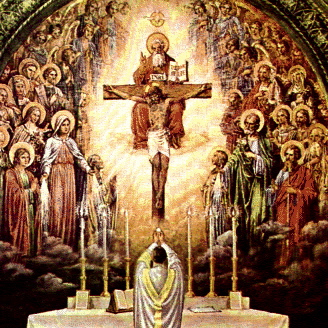
Corpus Christi - Body and Blood of Christ

Body and Blood of Christ

O precious 
and wonderful banquet!

From the work by Saint Thomas Aquinas, priest

Since it was the will of God’s only-begotten Son that men should share in his divinity, he assumed our nature in order that by becoming man he might make men gods.  Moreover, when he took our flesh he dedicated the whole of its substance to our salvation.  He offered his body to God the Father on the altar of the cross as a sacrifice  for our reconciliation.  He shed his blood for our ransom and purification, so that we might be redeemed from our wretched state of bondage and cleansed from all sin.  But to ensure that the memory of so great a gift would abide with us for ever, he left his body as food and his blood as drink for the faithful to consume in the form of bread and wine.

O precious and wonderful  banquet, that brings us salvation and contains all sweetness!  Could anything be of more intrinsic value?  Under the old law it was the flesh of calves and goats that was offered, but here Christ himself, the true God, is set before us as our food.  What could be more wonderful than this.  

No other sacrament has greater healing power; through it sins are purged away, virtues are increased, and the soul is enriched with an abundance of every spiritual gift.  

It is offered in the Church for the living and the dead, so that what was instituted for the salvation of all may be for the benefit of all.  

Yet, in the end, no one can fully express the sweetness of this sacrament, in which spiritual delight is tasted at its very source, and in which we renew the memory of that surpassing love for us which Christ revealed in his passion.


It was to impress the vastness of this love more firmly upon the hearts of the faithful that our Lord instituted this sacrament at the Last Supper.  

As he was on the point of leaving the world to go to the Father, after celebrating the Passover with his disciples, he left it as a perpetual memorial of his passion.  

It was the fulfillment of ancient figures and the greatest of all his miracles, which for those who were to experience the sorrow of his departure,  it was destined to be a unique and abiding consolation.

Prayer of St. Ambrose 


Preparing to Receive 
Christ in the Eucharist

Lord Jesus Christ, I approach Thy banquet table in fear and trembling, for I am a sinner, and dare not rely on my own worth, but only on Thy goodness and mercy.  

I am defiled by my many sins in body and soul, and by my unguarded thoughts and words. 

Gracious God of majesty and awe, I seek Thy protection, I look for Thy healing.  Poor troubled sinner that I am, I appeal to Thee, the fountain of all mercy.  I cannot bear Thy judgment, but I trust in Thy salvation.  

Lord, I show my wounds to Thee and uncover my shame before Thee.  I know my sins are many and great, and they fill me with fear, but I hope in Thy mercies, for they cannot be numbered.  

Lord Jesus Christ, Eternal King, God and man, crucified for mankind, look upon me with mercy and hear my prayer, for I trust in Thee.  Have mercy on me, full of sorrow and sin, for the depth of Thy compassion never ends.  

Praise to Thee, Saving Sacrifice, offered on the wood of the cross for me and for all mankind!

Praise to the noble and precious Blood, flowing from the wounds of my crucified Lord Jesus Christ and washing away the sins of the whole world!

Remember, Lord, Thy creature, whom Thou has redeemed with Thy Blood; I repent my sins, and I long to put right what I have done. 

Merciful Father, take away all my offenses and sins; purify me in body and soul, and make me worthy to taste the Holy of Holies.  

May Thy Body and Blood, which I intend to receive, although I am unworthy, be for me the remission of my sins, the washing away of my guilt, the end of my evil thoughts, and the rebirth of my better instincts.  

May it incite me to do the works pleasing to Thee and profitable to my health in body and soul, and be a firm defense against the wiles of my enemies.  

Amen.

Prepare your Soul to receive Christ in the Eucharist

Wednesday, 1 March 2017

Lent and Sacrifice


Voluntary Sacrifice Produces Eternal Beauty

An Inspirational homily
for Ash Wednesday and Lent..

Check it out... I do not know the priest's name, but 
Thank You Father!


More inspirational homilies & more at Sensus Fidelium  on YOU TUBE my favorite channel

Sunday, 28 February 2016

WHAT ARE THE SEVEN DEADLY SINS?


and THE DAUGHTERS OF 
THE SEVEN DEADLY SINS

“Sin is nothing else than a morally bad act (St. Thomas, De malo, 7:3), an act not in accord with reason informed by the Divine law.”
“Since the time of Pope St. Gregory the Great (who lived from 540 – 604 AD) the Catholic Church has maintained that there are seven capital sins, also referred to as the seven mortal sins, seven deadly sins, or seven capital vices. Mortal sin refers to sin, due to action and intention, which is of a graver nature than venial sin. Where venial sin is relatively minor, mortal sin creates the threat of eternal damnation, a full turning away from God on the part of the sinner, unless absolved of the sin...” 


The disorder introduced into our human nature by Adam’s fall from grace reveals itself especially through seven dominant vices known in the Catholic tradition as the capital sins. These are: pride, avarice, lust, anger, gluttony, envy, and sloth. We call them “capital” sins (from the Latin caput, “head”) because they are the sources or fountainheads of all the sins people commit, whether sins of commission or sins of omission.

We call them “deadly” because they cause spiritual death; Archbishop Fulton J. Sheen liked to call them the “seven pallbearers of the soul.”

Spiritual growth is impossible unless we try to dig up the roots of our sins with the help of God’s illuminating and sanctifying grace. Excerpt taken from http://www.onepeterfive.com/seven-deadly-sins-remedies/

To Remember The 7 Deadly Sins Use The Acronym
P-A-L-E-G-A-S
PRIDE, ANGER, LUST, ENVY, GLUTTONY, AVARICE, SLOTH

PRIDE – Pride is an unrestrained and improper appreciation of our own worth. This is listed first because it is widely considered the most serious of the seven sins; pride often leads to the committing of other capital sins. Pride is manifest in vanity and narcissism about one’s appearance, intelligence, status, etc. Dante described pride as “love of self perverted to hatred and contempt for one's neighbor.”

GREED – Greed, which is also known as avarice or covetousness, is the immoderate desire for earthly goods, as well as situations such as power. It is a sin of excess. The object a person is greedy about need not be evil, but the issue lies in the way one regards the object, placing inappropriate value on it. Greed can further inspire such sinful actions as hoarding of materials or objects, theft and robbery, trickery, and manipulation.

GLUTTONY – Gluttony, which comes from the Latin gluttirei – to gulp down or swallow, refers to the sin of over-indulgence and over-consumption of food and drink. The manners in which gluttony can be committed, as first mentioned by Pope Gregory the Great and later reiterated by Thomas Aquinas, are eating too soon, eating too expensively, eating too much, eating too eagerly, eating too daintily, and eating wildly.

St. Alphonsus Liguori explained that “it is not a fault to feel pleasure in eating: for it is, generally speaking, impossible to eat without experiencing the delight which food naturally produces. But it is a defect to eat, like beasts, through the sole motive of sensual gratification, and without any reasonable object” (The True Spouse of Jesus Christ).

LUST – The sin of lust refers to impure desire of a sexual nature. Sexuality is a gift from God, and not inherently impure in itself. However, lust refers to the impure thoughts and actions that misuse that gift, deviating from God’s law and intentions for us. Indulging in the sin of lust can include (but is not limited to) fornication, adultery, bestiality, rape, and incest and can lead to such things as sexual addiction.

SLOTH – Sloth is often described simply as the sin of laziness. However, while this is part of the manifestation of sloth, the central problem with sloth as a capital sin is spiritual laziness. The sin of sloth means being lazy and lax about living the Faith and practicing virtue.


THE DAUGHTERS OF THE SEVEN DEADLY SINS 
were explained by St. Thomas Aquinas as Sins relating to the 7 Deadly sins they are:


 PRIDE 
Disobedience, boastfulness, hypocrisy, contention, obstinacy, 
discord, love of novelties (too much about fashion, etc.)
     
  ANGER 
indignation, swelling of the mind, clamor (raising your voice), blasphemy, name calling, quarrels.

 LUST 
blindness of the mind, thoughtlessness, inconstancy, 
impulsiveness, self-love, hatred of God, love of this world, 
contempt for the future world.

 ENVY 
hatred, tale-bearing, detraction, 
joy of our neighbour’s misfortunes, 
and grief of others’ prosperity.

 GLUTTONY 
unseemly joy, vulgarity, uncleanness of mind 
and dullness of mind as regards to understanding, 
loquaciousness (talking too much),
 excessive food or pleasure, drunkenness.

 AVARICE
obsession of money or coveting what 
other people have, treachery, fraud, falsehood, 
perjury, restlessness, violence and insensibility to mercy.


 SLOTH 
malice, spite, faint-heartedness, despair, 
sluggishness in regard to the Ten Commandments, 
wandering of mind after unlawful things. 

Thursday, 14 August 2014

SAINTS SPEAK OUT ABOUT ISLAM

What do the Saints say about Islam??


With everything that is happening in the Middle East with the killing of Christians by the Muslimists, I thought this subject was one to look into.  


The "political correctness" thoughts of today make it nearly impossible to say anything about what our faith believes.  If we do we are attacked on all sides as prejudiced, hate mongers.  

I wondered what it the Church's stand on Islam? From the mouth of the saints we find the true answers....  

I found an article on the National Catholic Register. Mr. Andrew Bieszad has a great article called "What did the Saints Say about Islam? It is a blog which you can find at 
http://www.onepeterfive.com/what-did-the-saints-say-about-islam/  

I've just added the quotes of the saints he listed here... Please Read the entire article of Mr. Beiezad, it's worth the read and gives us some understanding as to the Church's stand on the subject.  

Anyway, thought this was important to share... please pass this on to everyone you know.


PRAY that this error will be destroyed.  That the Lord will save us from this cancer known as Islam.

+ + + + + + + + +


St. John Damascene (d. 749), Syrian Arab Catholic monk and scholar

“There is also the superstition of the Ishmaelites which to this day prevails and keeps people in error, being a forerunner of the Antichrist…. From that time to the present a false prophet named Mohammed has appeared in their midst. This man, after having chanced upon the Old and New Testaments and likewise, it seems, having conversed with an Arian monk, devised his own heresy. Then, having insinuated himself into the good graces of the people by a show of seeming piety, he gave out that a certain book had been sent down to him from heaven. He had set down some ridiculous compositions in this book of his and he gave it to them as an object of veneration.”
-- St. John Damascene (d. 749), Syrian Arab Catholic monk and scholar. Quoted from his book On Heresies under the section On the Heresy of the Ishmaelites (in The Fathers of the Church. Vol. 37. Translated by the Catholic University of America. CUA Press. 1958. Pages 153-160.)
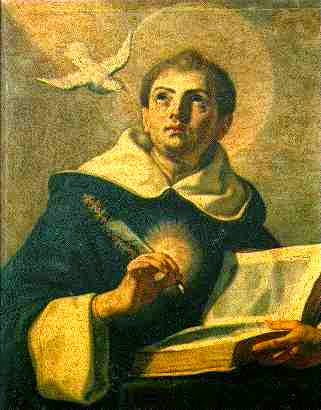


St. Thomas Aquinas
“On the other hand, those who founded sects committed to erroneous doctrines proceeded in a way that is opposite to this, the point is clear in the case of Muhammad. He seduced the people by promises of carnal pleasure to which the concupiscence of the flesh goads us. His teaching also contained precepts that were in conformity with his promises, and he gave free rein to carnal pleasure. In all this, as is not unexpected, he was obeyed by carnal men. As for proofs of the truth of his doctrine, he brought forward only such as could be grasped by the natural ability of anyone with a very modest wisdom. Indeed, the truths that he taught he mingled with many fables and with doctrines of the greatest falsity. He did not bring forth any signs produced in a supernatural way, which alone fittingly gives witness to divine inspiration; for a visible action that can be only divine reveals an invisibly inspired teacher of truth. On the contrary, Muhammad said that he was sent in the power of his arms—which are signs not lacking even to robbers and tyrants.”
-St. Thomas Aquinas (d. 1274), Theologian and Doctor of the Church. Quoted from his De Rationibus Fidei Contra Saracenos, Graecos, et Armenos and translated from Fr. Damian Fehlner’s Aquinas on Reasons for the Faith: Against the Muslims, Greeks, and Armenians (Franciscans of the Immaculate. 2002.).


“We profess Christ to be truly God and your prophet to be a precursor of the Antichrist and other profane doctrine.”
-Sts. Habenitus, Jeremiah, Peter, Sabinian, Walabonsus, and Wistremundus (d. 851), martyrs of Cordoba, Spain. Reported in the Memoriale Sanctorum in response to Spanish Umayyad Caliph ‘Abd Ar-Rahman II’s ministers that they convert to Islam on pain of death.

“Any cult which denies the divinity of Christ, does not profess the existence of the Holy Trinity, refutes baptism, defames Christians, and derogates the priesthood, we consider to be damned.”
-Sts. Aurelius, Felix, George, Liliosa, and Natalia (d. 852), martyrs of Cordoba, Spain. Reported in the Memoriale Sanctorum in response to Spanish Umayyad Caliph ‘Abd Ar-Rahman II’s ministers that they convert to Islam on pain of death.


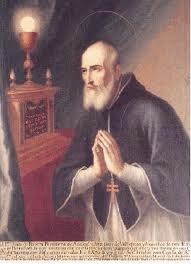
St. Juan de Ribera
“As we have seen, Muhammed had neither supernatural miracles nor natural motives of reason to persuade those of his sect. As he lacked in everything, he took to bestial and barbaric means, which is the force of arms. Thus he introduced and promulgated his message with robberies, murders, and bloodshedding, destroying those who did not want to receive it, and with the same means his ministers conserve this today, until God placates his anger and destroys this pestilence from the earth. […]

(Muhammad) can also be figured for the dragon in the same Apocalypse which says that the dragon swept up a third of the stars and hurled down a third to earth. Although this line is more appropriately understood concerning the Antichrist, Mohammed was his precursor – the prophet of Satan, father of the sons of haughtiness.

[…]

Even if all the things contained in his law were fables in philosophy and errors in theology, even for those who do not possess the light of reason, the very manners (Islam) teaches are from a school of vicious bestialities. (Muhammad) did not prove his new sect with any motive, having neither supernatural miracles nor natural reasons, but solely the force of arms, violence, fictions, lies, and carnal license. It remains an impious, blasphemous, vicious cult, an innovention of the devil, and the direct way into the fires of hell. It does not even merit the name of being called a religion.”
-St. Juan de Ribera (d.1611), Archbishop of Valencia, missionary to Spanish Muslims, and organizer of the Muslim expulsions of 1609 from Spain. Quoted in several locations from his 1599 Catechismo para la Instruccion de los Nuevos Convertidos de los Moros (my translation).


“The Mahometan paradise, however, is only fit for beasts; for filthy sensual pleasure is all the believer has to expect there.”
St. Alfonsus Liguori (d. 1787). Quoted from his book, The History of Heresies and their Refutation.
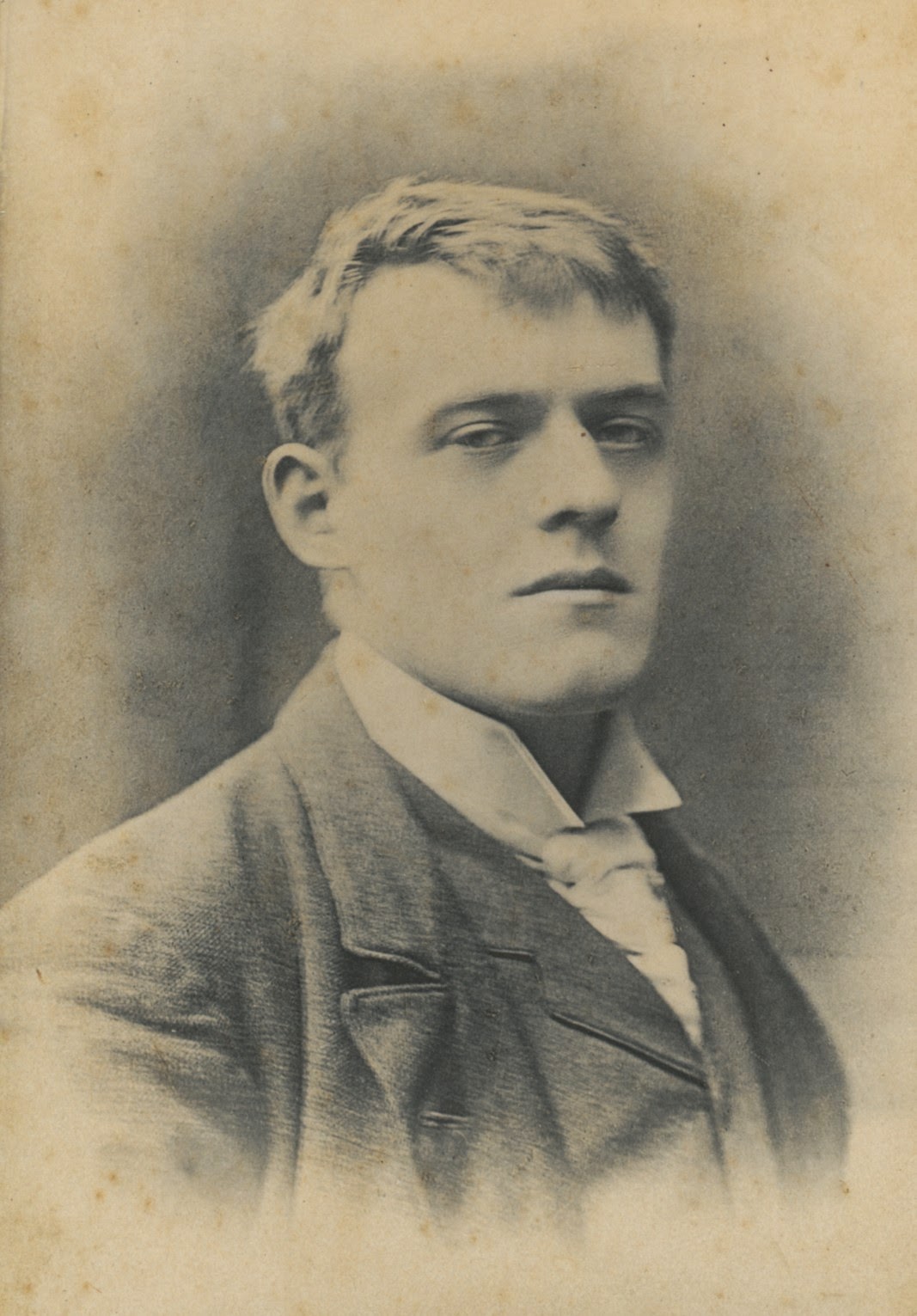


Hilaire Belloc
Hilaire Belloc, the great 20th century Catholic historian and poet, warned in 1929 that Islam would make a return to the world stage:
We shall almost certainly have to reckon with Islam in the near future. Perhaps, if we lose our Faith, it will rise. For after this subjugation of the Islamic culture by the nominally Christian had already been achieved, the political conquerors of that culture began to notice two disquieting features about it. The first was that its spiritual foundation proved immovable; the second that its area of occupation did not recede, but on the contrary slowly expanded.
[...]


“Whoever does not embrace the Catholic Christian faith is lost, like your false prophet Muhammad.”
-St. Peter Mavimenus (d. 8th century), martyr from Gaza. Response reported in the Martyriologum Romanum when he was asked to convert to Islam by a group of Muslims.


+++++++++

Is THIS what we want?
"What is obvious from these statements is that represent a very different view of Islam than we’ve heard from the Vatican in recent years. The recent dormancy of Islam has led many in this generation to believe precisely as Pope Francis does: that it is only Muslim extremists who pose a threat, and that the religion itself is more or less praiseworthy. The experiences of most of the saints throughout Church history, however, taught them the opposite — namely, that Islam and its practices are antithetical to the Catholic faith and those who seek to live it.

In my own youth the decaying power of Islam (for it was still decaying) in the Near East was a strong menace to the peace of Europe. Those old people of whom I speak had grandparents in whose times Islam was still able to menace the West. The Turks besieged Vienna and nearly took it, less than a century before the American Declaration of Independence. Islam was then our superior, especially in military art. There is no reason why its recent inferiority in mechanical construction, whether military or civilian, should continue indefinitely. Even a slight accession of material power would make the further control of Islam by an alien culture difficult. A little more and there will cease that which our time has taken for granted, the physical domination of Islam by the disintegrated Christendom we know.


As Catholics, we need to understand this situation much better than we currently do. When it comes to the variances between what the Church and her saints used to say about Islam and what is being said now, we need to square the circle. With Islamic violence sweeping the Middle East and growing Muslim populations in many formerly-Christian nations, being able to see the reality we face with clarity truthfulness is critical to our ability to evangelize Muslims.

As Christians in Iraq and Syria are learning at their own peril, it may also be the only way we’ll learn to survive them."
Andrew Bieszad
Andrew Bieszad has an MA in Islamic Studies 
from Hartford Seminary with concentration 
in the Islamic equivalent of Dogmatic Theology.


NEW ADDITIONAL INFORMATION.... CHECK OUT THIS SITE
Jihadists recruit children to behead victims


Friday, 22 June 2012

Life of St. Thomas Aquinas

St. Thomas Aquinas, Priest and Doctor of the Church

Thomas Aquinas, O.P. also Thomas of Aquin or Aquino, was an Italian Dominican priest of the Roman Catholic Church, and an immensely influential philosopher and theologian in the tradition of scholasticism, known as Doctor Angelicus ([the] Angelic Doctor), Doctor Communis, or Doctor Universalis.[1] "Aquinas" is not a surname, but is a Latin demonym for a resident of Aquino, his place of birth. He was the foremost classical proponent of natural theology, and the father of Thomism. His influence on Western thought is considerable, and much of modern philosophy was conceived in development or refutation of his ideas, particularly in the areas of ethics, natural law, metaphysics, and political theory.
                Thomas is held in the Catholic Church to be the model teacher for those studying for the priesthood.[2] The works for which he is best-known are the Summa Theologica and the Summa Contra Gentiles. As one of the 33 Doctors of the Church, he is considered the Church's greatest theologian and philosopher. Pope Benedict XV declared: "This (Dominican) Order ... acquired new luster when the Church declared the teaching of Thomas to be her own and that Doctor, honored with the special praises of the Pontiffs, the master and patron of Catholic schools."
He was the son of Landulph, Count of Aquino, who, when St. Thomas was five years old, placed him under the care of the Benedictines of Monte Casino.  His teachers were surprised at the progress he made, for he surpassed all his fellow pupils in learning as well as in the practice of virtue.
When he became of age to choose his state of life, St. Thomas renounced the things of this world and resolved to enter the Order of St. Dominic in spite of the opposition of his family. In 1243, at the age of seventeen, he joined the Dominicans of Naples.  Some members of his family resorted to all manner of means over a two year period to break his constancy.  They even went so far as to send an impure woman to tempt him. But all their efforts were in vain and St. Thomas persevered in his vocation.  As a reward for his fidelity, God conferred upon him the gift of perfect chastity, which has merited for him the title of the "Angelic Doctor".
After making his profession at Naples, he studied at Cologne under the celebrated St. Albert the Great. Here he was nicknamed the "dumb ox" because of his silent ways and huge size, but he was really a brilliant student.  At the age of twenty-two, he was appointed to teach in the same city.  At the same time, he also began to publish his first works. After four years he was sent to Paris. The saint was then a priest. At the age of thirty-one, he received his doctorate.
At Paris he was honored with the friendship of the King, St. Louis, with whom he frequently dined. In 1261, Urban IV called him to Rome where he was appointed to teach, but he positively declined to accept any ecclesiastical dignity. St. Thomas not only wrote (his writings filled twenty hefty tomes characterized by brilliance of thought and lucidity of language), but he preached often and with greatest fruit. Clement IV offered him the archbishopric of Naples which he also refused. He left the great monument of his learning, the "Summa Theologica", unfinished, for on his way to the second Council of Lyons, ordered there by Gregory X, he fell sick and died at the Cistercian monastery of Fossa Nuova in 1274.
St. Thomas was one of the greatest and most influential theologians of all time. He was canonized in 1323 and declared Doctor of the Church by Pope Pius V.
Priest and doctor of the Church, patron of all universities and of students. His feast day is January 28th.
And

Writings of St. Thomas Aquinas


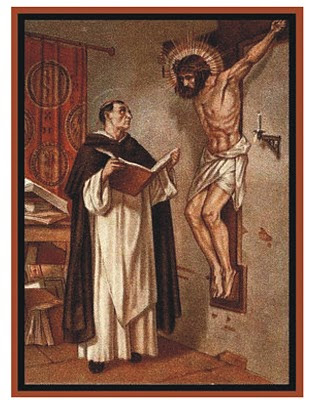
St. Thomas Aquinas with Crucified Christ
Saint Thomas Aquinas, priest

Homily on the 
Feast of Corpus Christi

"O precious and wonderful banquet!
                Since it was the will of God’s only-begotten Son that men should share in his divinity, he assumed our nature in order that by becoming man he might make men gods.  Moreover, when he took our flesh he dedicated the whole of its substance to our salvation.  He offered his body to God the Father on the altar of the cross as a sacrifice for our reconciliation.  He shed his blood for our ransom and purification, so that we might be redeemed from our wretches state of bondage and cleansed from all sin.  But to ensure that the memorial of so great a gift would abide with us forever, he left his body as food and his blood as drink for the faithful to consume in the form of bread and wine.
                O precious and wonderful banquet, that brings us salvation and contains all sweetness!  Could anything be of more intrinsic value?  Under the old law it was the flesh of calves and goats that was offered, but here Christ himself, the true God, is set before us as our food.  What could be more wonderful than this?  No other sacrament has greater healing power; through it sins are purged away, virtues are increased, and the soul is enriched with an abundance of every spiritual gift.  It is offered in the Church for the living and the dead, so that what was instituted for the salvation of all may be for the benefit of all.  Yet, in the end, no one can fully express the sweetness of this sacrament, in which spiritual delight is tasted at its very source, and in which we renew the memory of that surpassing love for us which Christ revealed in his passion.
                It was to impress the vastness of this love more firmly upon the hearts of the faithful that our Lord instituted this sacrament at the Last Supper.  As he was on the point of leaving the world to go to the Father, after celebrating the Passover with his disciples, he left it as a perpetual memorial of his passion.  It was the fulfillment of ancient figures and the greatest of all his miracles, while for those who were to experience the sorrow of his departure, it was destined to be a unique and abiding consolation."

"Since it was the will of God's only-begotten Son that men should share in His divinity. . . when He took our flesh He dedicated the whole of its substance to our salvation. He offered His body to God the Father on the altar of the cross as a sacrifice for our reconciliation He shed His blood for our ransom and purification, so that we might be redeemed from our wretched state of bondage and cleansed from all sin. But to ensure that the memory of so great a gift would abide with us forever, He left His body as food and His blood a drink for the faithful to consume in the form of bread and wine. O precious and wonderful banquet, that brings us sal­vation and contains all sweetness! Could anything be of more intrinsic value? Under the old law it was the flesh of calves and goats that was offered, but here Christ himself, the true God, is set before us as our food."
St. Thomas Aquinas, c. A.D. 1264


Taken from the Liturgy of the Hours, According to the Roman Rite, Ordinary Time, Catholic Book Publishing Corp.  New York, 1975
 and
Roman Catholic Homilies   http://romancatholichomilies.blogspot.ca/2011/01/st-thomas-aquinas-priest-and-doctor-of.html