Ad

Showing posts with label saint. Show all posts

Thursday, 4 October 2018

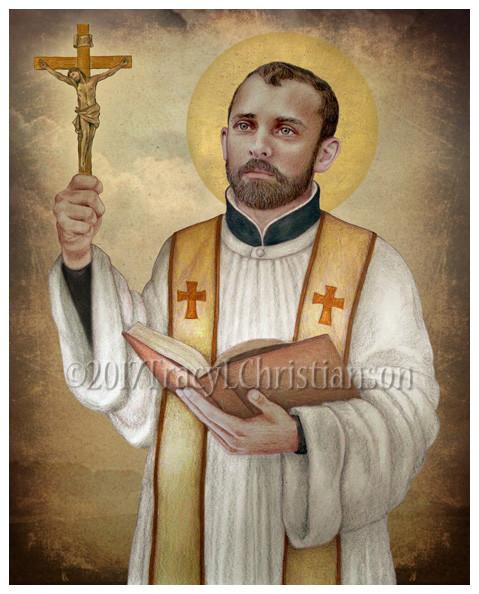
Saint Cajetan August 7


Saint Cajetan, priest
St. Cajetan, priest

August 7

From a letter by Saint Cajetan, priest

Christ dwells in our hearts by Faith

I am a sinner and do not think much of myself; I have recourse to the greatest servants of the Lord, that they may pray for you to the blessed Christ and His Mother.  

But do not forget that all the saints 
can not endear you to Christ 
as much as you can yourself.  

It is entirely up to you.  
If you want Christ to love you 
and help you, 
you must love Him 
and always make an effort to please Him. 


Do not waver in your purpose, because even if all the saints and every single creature should abandon you, He will always be near you, whatever your needs.

You know, of course, that we are pilgrims in this world, on a journey to our true home in heaven.  The man who becomes proud loses his way and rushes to death.  While living here we should strive to gain eternal life.  Yet or ourselves we cannot achieve this since we have lost it through sin; but Jesus Christ ha recovered it for us.  For this reason we must always be grateful to Him and love Him.  We must always obey Him, and as far as possible remain united with Him.


He has offered Himself 
to be our food.  
How wretched is the man 
who knows nothing of such a gift!  

To us has been given the opportunity 
to receive Christ, son of the Virgin Mary, 
and we refuse Him.  
Woe to the man who does 
not care enough to receive Him. 

My daughter, I want what is good for myself; I beg the same for you.  Now there is no other way to bring this about than to ask the Virgin Mary constantly to come to you with her glorious Son.  Be bold!  Ask her to give you her Son, Who in the Blessed Sacrament of the altar is truly food of your soul.  Readily will she give HI to you, still more readily will He come to you, giving you the strength to make your way fearlessly through this dark wood.  In it large numbers of our enemies lie in wait, but they cannot reach us if they see us relying on such powerful help.

Nor, my child, must you receive Jesus Christ simply as a means to further your own plans; 


I want you to surrender to Him, that He may welcome you and, as your divine Saviour, do to you and in you whatever He wills.  

This is what I want, this is what I beg of you, this, as far as I can, is what I compel you to do.

taken from Liturgy of the Hours Weeks 18-34

Saturday, 29 September 2018

St. Therese of the Child Jesus October 1

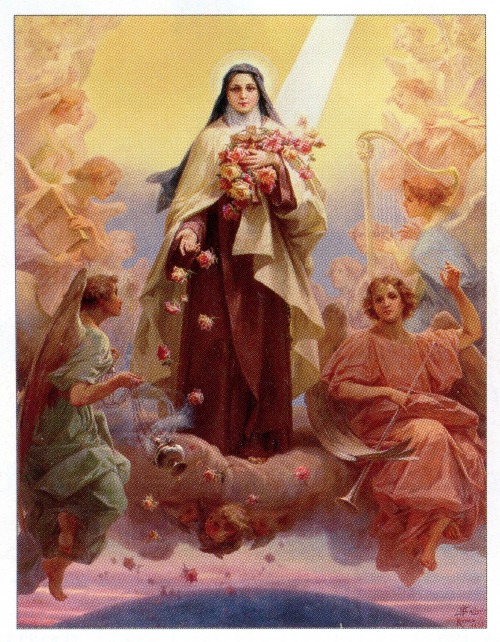
St. Therese of the Child Jesus
St. Therese of the 
Child Jesus, Virgin

Memorial October 1

Saint Therese was born at Alencon in France in 1873.  While still a young girl, she entered the Carmelite monastery at Lisieux.  There she lived a life of humility, evangelical simplicity and trust in God.  By word and example she taught those virtues to the novices of the community.  Offering her life for the salvation of souls and the growth of the Church.  She died September 30, 1897.


St. Therese of the Child Jesus

In the Heart of the Church 
I will be Love
From the autobiography of Saint Therese of the Child Jesus, virgin

Since my longing for martyrdom was powerful and unsettling, I trusted in the epistles of Saint Paul in the hope of finally finding an answer.  By chance the twelfth and thirteenth chapters of the first epistle to the Corinthians caught my attention, and in the first section I read that not everyone can be an apostle, prophet or teacher, that the Church is composed of a variety of members, and that the eye cannot be the hand.  Even with such an answer revealed to me, I was not satisfied and did not find peace.

St. Therese of Lisieux
I persevered in the reading and did let not my mind wander until I found this encouraging theme: Set your desires on the greater gifts.  And I will now show you the way which surpasses all others.  For the Apostle insists that the greater gifts are nothing as all without love and that this same love is surely the best path leading directly to God.  At length I had found peace of mind.

When I looked upon the Mystical body of the Church, I recognized myself in none of the members which Saint Paul described, and what is more, I desired to distinguish myself more favorably within the whole body.  Love appeared to me to be the hinge for my vocation.  Indeed I knew that the Church had a body composed of various members, but in this body the necessary and noble member was not lacking; I knew that the Church had a heart and that such a heart appeared to be aflame with love.  I knew that the one love drove the members of the Church to action, that if this love were extinguished, the apostles would have proclaimed the Gospel no longer, the martyrs would have shed their blood no more.  I saw and realized that love sets off the bounds of all vocation, that love is everyting, that this same love embraces every time and every place.  In one word, that love is everlasting.

Then, nearly ecstatic with supreme joy in my soul, I proclaimed:

 O Jesus, my love! 
at last I have found my calling: 
my call is love!

Certainly I have found my proper place in the Church, and you gave me the very place, my God.  In the heart of the Church, my mother, I will be love, and thus I will be all things, as my desire finds its direction.


Prayer: 

God our Father, you have promised your kingdom to those who are willing to become like little children.  Help us to follow the way of Saint Therese with confidence so that by her prayers we may come to know your eternal glory.   Grant this through Our Lord Jesus Christ, Your Son, Who lives and reigns with you and the Holy Spirit, one God, for ever and ever.

Taken from Liturgy of the Hours, Ordinary Time 18-34  October 1 Therese of the Child Jesus

Friday, 24 February 2017

Preparation for Death - St. Alphonsus Liguori

Death will Come to us all -- how will you greet it?

Preparation for Death or, Considerations on 
the Eternal Truths,
Useful to all as MediTations, 

Serviceable to Priests for Sermons

By St. Alphonsus Liguori


I am currently reading this book and it's content makes you realize the seriousness of our death and eternity... as we all shall die... and we are not certain as to when this will happen -- BUT IT WILL.  It may be this hour, this day, or 30 years from now, but WE WILL ALL EXPERIENCE IT.  The four Truths are Death, Judgment, Heaven and Hell... It's up to us to decide where we want to land up... Heaven or Hell... FOREVER.

I have copied this meditation to share with you and advise you to read the whole book yourself..  See where you are in your life with Christ... it is eye opening. As Lent will shortly be upon us... it's a good book to contemplate and reform our lives....


CONSIDERATION VI


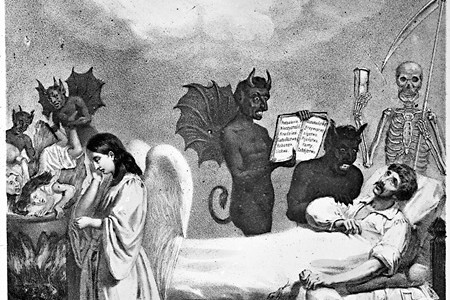
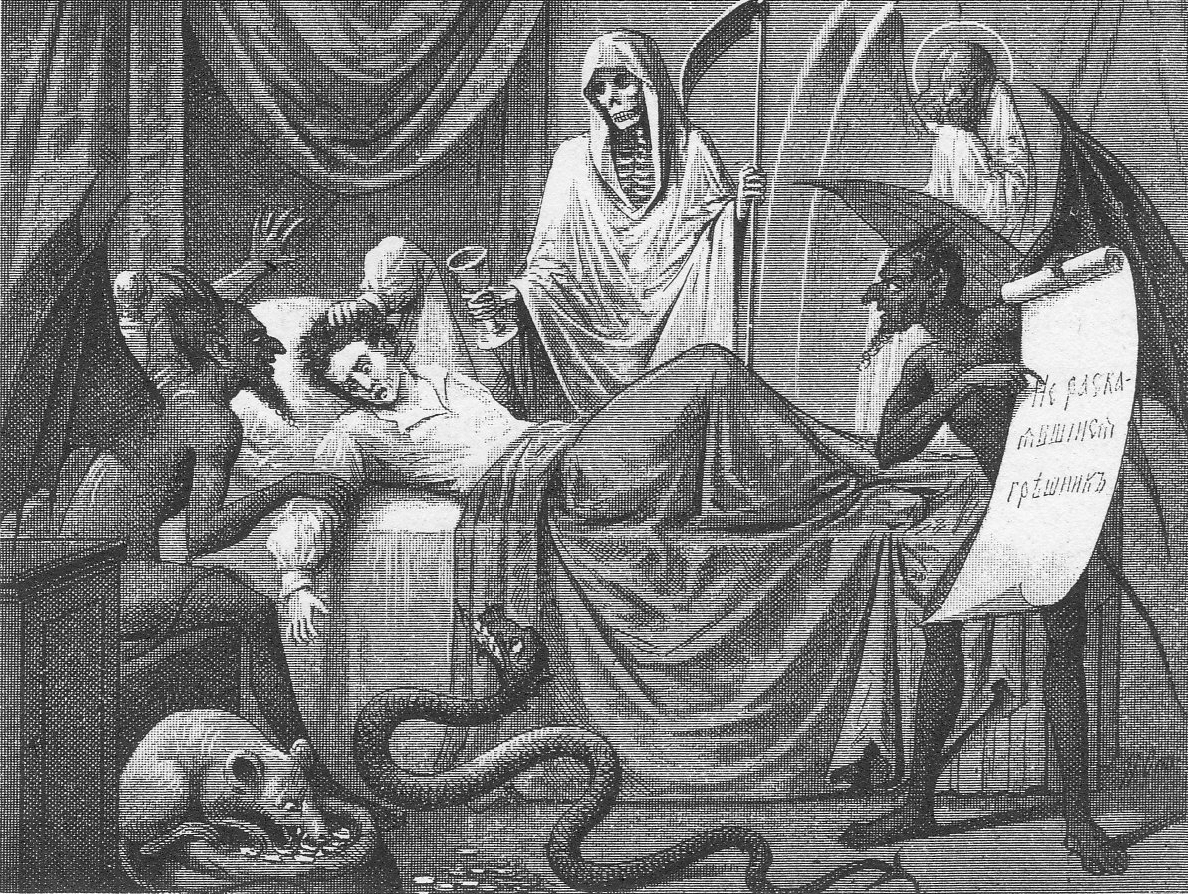
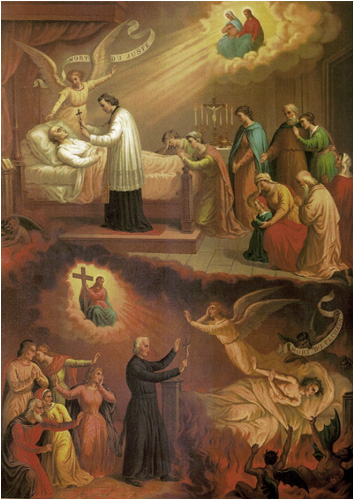
The Death of a Sinner

“When distress cometh upon them, they will seek for peace, and there shall be none.  Trouble shall come  upon trouble.” – Ezekiel 7:25
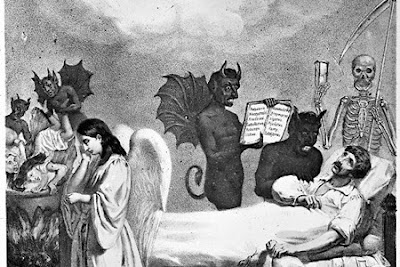

Death of a Sinner


FIRST POINT

The sinner will 
Seek God at Death, 
but He will not 
find Him


At present sinners banish the remembrance and though of death; and thus they seek after peace, though they never find it, in the sinful life which they lead.  But when they are found in the straits of death, on the point of entering into eternity, they shall seek peace, there shall be none.  

Then they will not be able to fly from the torture of their sinful conscience.  They will seek peace; but what peace can be found by a soul loaded with sins that sting it like so my vipers?  

What peace can the sinner enjoy when he sees that he must in a few moments appear before the judgment-seat of Jesus Christ, whose law and friendship he has till then despised?  

Trouble shall come upon trouble.  The news of death, which has been already announced, the thought of being obliged to take leave of everything in this worlds, the remorse of conscience, the time lost, the want of time at present, the rigor of the divine judgments, the unhappy eternity which awaits sinners all these things will form a horrible tempest, which will confuse the mind, will increase his apprehensions; and thus, full of confusion and distrust, the dying sinner will pass to the other world.  

Trusting in the divine promise, Abraham with great merit, hoped in God, against human hope. (Romans 4:18) 

But sinners, with great demerit, 
hope falsely and to their own perdition, 
not only against hope but also against faith; 
because they despise the menace of God 
against all who are obstinate in sin.  

They are afraid of a bad death, 

but they fear not to lead a wicked life.  

But who has assured them that they will not suddenly be deprived of life by a thunderbolt, by apoplexy, or by the bursting of a blood vessel?  And were they at death even allowed time for repentance, who assures them that they will be sincerely return to God?  

To conquer bad habits, St. Augustine had to fight against them for twelve years.  How will the dying man, who has always lived in sin, be able, in the midst of the pains, the stupefaction, and the confusion of death, to repent sincerely of all his past iniquities?  
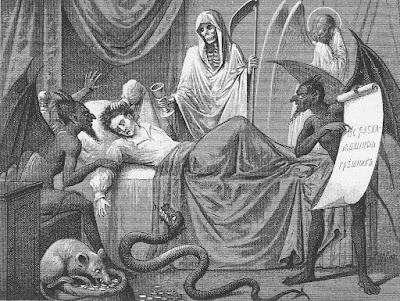
Death is Near Your Sins are Before You!

I say sincerely, 
because it is not enough to say 
and to promise 
with the tongue: 
it is necessary to promise 
with the heart!  

O God! What terror and confusion will seize the unhappy Christian who has led a careless life, when he finds himself overwhelmed with sins, with the fears of judgment, of hell and of eternity!  

Oh! What confusion will these thoughts produce when the dying sinner will find his reason gone, his mind darkened, and his whole frame assailed by the pains of approaching death.  He will make his confession; he will promise, weep, and seek mercy from God, but without understanding what he does; and in this tempest of agitation, of remorse, of pains and terrors, he will pass to the other life.  

The people shall be troubled, and they shall pass (Job 34:20) A certain author says that the prayers, the wailings, and promises of dying sinners are like the tears and promises of a man assailed by an enemy who points a dagger to his throat to take away his life.  Miserable the man who takes to his bed at enmity with God, and passes from the bed of sickness to eternity.


Affections and Prayers
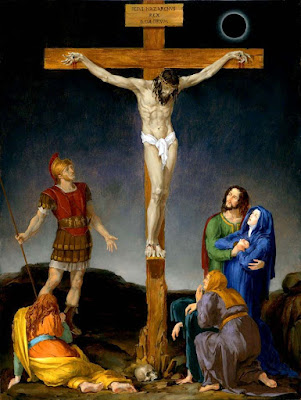
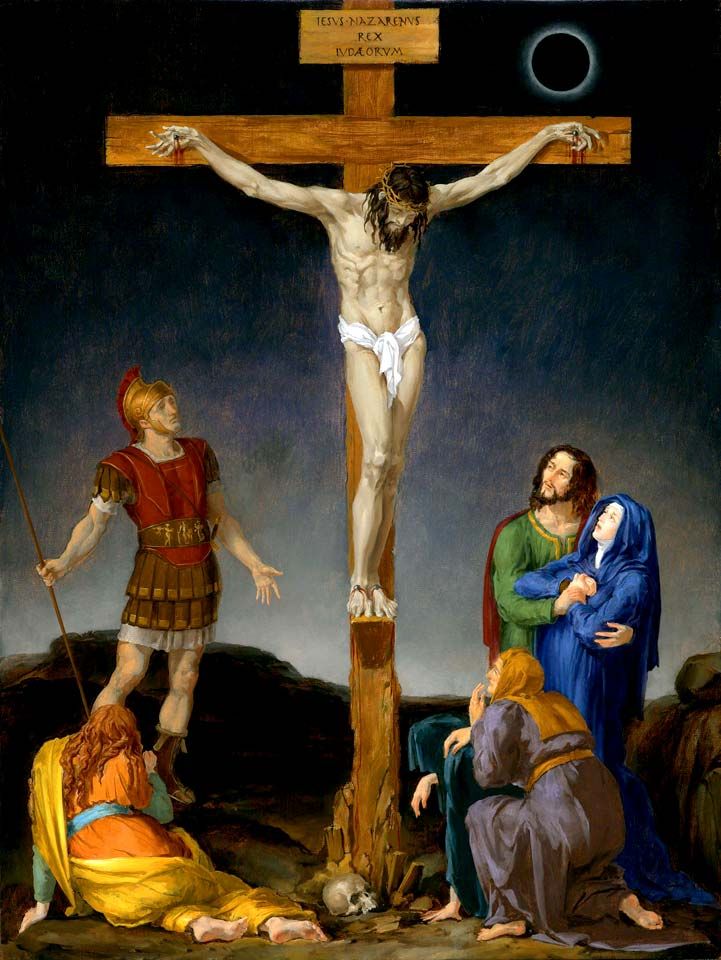
Christ Crucified


O wounds of Jesus! You are my hope.  I should despair of the pardon of my sins, and of my eternal salvation, did I not behold you, the fountains of mercy and grace, through which a God has shed all his blood, to wash my soul from the sins which I have committed.  


I adore you, then, O holy wounds! And trust in You.  I detest a thousand times, and curse those vile pleasures by which have displeased my Redeemer, and have miserably lost His friendship.  


Looking then at Thee, I raise up my hopes, and turn my affections to Thee.  My dear Jesus, Thou deservest to be loved by all men, and to be loved with their whole heart.  I have so grievously offended Thee, I have despised Thy love; but, notwithstanding my sinfulness, Thou hast bourne with me so long, and invited me to pardon with so much mercy.  


Ah, my Saviour, do not permit me evermore to offend Thee, and to merit my own damnation. 
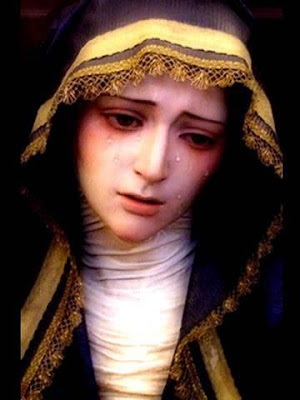
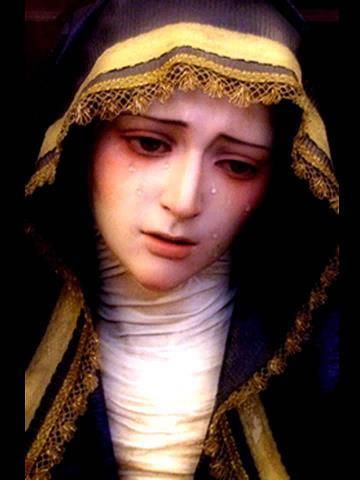
Sorrowful Mother of God

O, God! What torture should I feel in hell at the sight of Thy blood and of the great mercies Thou has shown me.  


I love Thee, and will always love Thee.  Give me holy perseverance.  Detach my heart from all love which is not for Thee and confirm in me a true desire, a true resolution henceforth, to love only Thee, my sovereign good.  


O Mary, my Mother! Draw me to God, and obtain for me the grace to belong entirely to him before I die.


More insight see this homily Twenty-Second Sunday After Pentecost by Fr. Francis Xavier Weninger, 1877
Friday, 9 December 2016

Prayer - Desire of the Heart

Prayer is the Desires of the Heart 

The Desire of Your Heart 
Constitutes Your Prayer

From a discourse on the psalms by Saint Augustine, bishop

In the anguish of my heart I groaned aloud. There is a hidden anguish which is inaudible to men.  Yet when a man’s heart is so taken up with some particular concern that the hurt inside finds vocal expression, one looks for the reason.  And one will say to oneself: perhaps this is what causes his anguish, or perhaps such and such has happened to him.  

                 But who can be certain of the cause except God, 
                        who hears and sees his anguish?  

Therefore the psalmist says: In the anguish of my heart I groaned aloud. For if men hear at all, they usually hear only bodily groaning and know nothing of the anguish of the heart from which it issues.

Who then knows the cause of man’s groaning? All my desire is before you.  No, it is not open before other men, for they cannot understand the heart; but before you is all my desire. 

If your desire lies open to Him who is your Father 
and Who sees in secret, He will answer you.

For the desire of your heart is itself your prayer.

And if the desire is constant, so is your prayer.  The Apostle Paul had a purpose in saying: Pray without ceasing.  Are we then ceaselessly to bend our knees, to lie prostrate, or to lift up our hands?  Is this what is meant in saying: Pray without ceasing? Even if we admit that we pray in this fashion, I do not believe that we can do so all the time.

Yet there is another, interior kind of prayer without ceasing, namely, the desire of the heart. 

Whatever else you may be doing, 
if you but fix your desire on God’s Sabbath rest, 
your prayer will be ceaseless.
 
Therefore, if you wish to pray without ceasing, 
do not cease to desire.

The constancy of your desire will itself be the ceaseless voice of your prayer.  And that voice of your prayer will be silent only when your love ceases.  For who is silent?  Those of whom it is said: Because evil has abounded, the love of many will grow cold.

St. Augustine of Hippo
The chilling of love means that the heart is silent; while burning love is the outcry of the heart.  

If your love is without ceasing, you are crying out always; if you always cry out, you are always desiring; and if you desire, you are calling to mind your eternal rest in the Lord.

And all my desire is before you. What if the desire of our heart is before him, but not our groaning?  But how is that possible since the groaning is the voice of our desire?  And therefore it is said: My groaning is not concealed from you. It may be concealed from men, but it is not concealed from you.  Sometimes God’s servant seems to be saying in his humility: My anguish is not concealed from you.  At other times he seems to be laughing.  Does that mean that the desire of his heart has died within him?  If the desire is there, then the groaning is there as well.  Even if men fail to hear it, it never ceases to sound in the hearing of God.


“We are Christ’s pilgrim people, 
journeying until we reach our homeland, 
singing on the way as we eagerly 
expect the fulfillment of our hope. 
For if one hopes, even though his tongue is still, 
he is singing always in his heart.

But the man who has no hope, 
no matter what clamors and shouts 
he makes to be heard by men, 
is speechless in the presence of God.”

God's pilgrim on the journey


Excerpt from the Liturgy of the Hours Friday, 3rd Week of Advent

Friday, 6 December 2013

St. Nicholas -- A True Christian


St. Nicholas  

Feast Day --December 6


Born: March 15, 270 AD, Patara, Turkey  

Died: December 6, 343 AD, Myra, Turkey

(Greek: Ἅγιος Νικόλαος, Hagios Nikólaos, Latin: Sanctus Nicolaus, 
Bulgarian: Св. Николай);
Also Known as Nikolaos of Myra and  Nikolaos the Wonderworker.

In 270AD, Nicholas was born in a city named Patara in Greece, now presently on the southern coast of Turkey.  His parents died when he was still young from an epidemic after raising him as a devout Christian.  He inherited great wealth in which he used to help the poor, needy, sick and suffering.  While still young he dedicated his whole life to God.

He was appointed Bishop of Myra, through a sign given to a wise bishop, who, being part of a group of bishops, was given the task of replacing the deceased Bishop of Myra.  So you can say it was a divine appointment. 


St. Nicholas was a great saint who walked the path of Christ in his life by helping the poor and those in need.  His selflessness is still honored today by his Feast Day and traditions that have grown around his legend.  He is considered the Patron Saint of many, from children, sailors, pawn brokers, brides, maidens etc. (see the list at  http://www.stnicholascenter.org/pages/people/).

There are many stories and legends about the Saint’s many miracles and undertakings.  He is known to have secretly given sacks of gold through a window of a poor man, who had three daughters, to pay their dowries.  Without the dowries these girls would have been sold into slavery.  This has been said to have started the tradition of Christmas stockings.


There is much to learn about this great saint that would fill many pages.  In my research I have discovered a treasure trove of information from reliable sites… He is much more than the giver of toys at Christmas.  I think it to be very beneficial to learn more about St. Nicholas who gives us an excellent example on how to live a truly Christian life. 

Here are a few stories from a few of these sites:

“Children around the world know and love St. Nicholas—for he brings gifts and treats in December.  He is known by different names—and even looks different from place to place.  But, it is the same St. Nicholas who delights with small surprises and good things to eat.   Nicholas gave in secret, alert to others' needs, and expecting nothing for himself in return.

   It is this selfless generosity 
which seeks only 
the good of the other 
that made Nicholas' 
gifts the gifts of a saint.


In the West the saint's image changed between the eleventh and twelfth centuries from a rather severe figure to the compassionate children's friend, giving gifts on St. Nicholas Day.   As early as 1163 it was observed in Utrecht, the Netherlands.   During the same time span, the 12th century, French nuns began leaving candy and gifts outside the doors of children in need.   


The St. Nicholas Day children's gift-giving custom spread through the Low Countries, Germany, Austria, France, Switzerland and England.   It took root across most of northern and central Europe, as far east as Romania.    

Henry Machyn described the 1550s London feast day processions, led by people dressed as St. Nicholas, that "went abroad in most parts of London singing after the old fashion," and were "received among good people into their houses, and had much good cheere as ever they had in many places."1  

15th century Swiss writer Hospinian wrote: It was the custom for parents, on the vigil of St Nicholas, to convey secretly presents of various kinds to their little sons and daughters who were taught to believe that they owed them to the kindness of St Nicholas and his train, who, going up and down among the towns and villages, came in at the windows, though they were shut, and distributed them…”  

“…Nicholas' mode of entry shifted from windows to chimneys.   There were no chimney's in Lycia when Nicholas lived—they simply did not exist and most cooking took place outdoors.   Chimneys, as we know them, appeared in colder Europe during the 13th century.   Art from that time begins to show Nicholas' charity being delivered via chimney, rather than window…” 

Who is St. Nicholas?

Nicholas As a Gift Giver:

General information about St. Nicholas:

Ever wonder what St. Nicholas really looked like?? Check out this page…

Relics of the Saint:

St. Nicholas in Art: