Showing posts with label Pope Francis. Show all posts
Showing posts with label Pope Francis. Show all posts
Monday, 21 March 2022


Tuesday, 1 March 2022
Tuesday, 30 March 2021
Friday, 26 March 2021
Saturday, 14 May 2016
Women Deacons.--- Ummm NO IT'S NOT GOING TO HAPPEN!!!
Women deacons?

The Pope is once again causing confusion... HERE.*sigh*
I am a Catholic woman proud of the roles I and other women parishioners play in the Church-- so I'm not a "chauvinistic pig"...
We women do have a vital and great role in the Church BUT NOT IN THE DIACONATE OR HOLY ORDERS!!!
For those who think women are second rate citizens in the Church please, look around you. WE ARE NOT!
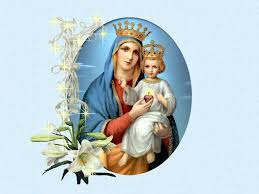

We follow Our Holy Mother Mary
the Great Mother of God
SHE IS NOT A SECOND RATE CITIZEN!!!
There are many responsibilities that women fill. I know in our parish, it's the women who insure that the Liturgical aspects are taken care of - the decorating for Feast Days, cleaning of the Altar cloths etc. for Mass, Fund raising committees, and much more! Working behind the scenes but still very important to the Church.
Here are some more examples:
~ They have equal rights to be sponsors at Baptism and
Confirmation.
~ Women can serve on the parish council and
finance committees.
~ They can be readers at Mass,
~ They can work in the parish office
~ Teach
Religious Ed, and so on, just like their male counterparts.
~ And many parishes
have women pastoral associates — usually nuns or religious sisters who help the
pastor with many spiritual and pastoral duties.
~ The Church has women who are
canon lawyers, judges, and chancellors across the country.
~ Usually through
religious communities that saw women leading universities, hospitals, and even
Catholic newspapers, long before their secular sisters were able to take
advantage of similar opportunities.

A GREAT EXAMPLE OF WHAT A WOMAN CAN ACCOMPLISH IN THE CATHOLIC CHURCH IS
 THE VERY HOLY WOMAN
MOTHER ANGELICA
who herself was called
BY GOD
and answered Him to start
the International Catholic Network EWTN...
that reaches millions of souls around the world!!
She didn't have to be a priest or deacon for that!
My own opinion is that
to push for women deacons and priests
is a sign of PRIDE, which is a MORTAL SIN.
JESUS DID NOT HAVE WOMEN APOSTLES...
I, in all humility, will follow Our Lord Jesus Christ and the Magisterium!! And be a faithful slave and servant to His Holy Mother!!!
Proof From the Vatican website:
IV. The Ministry of Deaconesses
In the apostolic era different forms of diaconal assistance
offered to the Apostles and communities by women seem to have been
institutional. Thus Paul recommends to the community at Rome "our sister
Phoebe, servant [he diakonos] of the Church at Cenchreae" (cf. Rom
16:1-4). Although the masculine form of diakonos is used here, it cannot therefore
be concluded that the word is being used to designate the specific function of
a "deacon"; firstly
because in this context diakonos still signifies
servant in a very general sense, and secondly because the word
"servant" is not given a feminine suffix but preceded by a feminine
article.
What seems clear is that Phoebe exercised a recognised service in the
community of Cenchreae, subordinate to the ministry of the Apostle. Elsewhere
in Paul's writings the authorities of the world are themselves called diakonos
(Rom 13:4), and in Second Corinthians 11:14-15 he refers to diakonoi of the
devil.
Exegetes are divided on the subject of First Timothy 3:11.
The mention of "women" following the reference to deacons may suggest
women deacons (by parallel reference), or the deacons' wives who had been
mentioned earlier. In this epistle, the functions of the deacon are not
described, but only the conditions for admitting them.
It is said that women
must not teach or rule over men
(1 Tim 2:8-15).
But the functions of governance
and teaching were in any case reserved to the bishop (1 Tim 3:5) and to priests
(1 Tim 5:17), and not to deacons.
Widows constituted a recognised group in the
community, from whom they received assistance in exchange for their commitment
to continence and prayer. First Timothy 5:3-16 stresses the conditions under
which they may be inscribed on the list of widows receiving relief from the
community, and says nothing more about any functions they might have.
Later on
they were officially "instituted" but "not ordained";58
they constituted an "order" in the Church,59 and would never have any
other mission apart from good example and prayer.
At the beginning of the second century a letter from Pliny
the Younger, governor of Bithynia, mentioned two women who were described by
the Christians as ministrae, the probable equivalent of the Greek diakonoi (10,
96-97). It was not until the third century that the specific Christian
termsdiaconissa or diacona appeared.
From the end of the third century on-wards, in certain regions
of the Church 60 (and not all of them), a specific ecclesial ministry is
attested to on the part of women called deaconesses.61 This was in Eastern
Syria and Constantinople. Towards 240 there appeared a singular
canonico-liturgical compilation, the Didascalia Apostolorum (DA), which was not
official in character. It attributed to the bishop the features of an
omnipotent biblical patriarch (cf. DA 2, 33-35, 3). He was at the head of a
little community which he governed mainly with the help of deacons and
deaconesses. This was the first time that deaconesses appeared in an
ecclesiastical document.
In a typology borrowed from Ignatius of Antioch, the
bishop held the place of God the Father, the deacon the place of Christ, and
the deaconess that of the Holy Spirit (the word for "Spirit" is
feminine in Semitic languages), while the priests (who are seldom mentioned)
represented the Apostles, and the widows, the altar (DA 2, 26, 4-7). There is
no reference to the ordination of these ministers.
The Didascalia laid stress on the charitable role of the
deacon and the deaconess. The ministry of the diaconate should appear as
"one single soul in two bodies". Its model is the diakonia of Christ,
who washed the feet of his disciples (DA 3, 13, 1-7). However, there was no
strict parallelism between the two branches of the diaconate with regard to the
functions they exercised.
The deacons were chosen by the bishop to
"concern themselves about many necessary things", and the deaconesses
only "for the service of women" (DA 3, 12, 1).
The hope was expressed
that "the number of deacons may be proportionate to that of the assembly
of the people of the Church" (DA 3, 13, l).62 The deacons administered the
property of the community in the bishop's name. Like the bishop, they were
maintained at its expense. Deacons are called the ear and mouth of the bishop
(DA 2, 44, 3-4). Men from among the faithful should go through the deacons to
have access to the bishop, as women should go through the deaconesses (DA 3,
12, 1-4). One deacon supervised the entries into the meeting place, while
another attended the bishop for the Eucharistic offering (DA 2, 57, 6).
Deaconesses should carry out the anointing of women in the
rite of baptism, instruct women neophytes, and visit the women faithful, especially
the sick, in their homes.
They were forbidden to confer baptism themselves, or
to play a part in the Eucharistic offering (DA 3, 12, 1-4).
The deaconesses had
supplanted the widows. The bishop may still institute widows, but they should
not either teach or administer baptism (to women), but only pray (DA 3, 5, 1-3,
6, 2).
The Constitutiones Apostolorum, which appeared in Syria
towards 380, used and interpolated the Didascalia, the Didache and the Traditio
Apostolica. The Constitutiones were to have a lasting influence on the
discipline governing ordinations in the East, even though they were never
considered to be an official canonical collection. The compiler envisaged the
imposition of hands with the epiklesis of the Holy Spirit not only for bishops,
priests and deacons, but also for the deaconesses, sub-deacons and lectors (cf.
CA 8, 16-23).
63The concept of kleros Was broadened to all those who exercised a
liturgical ministry, who were maintained by the Church, and who benefited from
the privileges in civil law allowed by the Empire to clerics, so that the
deaconesses were counted as belonging to the clergy while the widows were
excluded.
Bishop and priests were paralleled with the high priest and the
priests respectively of the Old Covenant, while to the Levites corresponded all
the other ministries and states of life: "deacons, lectors, cantors,
door-keepers, deaconesses, widows, virgins and orphans" (CA 2, 26, 3; CA
8, 1, 21).
The deacon was placed "at the service of the bishop and the
priests" and should not impinge on the functions of the latter.64 The
deacon could proclaim the Gospel and conduct the prayer of the assembly (CA 2,
57, 18), but only the bishop and the priests exhorted (CA 2, 57, 7).
Deaconesses took up their functions through an epithesis cheirôn or imposition
of hands that conferred the Holy Spirit,65 as did the lectors (CA 8, 20, 22).
The bishop pronounced the following prayer: "Eternal God, Father of our
Lord Jesus Christ, creator of man and woman, who filled Myriam, Deborah, Anne
and Hulda with your spirit; who did not deem it unworthy for your Son, the
Only-Begotten, to be born of a woman; who in the tent of witness and in the
temple did institute women as guardians of your sacred doors, look now upon
your servant before you, proposed for the diaconate: grant her the Holy Spirit
and purify her of all defilement of flesh and spirit so that she may acquit
herself worthily of the office which has been entrusted to her, for your glory
and to the praise of your Christ, through whom be glory and adoration to you,
in the Holy Spirit, world without end. Amen."66
The deaconesses were named before the sub-deacon who, in his
turn, received a cheirotonia like the deacon (CA 8, 21), while the virgins and
widows could not be "ordained" (8, 24-25).
The Constitutiones insist
that the deaconesses should have no liturgical function (3, 9, 1-2), but should
devote themselves to their function in the community which was "service to
the women" (CA 3, 16, 1)
and as intermediaries between women and the
bishop. It is still stated that they represent the Holy Spirit, but they
"do nothing without the deacon" (CA 2, 26, 6). They should stand at
the women's entrances in the assemblies (2, 57, 10). Their functions are summed
up as follows:
"The deaconess does not bless, and she does not fulfil any
of the things that priests and deacons do, but she looks after the doors and
attends the priests during the baptism of women, for the sake of decency"
(CA 8, 28, 6).
This is echoed by the almost contemporary observation of
Epiphanius of Salamis in his Panarion, in around 375:
"There is certainly
in the Church the order of deaconesses, but this does not exist to exercise the
functions of a priest, nor are they to have any undertaking committed to them,
but for the decency of the feminine sex at the time of baptism."
67A law
of Theodosius of 21 June 390, revoked on 23 August of the same year, fixed the
age for admission to the ministry of deaconesses at 60. The Council of
Chalcedon (can. 15) reduced the age to 40, forbidding them subsequent
marriage.68
Even in the fourth century the way of life of deaconesses
was very similar to that of nuns. At that time the woman in charge of a
monastic community of women was called a deaconess, as is testified by Gregory
of Nyssa among others.69 Ordained abbesses of the monasteries of women, the
deaconesses wore the maforion, or veil of perfection. Until the sixth century
they still attended women in the baptismal pool and for the anointing. Although
they did not serve at the altar, they could distribute communion to sick women.
When the practice of anointing the whole body at baptism was abandoned,
deaconesses were simply consecrated virgins who had taken the vow of chastity.
They lived either in monasteries or at home. The condition for admission was
virginity or widowhood and their activity consisted of charitable and
health-related assistance to women.
At Constantinople the best-known of the fourth-century
deaconesses was Olympias, the superior of a monastery of women, who was a protegee
of Saint John Chrysostom and had put her property at the service of the Church.
She was "ordained" (cheirotonein) deaconess with three of her
companions by the patriarch. Canon 15 of the Council of Chalcedon (451) seems
to confirm the fact that deaconesses really were "ordained" by the
imposition of hands (cheirotonia). Their ministry was called leitourgia and
after ordination they were not allowed to marry.
In eighth-century Byzantium, the bishop still imposed his
hands on a deaconess, and conferred on her the orarion or stole (both ends of
which were worn at the front, one over the other);
he gave her the chalice,
which she placed on the altar without giving communion to anyone.
Deaconesses
were ordained in the course of the Eucharistic liturgy, in the sanctuary, like
deacons.70 Despite the similarities between the rites of ordination,
deaconesses did not have access to the altar or to any liturgical ministry.
These ordinations were intended mainly for the superiors of monasteries of
women.
It should be pointed out that in the West there is no trace
of any deaconesses for the first five centuries.
The Statuta Ecclesiae antiqua
laid down that the instruction of women catechumens and their preparation for
baptism was to be entrusted to the widows and women religious "chosenad
ministerium baptizandarum mulierum".71
Certain councils of the fourth and
fifth centuries reject every ministerium feminae72 and forbid any ordination of
deaconesses.73 According to the Ambrosiaster (composed at Rome at the end of
the fourth century),
the female diaconate was an adjunct of Montanist
("Cataphrygian") heretics.74
In the sixth century women admitted into
the group of widows were sometimes referred to as deaconesses. To prevent any
confusion the Council of Epaone forbade "the consecrations of widows who
call themselves deaconesses".75 The Second Council of Orleans (533)
decided to exclude from communion women who had "received the blessing for
the diaconate despite the canons forbidding this and who had remarried".76
Abbesses, or the wives of deacons, were also called diaconissae, by analogy
with presbyterissae or even episcopissae.77
The present historical overview shows that a ministry of
deaconesses did indeed exist, and that this developed unevenly in the different
parts of the Church.
It seems clear that this ministry was not perceived as
simply the feminine equivalent of the masculine diaconate.
At the very least it
was an ecclesial function, exercised by women, sometimes mentioned together
with that of sub-deacon in the lists of Church ministries.78 Was this ministry
conferred by an imposition of hands comparable to that by which the episcopate,
the priesthood and the masculine diaconate were conferred? The text of the
Constitutiones Apostolorum would seem to suggest this, but it is practically
the only witness to this, and its proper interpretation is the subject of much
debate.79 Should the imposition of hands on deaconesses be considered the same
as that on deacons, or is it rather on the same level as the imposition of
hands on sub-deacons and lectors? It is difficult to tackle the question on the
basis of historical data alone. In the following chapters some elements will be
clarified, and some questions will remain open. In particular, one chapter will
be devoted to examining more closely how the Church through her theology and
Magisterium has become more conscious of the sacramental reality of Holy Orders
and its three grades. But first it is appropriate to examine the causes which
led to the disappearance of the permanent diaconate in the life of the Church.
[end quote]
Vatican link: http://www.vatican.va/roman_curia/congregations/cfaith/cti_documents/rc_con_cfaith_pro_05072004_diaconate_en.html
'No need for the Pope to tell the world he is going to get a
commission together to look into this already looked into and defined subject.
He is only causing confusion and discord once again!'
Thanks to the Connecticut Catholic Corner for this article!! http://connecticutcatholiccorner.blogspot.ca/
Tuesday, 25 August 2015
Filial Appeal to Pope Francis Sign the Petition

Half a Million Ask the Pope for Clarity
The Filial Appeal to Pope Francis has been signed by prominent clergy and Catholic leaders

DETROIT, August 24, 2015 (ChurchMilitant.com) - More than half a million faithful are asking the Pope for clarity.
The Filial Appeal to Pope Francis has garnered the signatures of leading prelates and lay Catholics, and pleads with the Holy Father to put an end to the worldwide confusion over Church teaching on marriage and the family.
Your Holiness, in light of information published on the last Synod, we note with anguish that, for millions of faithful Catholics, the beacon seems to have dimmed in face of the onslaught of lifestyles spread by anti-Christian lobbies. In fact we see widespread confusion arising from the possibility that a breach has been opened within the Church that would accept adultery — by permitting divorced and then civilly remarried Catholics to receive Holy Communion — and would virtually accept even homosexual unions when such practices are categorically condemned as being contrary to Divine and natural law. ...Truly, in these circumstances, a word from Your Holiness is the only way to clarify the growing confusion amongst the faithful. It would prevent the very teaching of Jesus Christ from being watered down and would dispel the darkness looming over our children's future should that beacon no longer light their way.Holy Father, we implore You to say this word.
Nearly 90 bishops and almost 150 priests have signed the petition, including former prefect of the Apostolic Signatura Raymond Cardinal Burke, Bishop Athanasius Schneider of Kazakhstan, and Bishop Robert Vasa of Santa Rosa, California. Other signatories include bishops from nearly every continent.
Prominent political leaders and royalty who have signed the document include H.R.H. Prince Dom Duarte, Duke of Braganza, Head of the Royal House of Portugal; H.I.R.H. Prince Dom Luiz of Orleans-Braganza, Head of the Imperial House of Brazil; Kigeli V, exiled King of Rwanda; and various current or former members of parliament in Europe and other countries. Professors, attorneys, authors and Catholic activists have also signed the petition.
To add your name to the petition, click on this link.
Wednesday, 15 January 2014
POPE FRANCIS MISQUOTES AND FALSEHOODS DISCREDITING THE CATHOLIC CHURCH
 |
| Internet Hoaxes and Lies Regarding Pope Francis and the Catholic Church |
POPE FRANCIS MISQUOTES
AND FALSEHOODS
DISCREDITING
THE CATHOLIC CHURCH
Poor Pope Francis--he has been misquoted so
many times, his words twisted and even complete lies that have been spread
about what he has said or didn’t say since his election in 2013.
There are many ‘antichrists’ who will do
anything in their power to create confusion in the world making statements that
were twisted to suit the desires of those who want changes made in the Catholic
Church…CHANGES THAT WILL NEVER HAPPEN
as they are dogmas from the beginning of the Church coming down from the
Apostles and Christ Himself.
One such article that
I discovered was sent to me as an email-- a
complete invention of it’s writer, Erik Thorsen on his site called "Diversity Chronicle" that went viral
on the internet completely confusing people who are not well-informed as to the
truth of the Catholic Church. Even those
declaring themselves to be Catholic. He
stated that Pope Francis said that there was no hell, that all religions are
true and that the Church has changed it’s teaching on homosexual behavior. All of course these claims are untrue. Mr. Thorsen stated that these new teachings
were from the third Vatican Council…. THERE HAS NOT BEEN A THIRD VATICAN
COUNCIL. Read more at http://www.ncregister.com/blog/jimmy-akin/dont-fall-for-this-pope-francis-hoax-5-things-to-know-and-share/.
Thorsen and many others in this world can’t tolerate
the Catholic Church’s stand on fundamental beliefs such as abortion,
homosexuality, women priests, etc. so they try to confuse the world’s
population with lies to turn their beliefs into an attitude positive to their
whims.
I feel every Catholic should take a stand and
tell the truth about the Church’s teachings.
It’s past time that we truly stood for our beliefs and stop letting the
so called relativism or liberals run atop of us. We have been too lax in standing up for what
is right and letting those with louder voices rule. Hence, the continuing corruptness of the world
today.
The worldly view is that the Catholic Church is
‘behind the times’ and ‘bigoted’. Of
course, the opposite is true. The
teachings that have come down through 2000 years are just a viable as they were
in the beginning. It’s the world that
has changed in a very immoral way—trying to make everything that is ‘sinful’ good and everything good as ‘sinful or evil’.
If we truly believe in
the teachings of the Church and want to follow her, we must know our faith.
Those who just attend Christmas Mass or occasionally come to a Sunday
Mass and even those who are faithfully attending Mass every Sunday and during
the week need to know what the truth is that the Church teaches.
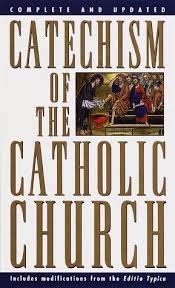 I recommend getting a copy of the Catechism of
the Catholic Church promulgated for the Catholic Church by Pope John Paul II
(soon to be lifted to sainthood this year 2014). In it is all the dogmas and truths that the
Church stands for. (You can even go
on-line as the Catechism of the Catholic Church has been added to the internet
by the Vatican itself. Go to http://www.vatican.va/archive/ENG0015/_INDEX.HTM
. “The decision to publish a catechism
was taken at the Extraordinary Assembly of the Synod of Bishops that was convened
by Pope John Paul II on 25 January 1985 for the 20th anniversary of the close
of the Second Vatican Council, and in 1986, the pope put a commission composed
of 12 bishops and cardinals in charge of the project.[2] The commission was
assisted by a seven member committee including diocesan bishops and experts in
theology and catechesis.[2] Read more
about the conception of the Catechism of the Catholic Church on Wikipedia http://en.wikipedia.org/wiki/Catechism_of_the_Catholic_Church
I recommend getting a copy of the Catechism of
the Catholic Church promulgated for the Catholic Church by Pope John Paul II
(soon to be lifted to sainthood this year 2014). In it is all the dogmas and truths that the
Church stands for. (You can even go
on-line as the Catechism of the Catholic Church has been added to the internet
by the Vatican itself. Go to http://www.vatican.va/archive/ENG0015/_INDEX.HTM
. “The decision to publish a catechism
was taken at the Extraordinary Assembly of the Synod of Bishops that was convened
by Pope John Paul II on 25 January 1985 for the 20th anniversary of the close
of the Second Vatican Council, and in 1986, the pope put a commission composed
of 12 bishops and cardinals in charge of the project.[2] The commission was
assisted by a seven member committee including diocesan bishops and experts in
theology and catechesis.[2] Read more
about the conception of the Catechism of the Catholic Church on Wikipedia http://en.wikipedia.org/wiki/Catechism_of_the_Catholic_Church For news concerning
the Church and the TRUE QUOTES OF POPE FRANCIS, I recommend the National Catholic Register. “With
so much happening in the world that affects Catholics and so many Catholics
making a difference in the world, it's the best source” for truthful
Catholic news--completely true to
the teachings of the Catholic Church and it's Magisterium. Go to http://www.ncregister.com.
For news concerning
the Church and the TRUE QUOTES OF POPE FRANCIS, I recommend the National Catholic Register. “With
so much happening in the world that affects Catholics and so many Catholics
making a difference in the world, it's the best source” for truthful
Catholic news--completely true to
the teachings of the Catholic Church and it's Magisterium. Go to http://www.ncregister.com.
Learn more about the
faith by watching EWTN – Eternal Word Television Network. http://www.ewtn.com/
Now also known at the Global Catholic Network. Cable
companies usually have it for free – others like my cable company charge a mere
$2.95 for the channel. It has true
fundamental Catholic teachings taught by priests such as Father Mitch Pacwa,
religious and laypersons. Daily Masses, programs
on the Pope’s addresses, News from the Vatican, Women’s issues, Saints, Children’s
programming and so much more 24 hours a day- some of their programs can be found
on Youtube as well. EWTN also has

Radio programs with great programs relating to today’s world by
speakers teaching true doctrine. EWTN is supported by the viewers and has been
since it’s conception August 15, 1981 by the much loved Mother Angelica. “EWTN Global Catholic Network, in its 32nd
year, is available in over 228 million television households in more than 140
countries and territories. With its direct broadcast satellite television and
radio services, AM & FM radio networks, worldwide short-wave radio station,
Internet website www.ewtn.com and publishing arm, EWTN, is the largest
religious media network in the world.”
It truly speaks for the Roman Catholic Church and it’s Magisterium.
As you
can see, there is NO REASON why Catholics and non-Catholics cannot find the
TRUTH if they are willing to look for it.
Stop living in an ignorant world,
open your eyes to the reality which is the Catholic Church...be informed…
become knowledgeable—so that when someone asks you a questions concerning your
beliefs you will know the answer or know where to look for the answer.

Written by Rosemary Mullan, creator of the blog
Faith Warriors, One Defender of the Catholic Faith http://catholicfaithwarriors.blogspot.ca/
Monday, 9 December 2013
Prayers to Mary by Pope Francis

“Enkindle in all of us a renewed desire for holiness: may
our words glow with the splendor of truth, may our works resound with the song
of charity, may purity and chastity live in our bodies and in our hearts, may
our lives express the presence of all the beauty of the gospel,” he prayed on
Dec. 8.
“Help us to attentively listen to the voice of the

“Don’t let us forget the meaning of our earthly journey: may
the noble light of faith illumine our days, the consoling strength of hope
orient our steps, the consoling warmth of love animate our heart, may our eyes
always remain fixed there, in God, where there is true joy.”

Pope Francis, December 8, 2013
Subscribe to:
Posts (Atom)