Ad

Showing posts with label Bible teaches. Show all posts

Thursday, 4 October 2018

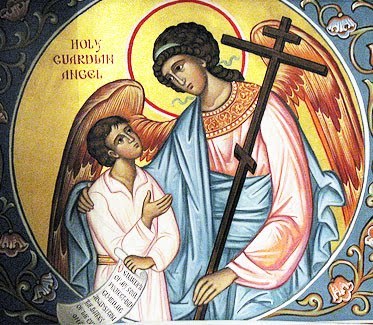
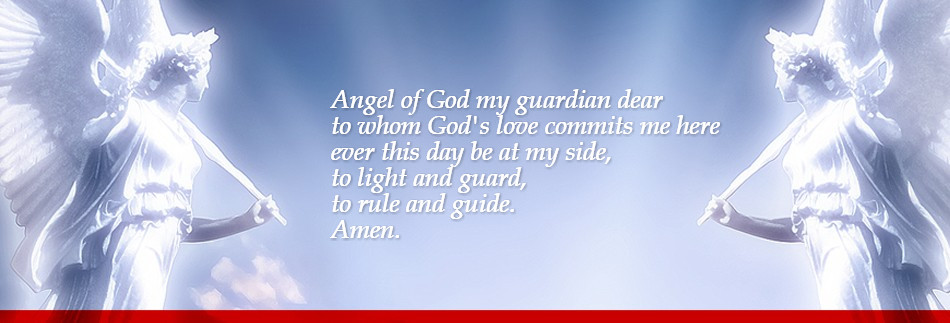
Guardian Angels October 2


Guardian Angels

Feast Day October 2


From a Sermon by Saint Bernard, abbot

That they may guard you 
in all of your ways

He has given His angels charge over you to guard you in all of your ways.  Let them thank the Lord for His Mercy; His wonderful works are for the children of men.  Let them give thanks and say among the nations, the Lord has done great things for them.  O Lord, what is man that you have made yourself known to him, or why do you incline your heart to him?  And you do inline your heart to him; you show him your care and your concern.  Finally, you send your only Son and the grace of your Spirit, and promise him a vision of Your countenance.  And so, that nothing in heaven should be wanting in your concern for us, you send those blessed spirits to serve us, assigning them as our guardians and our teachers.

He has given His angels charge over you to guard you in all your ways. These words should fill you with respect, inspire devotion and instill confidence; respect for the presence of angels, devotion because of their loving service, and confidence because of their protection.  And so the angels are here, they are at your side, they are with you, present on your behalf.  They are here to protect you and to serve you.  But even if it is God Who has given them this charge, we must nonetheless be grateful to them for the great love with which they obey and come to help us in our great need.

So let us be devoted and grateful to such 
great protectors; 
let us return their love and honor them 
as much as we can 
and should.

  Yet all our love and honor must go to Him, for it is from Him that they receive all that makes them worthy of our love and respect.

We should then, my brothers show our affection for the angels, for one day they will be our coheirs just as here below they are our guardians and trustees appointed and set over us by the Father.  We are God’s children although it does not seem so, because we are still but small children under guardians and trustees, and for the present little better than slaves.

Even though we are children and have a long, a very long and dangerous way to go, with such protectors what have we to fear?  They who keep us in our ways cannot be overpowered or let astray, much less lead us astray.  They are loyal, prudent, powerful.  Why then are we afraid?  

We have only to follow them, 
stay close to them, 
and we shall dwell under 
the protection of God’s heaven.

taken from Liturgy of the Hours Week 18-34 


Thursday, 25 January 2018

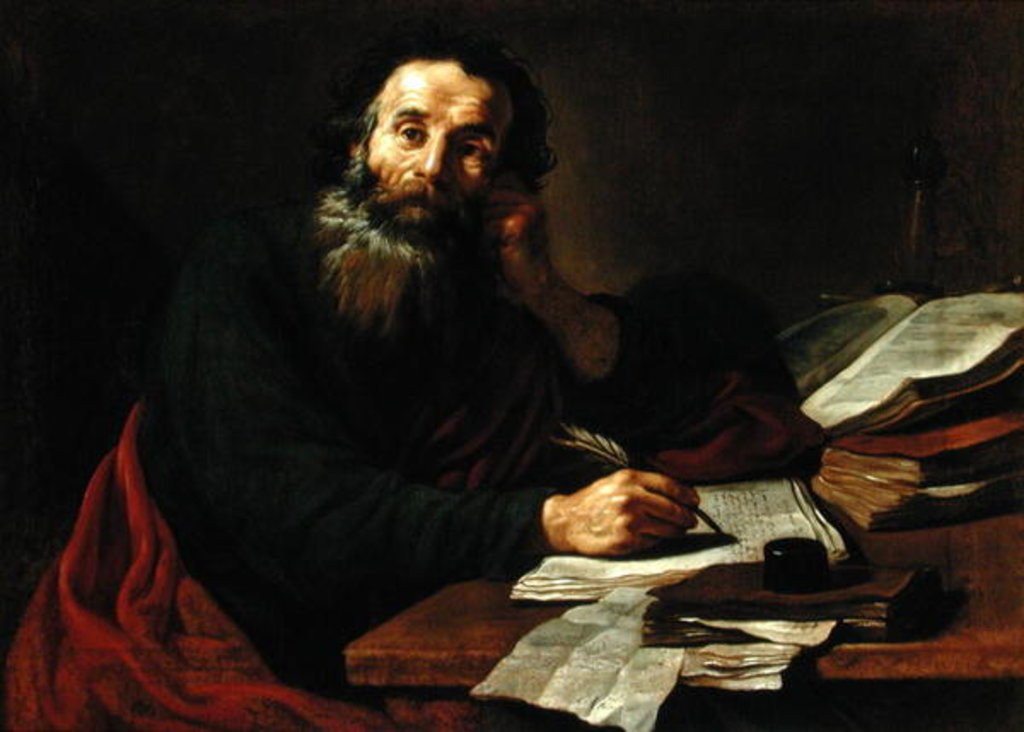
St. Paul the Apostle homily by St. John Chrysostom


For Love of Christ, 
Paul  bore every burden


From a homily by 
Saint John Chrysostom, bishop

Paul, more than anyone else, has shown us what man really is, and in what our nobility consists and of what virtue this particular animal is capable.  Each day he aimed ever higher; each day he rose up with greater ardor and faced with new eagerness the dangers that threatened him.  

He summed up his attitude in the words:   I forget what is behind me and push on to what lies ahead.  When he saw death imminent, he had others share his joy:   Rejoice and be glad with me!  And when danger, injustice and abuse threatened, he said: I am content with weakness, mistreatment and persecution.  These he called the weapons of righteousness, thus telling us that he derived immense profit from them.

Thus, amid the traps set for him by his enemies, with exultant heart he turned their every attack into a victory for himself; constantly beaten, abused and cursed, he boasted of it as though he were celebrating a triumphant procession and taking trophies home, and offered thanks to God for it all: Thanks be to God who is always victorious in us!  

This is why he was far more eager for the shameful abuse that his zeal in preaching brought upon him than we are the most pleasing honors, more eager for death than we are for life, for poverty than we are for wealth; he yearned for toil far more than others yearn for rest after toil.  

The one thing he feared, indeed dreaded, 
was to offend God; 
nothing else could sway him. 
Therefore, the only thing 
he really wanted was always to please God.

The most important thing of all to him, however, was that he knew himself to be loved by Christ.  Enjoying this love, he considered himself happier than anyone else; were he without it, it would be no satisfaction to be the friend of principalities and powers.  He preferred to be thus loved and be the least of all, or even to be among the damned, than to be without that love and be among the great and honored.

To be separated from that love 
was, in his eyes, 
the greatest and most 
extraordinary of torments; 
the pain of that loss 
would alone have been hell, 
and endless, unbearable torture.

So too, in being loved by Christ he thought of himself as possessing life, the world, the angels, present and future, the kingdom, the promise and countless blessings.  Apart from that love nothing saddened or delighted him;  for nothing earthly did he regard as bitter or sweet.

Paul set no store by the things that fill our visible world, any more than a man sets value on the withered grass of the field.  As for tyrannical ruler or the people enraged against him, he paid them no more heed than gnats.

Death itself and pain and whatever torments might come were but child’s play to him, provided that thereby he might bear some burden for the sake of Christ.

Taken from the Liturgy of the Hours, Conversion of Paul January 25

St. Paul preaching in Athens by Raphael

St. Paul Teaches Us That ...

1 Cor. 1:23- Paul preaches a Christ crucified, not just risen. Catholic spirituality focuses on the sacrifice of Christ which is the only means to the resurrection. This is why Catholic churches have crucifixes with the corpus of Jesus affixed to them. Many Protestant churches no longer display the corpus of Jesus (only an empty cross). Thus, they only preach a Christ risen, not crucified.

1 Cor. 2:2 – Paul preaches Jesus Christ and Him crucified. While the cross was the scandal of scandals, and is viewed by the non-Christian eye as defeat, Catholic spirituality has always exalted the paradox of the cross as the true tree of life and our means to salvation.

2 Cor. 1:5-7- if we share abundantly in Christ’s sufferings, so through Christ we share abundantly in comfort as well. If we unite our sufferings with His, we will be comforted by Him.

2 Cor. 4:10 – Paul writes that we always carry in the body the death of Jesus so that the life of Jesus may also be manifested in our bodies. Christ has allowed room in His Body for our sufferings, and our sufferings allow room for Christ to bring us to life.

2 Cor. 4:11 – while we live we are always being given up to death for Jesus’ sake so that His life may be manifested in our flesh. This proves the Catholic position that our sufferings on earth are united with Jesus in order to bring about Jesus’ life in us.

Phil. 1:29 for the sake of Christ we are not only to believe in Him but also to suffer for His sake. Growing in holiness requires more than having faith in God and accepting Jesus as personal Lord and Savior. We must also willfully embrace the suffering that befalls us as part of God’s plan. Thus, Christ does not want our faith alone, but our faith in action which includes faith in suffering.

Phil. 3:10 – Paul desires to share in Christ’s sufferings in order to obtain the resurrection. Paul recognizes the efficacy of suffering as a means of obtaining holiness which leads to resurrection and eternal life. 
There is no Easter Sunday 
without Good Friday.

Excerpts from Scripture Catholic https://www.scripturecatholic.com/suffering/