Ad

Showing posts with label St. John Chrysostom. Show all posts

Thursday, 25 January 2018

St. Paul the Apostle homily by St. John Chrysostom


For Love of Christ, 
Paul  bore every burden


From a homily by 
Saint John Chrysostom, bishop

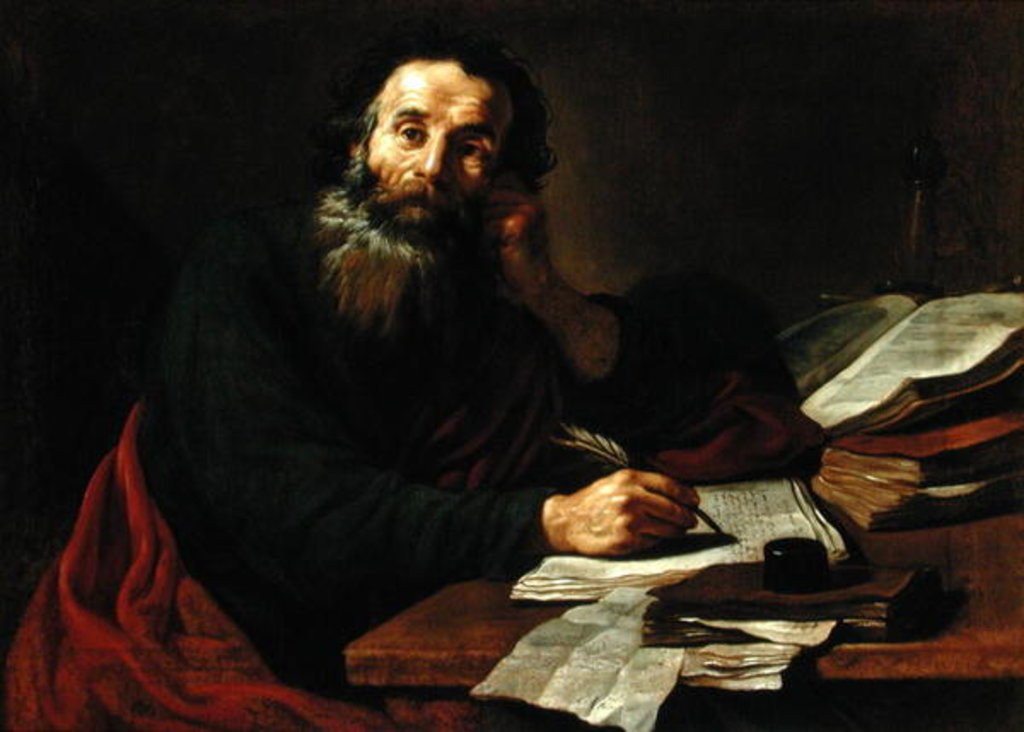
Paul, more than anyone else, has shown us what man really is, and in what our nobility consists and of what virtue this particular animal is capable.  Each day he aimed ever higher; each day he rose up with greater ardor and faced with new eagerness the dangers that threatened him.  

He summed up his attitude in the words:   I forget what is behind me and push on to what lies ahead.  When he saw death imminent, he had others share his joy:   Rejoice and be glad with me!  And when danger, injustice and abuse threatened, he said: I am content with weakness, mistreatment and persecution.  These he called the weapons of righteousness, thus telling us that he derived immense profit from them.

Thus, amid the traps set for him by his enemies, with exultant heart he turned their every attack into a victory for himself; constantly beaten, abused and cursed, he boasted of it as though he were celebrating a triumphant procession and taking trophies home, and offered thanks to God for it all: Thanks be to God who is always victorious in us!  
This is why he was far more eager for the shameful abuse that his zeal in preaching brought upon him than we are the most pleasing honors, more eager for death than we are for life, for poverty than we are for wealth; he yearned for toil far more than others yearn for rest after toil.  

The one thing he feared, indeed dreaded, 
was to offend God; 
nothing else could sway him. 
Therefore, the only thing 
he really wanted was always to please God.

The most important thing of all to him, however, was that he knew himself to be loved by Christ.  Enjoying this love, he considered himself happier than anyone else; were he without it, it would be no satisfaction to be the friend of principalities and powers.  He preferred to be thus loved and be the least of all, or even to be among the damned, than to be without that love and be among the great and honored.

To be separated from that love 
was, in his eyes, 
the greatest and most 
extraordinary of torments; 
the pain of that loss 
would alone have been hell, 
and endless, unbearable torture.

So too, in being loved by Christ he thought of himself as possessing life, the world, the angels, present and future, the kingdom, the promise and countless blessings.  Apart from that love nothing saddened or delighted him;  for nothing earthly did he regard as bitter or sweet.

Paul set no store by the things that fill our visible world, any more than a man sets value on the withered grass of the field.  As for tyrannical ruler or the people enraged against him, he paid them no more heed than gnats.

Death itself and pain and whatever torments might come were but child’s play to him, provided that thereby he might bear some burden for the sake of Christ.

Taken from the Liturgy of the Hours, Conversion of Paul January 25

St. Paul preaching in Athens by Raphael

St. Paul Teaches Us That ...

1 Cor. 1:23- Paul preaches a Christ crucified, not just risen. Catholic spirituality focuses on the sacrifice of Christ which is the only means to the resurrection. This is why Catholic churches have crucifixes with the corpus of Jesus affixed to them. Many Protestant churches no longer display the corpus of Jesus (only an empty cross). Thus, they only preach a Christ risen, not crucified.

1 Cor. 2:2 – Paul preaches Jesus Christ and Him crucified. While the cross was the scandal of scandals, and is viewed by the non-Christian eye as defeat, Catholic spirituality has always exalted the paradox of the cross as the true tree of life and our means to salvation.

2 Cor. 1:5-7- if we share abundantly in Christ’s sufferings, so through Christ we share abundantly in comfort as well. If we unite our sufferings with His, we will be comforted by Him.

2 Cor. 4:10 – Paul writes that we always carry in the body the death of Jesus so that the life of Jesus may also be manifested in our bodies. Christ has allowed room in His Body for our sufferings, and our sufferings allow room for Christ to bring us to life.

2 Cor. 4:11 – while we live we are always being given up to death for Jesus’ sake so that His life may be manifested in our flesh. This proves the Catholic position that our sufferings on earth are united with Jesus in order to bring about Jesus’ life in us.

Phil. 1:29 for the sake of Christ we are not only to believe in Him but also to suffer for His sake. Growing in holiness requires more than having faith in God and accepting Jesus as personal Lord and Savior. We must also willfully embrace the suffering that befalls us as part of God’s plan. Thus, Christ does not want our faith alone, but our faith in action which includes faith in suffering.

Phil. 3:10 – Paul desires to share in Christ’s sufferings in order to obtain the resurrection. Paul recognizes the efficacy of suffering as a means of obtaining holiness which leads to resurrection and eternal life. 
There is no Easter Sunday 
without Good Friday.

Excerpts from Scripture Catholic https://www.scripturecatholic.com/suffering/


Thursday, 21 July 2016

Teach Our Children About God, Don't Let Others Teach Them About Evil!

St. John Chrysostom, Bishop 


Saint John Chrysostom 
lived in the years
349 – 407 A.D.


He wrote the words below 
which pertain more urgently today! 


"They" are teaching our children 
evil in our schools -- 

We MUST teach them the TRUTH 
to give them the strength 
to resist this evil generation --- 
the times are changing fast... 

Will YOUR children 
be able to enter the Kingdom???  

IT'S YOUR RESPONSIBILITY 
to insure they know the Truth!

Keep Our Kids Innocent!

+ + + + + + +

We Must be Concerned 
for the Children’s Good

From a homily on the Gospel of Matthew
by Saint John Chrysostom, bishop


By the words: 
Their angels see my Father’s face 
and for this purpose have I come, 
and this is m Father’s Will, 
the Lord is calling for greater care 
from those who are in charge of children.

Their Angels see the Face of God

Do you not see what a protective wall he has built round them?

Appalling punishments are threatened 
for those who cause their downfall; 
great blessings are promised to those 
who protect and care for them; 
and all this is confirmed by the example 
both he and his Father give.

Jesus Loves the Children
Let us too imitate Him and refuse no task, however humble and arduous it may seem, on behalf of those who are our brothers.  

We may have to serve someone who is small and unimportant, if we undertake this work; the job may be very taxing; mountains and precipices may lie in our way; for the sake of our brothers’ salvation everything must be endured.  

God, after all, cares so much for the soul of man that he did not spare even his Son.  

So, I beg you, from the very moment we leave our homes in the morning, let us have but one aim in view, let this be our chief concern, to rescue anyone who is in danger.


Nothing 
is as precious as a human soul.  


For what does it profit a man if 
he gains the whole world but suffers the loss of his soul?  


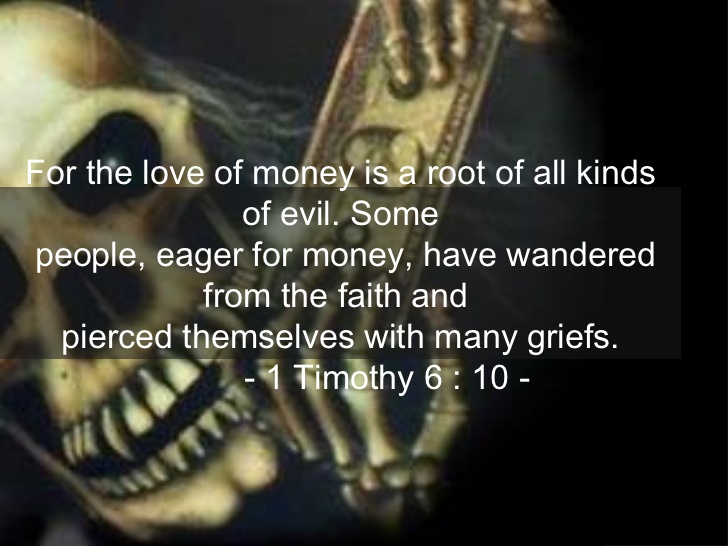
1 Timothy 6:10

Yet the love of money has perverted 
and destroyed our values; 
it has driven out the fear of God 
and holds our souls in its power, 
as a tyrant holds a citadel.  


In consequence we neglect the spiritual welfare of our children and of ourselves in our desire to become richer and leave our wealth to others, and they again to their descendants.  We are not really owners of our money and other possessions; we merely hand them on.  The folly of it!  

Our children become lower than our slaves.  We punish slaves, but our children do not profit from our forethought, and in effect are regarded as less valuable than our slaves.

But why talk about slaves?  
We take less care of our children than our cattle; 
we worry more about our horses and donkeys 
(in our time of course cars, houses, etc) 
than about our sons. (and daughters!) 

If a man owns a mule he takes good care to find the best driver for it, not some scoundrel who is dishonest, drunken and inexperienced.  

Whereas if our son needs a teacher, 
we take on the first man who comes along, 
quite haphazardly and without any selection. 

Teachers Influence YOUR children -- Do YOU know what they are teaching?

Yet no profession 
is more important 
than that of teaching.

For what could equal an art which aims at directing the soul and forming the mind and character of a young man?  One with these gifts should be more conscientious than any painter or sculptor.  Yet we completely neglect all this.  

The one thing that matters to us is that our son should learn to speak well.  And even this we are keen on simply for the sake of making money.  He does not study a language primarily to enable him to speak well, but only to enable him to get rich.  In fact, if man could become wealthy without being able to speak at all, we would not bother about such lessons.

What a tyranny money exercises!  It invades the whole life forcing men to go where it chooses, like slaves in chains.  But what good is our invective?  We make a verbal attack on this tyranny; it defeats us by the sheer force of events.  

Nonetheless, I shall not stop lashing it with my tongue; if my words achieve anything, you and I will both be the gainers; if, however, you remain of the same mind, at least I shall have done my duty.


Still, may God cure you of this disease, and grant me the satisfaction of being able to take pride in you.  To him be glory and power for ever and ever. Amen.

Wednesday, 13 July 2016

Christ's Light Shines in YOU share It!

YOU ARE...


The Light of a Christian Cannot Escape Notice

From a homily on the Acts of the Apostles 
by Saint John Chrysostom, bishop


There is nothing colder 
than a Christian 
who does not seek to save others.

You cannot plead poverty here; the widow putting in her two small coins will be your accuser.  Peter said, Silver and gold I have not.  Paul was so poor that he was often hungry and went without necessary food.

You cannot plead humble birth, for they were humbly born, of humble stock.  You cannot offer the excuse of lack of education, for they were uneducated.  You cannot plead ill-health, for Timothy also had poor health, with frequent illnesses.

Each one can help his neighbor if only he is willing to do what is in his power.  Look at the trees that do not bear fruit: have you not noticed how strong and fine they are, upstanding, smooth and tall?  If we had a garden, we would much prefer trees with fruit—pomegranates and olives—to trees that are for pleasure, not for utility, and any utility have is small.

Share the Light of Christ with your neighbor
Such are those men who think only of their own concerns.  In fact, they are even worse: the trees are at least useful for building or for protection, whereas the selfish fit only for punishment.   Such were those foolish virgins who were chaste, comely and self-controlled, but did nothing for anyone.  So they are consumed in the fire.  Such are those men who refuse to give Christ food.

Notice that none of them 
is accused of personal sins.  

They are not accused of committing fornication 
or perjury or any such sin at all: 
only of not helping anybody else.  

Parable about the Talents 
The man who buried the talent was like this.  
His life was blameless, but he was of no service to others.

How can such a person be a Christian?  Tell me, if yeast did not make the whole mass like itself, is it  really yeast?  Again, if perfume failed to pervade all around it with its fragrance, would we call it perfume?

Do not say: it is impossible for me to influence others.  If you are a Christian, it is impossible for this not to happen.  Things found in nature cannot be denied; so here, for it is a question of the nature of the Christian.

Do not insult God.  If you say that the sun cannot shine, you have insulted him.  If you say that a Christian cannot help others, you have insulted God and called him a liar.  It is easier for the sun not to give warmth or shine than for a Christian not to shed his light.  It is easier for light to be darkness than for this to happen.


Do not say then that it is impossible.  The opposite is impossible.  Do not insult God.  If we have put our affairs in order, these things will certainly come to be, and will follow as a natural consequence. 

Let Christ shine through you - save souls

 The light of a Christian cannot escape notice.  So bright a lamp cannot be hidden.

taken from the Liturgy o the Hours

Christ's Light Shines in YOU share It!

YOU ARE...


The Light of a Christian Cannot Escape Notice

From a homily on the Acts of the Apostles 
by Saint John Chrysostom, bishop


There is nothing colder 
than a Christian 
who does not seek to save others.

You cannot plead poverty here; the widow putting in her two small coins will be your accuser.  Peter said, Silver and gold I have not.  Paul was so poor that he was often hungry and went without necessary food.

You cannot plead humble birth, for they were humbly born, of humble stock.  You cannot offer the excuse of lack of education, for they were uneducated.  You cannot plead ill-health, for Timothy also had poor health, with frequent illnesses.

Each one can help his neighbor if only he is willing to do what is in his power.  Look at the trees that do not bear fruit: have you not noticed how strong and fine they are, upstanding, smooth and tall?  If we had a garden, we would much prefer trees with fruit—pomegranates and olives—to trees that are for pleasure, not for utility, and any utility have is small.

Share the Light of Christ with your neighbor
Such are those men who think only of their own concerns.  In fact, they are even worse: the trees are at least useful for building or for protection, whereas the selfish fit only for punishment.   Such were those foolish virgins who were chaste, comely and self-controlled, but did nothing for anyone.  So they are consumed in the fire.  Such are those men who refuse to give Christ food.

Notice that none of them 
is accused of personal sins.  

They are not accused of committing fornication 
or perjury or any such sin at all: 
only of not helping anybody else.  

Parable about the Talents 
The man who buried the talent was like this.  
His life was blameless, but he was of no service to others.

How can such a person be a Christian?  Tell me, if yeast did not make the whole mass like itself, is it  really yeast?  Again, if perfume failed to pervade all around it with its fragrance, would we call it perfume?

Do not say: it is impossible for me to influence others.  If you are a Christian, it is impossible for this not to happen.  Things found in nature cannot be denied; so here, for it is a question of the nature of the Christian.

Do not insult God.  If you say that the sun cannot shine, you have insulted him.  If you say that a Christian cannot help others, you have insulted God and called him a liar.  It is easier for the sun not to give warmth or shine than for a Christian not to shed his light.  It is easier for light to be darkness than for this to happen.


Do not say then that it is impossible.  The opposite is impossible.  Do not insult God.  If we have put our affairs in order, these things will certainly come to be, and will follow as a natural consequence. 

Let Christ shine through you - save souls

 The light of a Christian cannot escape notice.  So bright a lamp cannot be hidden.

Christ's Light Shines in YOU share It!

YOU ARE...


The Light of a Christian cannot escape notice

From a homily on the Acts of the Apostles 
by Saint John Chrysostom, bishop


There is nothing colder 
than a Christian 
who does not seek to save others.

You cannot plead poverty here; the widow putting in her two small coins will be your accuser.  Peter said, Silver and gold I have not.  Paul was so poor that he was often hungry and went without necessary food.

You cannot plead humble birth, for they were humbly born, of humble stock.  You cannot offer the excuse of lack of education, for they were uneducated.  You cannot plead ill-health, for Timothy also had poor health, with frequent illnesses.

Each one can help his neighbor if only he is willing to do what is in his power.  Look at the trees that do not bear fruit: have you not noticed how strong and fine they are, upstanding, smooth and tall?  If we had a garden, we would much prefer trees with fruit—pomegranates and olives—to trees that are for pleasure, not for utility, and any utility have is small.

Share the Light of Christ with your neighbor
Such are those men who think only of their own concerns.  In fact, they are even worse: the trees are at least useful for building or for protection, whereas the selfish fit only for punishment.   Such were those foolish virgins who were chaste, comely and self-controlled, but did nothing for anyone.  So they are consumed in the fire.  Such are those men who refuse to give Christ food.

Notice that none of them 
is accused of personal sins.  

They are not accused of committing fornication 
or perjury or any such sin at all: 
only of not helping anybody else.  

The man who buried the talent was like this.  
His life was blameless, but he was of no service to others.

How can such a person be a Christian?  Tell me, if yeast did not make the whole mass like itself, is it  really yeast?  Again, if perfume failed to pervade all around it with its fragrance, would we call it perfume?

Do not say: it is impossible for me to influence others.  If you are a Christian, it is impossible for this not to happen.  Things found in nature cannot be denied; so here, for it is a question of the nature of the Christian.

Do not insult God.  If you say that the sun cannot shine, you have insulted him.  If you say that a Christian cannot help others, you have insulted God and called him a liar.  It is easier for the sun not to give warmth or shine than for a Christian not to shed his light.  It is easier for light to be darkness than for this to happen.


Do not say then that it is impossible.  The opposite is impossible.  Do not insult God.  If we have put our affairs in order, these things will certainly come to be, and will follow as a natural consequence. 

Let Christ shine through you - save souls

 The light of a Christian cannot escape notice.  So bright a lamp cannot be hidden.

Tuesday, 18 August 2015

You are the Salt of the Earth - What that Means


Salt of the Earth &
Light of the World

Homily by St. John Chrysostom


You are the salt of the earth. It is not for your own sake, he says, but for the world’s sake that the word is entrusted to you. I am not sending you only into two cities only or ten to twenty, not to a single nation, as I sent the prophets of old, but across land and sea, to the whole world. And that world is in a miserable state. For when he says: 
You are the salt of the earth, 
he is indicating that all mankind had lost its savor 
and had been corrupted by sin. 

Therefore, he requires of these men those virtues which are especially useful and even necessary if they are to bear the burdens of many. For the man who is kindly, modest, merciful and just will not keep his good works to himself but will see to it that these admirable fountains send out their streams for the good of others. Again, the man who is clean of heart, a peacemaker and ardent for truth will order his life so as to contribute to the common good.

St. John Chrysostom

Do not think, he says, that you are destined for easy struggles or unimportant tasks. 

You are the salt of the earth. 

What do these words imply? Did the disciples restore what had already turned rotten? Not at all. Salt cannot help what is already corrupted. That is not what they did. But what had first been renewed and freed from corruption and then turned over to them, they salted and preserved in the newness the Lord had bestowed. It took the power of Christ to free men from the corruption caused by sin; it was the task of the apostles through strenuous labor to keep that corruption from returning.

Have you noticed how, bit by bit, Christ shows them to be superior to the prophets? He says they are to be teachers not simply for Palestine but for the whole world. Do not be surprised, then, he says, that I address you apart from the others and involve you in such a dangerous enterprise. Consider the numerous and extensive cities, peoples and nations I will be sending you to govern. For this reason I would have you make others prudent, as well as being prudent yourselves. For unless you can do that, you will not be able to sustain even yourselves.


If others lose their savor, then your ministry will help them regain it. But if you yourselves suffer that loss, you will drag others down with you. Therefore, the greater the undertakings put into your hands, the more zealous you must be. For this reason he says: But if the salt becomes tasteless, how can its flavor be restored? It is good for nothing now, but to be thrown out and trampled by men’s feet.


When they hear the words: When they curse you and persecute you and accuse you of every evil, They may be afraid to come forward. Therefore he says: “Unless you are prepared for that sort of thing, it is in vain that I have chosen you. Curses shall necessarily be your lot but they shall not harm you and will simply be a testimony to your constancy. If through fear, however, you fail to show the forcefulness your mission demands, your lot will be much worse, for all will speak evil of you and despise you. That is what being trampled by men’s feet means”.


Then he passes on to a more exalted comparison: You are the light of the world. Once again, “of the world”: not of one nation or twenty cities, but of the whole world. The light he means is an intelligible light, far superior to the rays of the sun we see, just as the salt is a spiritual salt. First salt, then light, so that you may learn how profitable sharp words may be and how useful serious doctrine. Such teaching holds in check and prevents dissipation; it leads to virtue and sharpens the mind’s eye. 

A city set on a hill cannot be hidden; 
nor do men light a lamp and put it under a basket. 

Here again he is urging them to a careful manner of life and teaching them to be watchful, for they live under the eyes of all and have the whole world for the arena of their struggles.


Thursday, 27 November 2014

Moderation not a fierce attack beats back a fierce attack


If we are sheep, we overcome, if wolves, we are overcome
From a homily on Matthew by Saint John Chrysostum, bishop


As long as we are sheep, we overcome and, though surrounded by countless wolves, we emerge victorious; but if we turn into wolves, we are overcome, for we lose the shepherd’s help. He, after all, feeds the sheep not wolves, and will abandon you if you do not let him show his power in you.

What he says is this: “Do not be upset that, as I send you out among the wolves, I bid you be as sheep and doves. I could have managed things quite differently and sent you, not to suffer evil nor to yield like sheep to the wolves, but to be fiercer than lions. but the way I have chosen is right. It will bring you greater praise and at the same time manifest my power.” That is what he told Paul: My grace is enough for you, for in weakness my power is made perfect. “I intend,” he says, “to deal the same way with you.” For, when he says, I am sending you out like sheep, he implies: 

“But do not therefore lose heart, 
for I know and am certain that no one
 will be able to overcome you.”

The Lord, however, does want them to contribute something, lest everything seem to be the work of grace, and they seem to win their reward without deserving it. Therefore he adds: You must be clever as snakes and innocent as doves. But, they may object, what good is our cleverness amid so many dangers? How can we be clever when tossed about by so many waves? However great the cleverness of the sheep as he stands among the wolves – so may wolves! – what can it accomplish? However great the innocence of the dove, what good does it do him, with so many hawks swooping upon him? To all this I say: Cleverness and innocence admittedly do these irrational creatures no good, but they can help you greatly.

What cleverness is the Lord requiring here? The cleverness of a snake. A snake will surrender everything and will put up no great resistance even if its body is being cut in pieces, provided it can save its head. So you, the Lord is saying, must surrender everything but your faith: money, body, even life itself. For faith is the head and the root; keep that, and though you lose all else, you will get it back in abundance. The Lord therefore counselled the disciples to be not simply clever or innocent; rather he joined the two qualities so that they become a genuine virtue. He insisted on the cleverness of the snake so that deadly wounds might be avoided, and he insisted on the innocence of the dove so that revenge might not be taken on those who injure or lay traps for you. Cleverness is useless without innocence.


Do not believe that this precept is beyond your power. More than anyone else, the Lord knows the true natures of created things; 

He knows that moderation, 
not a fierce defense, 
beats back a fierce attack


Friday, 22 June 2012

The Life of St. John Chrysostom


Icon of St. John Chrysostom
The Life of St. John Chrysostom

John was born in Antioch in 349 to Greco-Syrian parents. Different scholars describe his mother and his father was a high ranking military officer.  John's father died soon after his birth and he was raised by his mother.
            He was baptised in 368 or 373 and tonsured as a reader (one of the minor orders of the Church). As a result of his mother's influential connections in the city, John began his education under the pagan teacher Libanius. From Libanius, John acquired the skills for a career in rhetoric, as well as a love of the Greek language and literature.
                As he grew older, however, he became more deeply committed to Christianity and went on to study theology under Diodore of Tarsus, founder of the re-constituted School of Antioch. According to the Christian historian Sozomen, Libanius was supposed to have said on his deathbed that John would have been his successor "if the Christians had not taken him from us".
            He lived with extreme asceticism and became a hermit in about 375; he spent the next two years continually standing, scarcely sleeping, and committing the Bible to memory. As a consequence of these practices, his stomach and kidneys were permanently damaged and poor health forced him to return to Antioch.
John was ordained as a deacon in 381 by Saint Meletius of Antioch who was not then in communion with Alexandria and Rome. After the death of Meletius, John separated himself from the followers of Meletius, without joining Paulinus, the rival of Meletius for the bishopric of Antioch, but after the death of Paulinus he was ordained a presbyter (that is, a priest) in 386 by Evagrius, the successor of Paulinus.   He was destined later to bring about reconciliation between Flavian I of Antioch, the successor of Alexandria and Rome, thus bringing those three sees into communion for the first time in nearly seventy years.
            In Antioch, over the course of twelve years, John gained popularity because of the eloquence of his public speaking, especially his insightful expositions of Bible passages and moral teaching. The most valuable of his works from this period are his Homilies on various books of the Bible. He emphasised charitable giving and was concerned with the spiritual and temporal needs of the poor.  He also spoke against abuse of wealth and personal property:

“Do you wish to honour the body of Christ? Do not ignore him when he is naked. Do not pay him homage in the temple clad in silk, only then to neglect him outside where he is cold and ill-clad. He who said: "This is my body" is the same who said: "You saw me hungry and you gave me no food", and "Whatever you did to the least of my brothers you did also to me"... What good is it if the Eucharistic table is overloaded with golden chalices when your brother is dying of hunger? Start by satisfying his hunger and then with what is left you may adorn the altar as well.”

          He became the Archbishop of Constantinople, was an important Early Church Father. He is known for his eloquence in preaching and public speaking, his denunciation of abuse of authority by both ecclesiastical and political leaders, the Divine Liturgy of St. John Chrysostom, and his ascetic sensibilities.   After his death in 407 (or, according to some sources, during his life) he was given the Greek epithet chrysostomos, meaning "golden mouthed" in English, and Anglicized to Chrysostom.

           The Orthodox and Eastern Catholic Churches honor him as a saint and count him among the Three Holy Hierarchs, together with Basil the Great and Gregory Nazianzus. He is recognized by the Eastern Orthodox Church and the Catholic Church as a saint and as a Doctor of the Church. Churches of the Western tradition, including the Roman Catholic Church, some Anglican provinces, and parts of the Lutheran Church, commemorate him on 13 September. Some Lutheran and many Anglican provinces commemorate him on the traditional Eastern feast day of 27 January. The Coptic Orthodox Church of Alexandria also recognizes John Chrysostom as a saint (with feast days on 16 Thout and 17 Hathor).

        John is known in Christianity chiefly as a preacher, theologian and liturgist. Among his homilies, eight directed against Judaizing Christians remain controversial for their impact on the development of Christian antisemitism. ....


Excerpts taken from Wikipedia http://en.wikipedia.org/wiki/John_Chrysostom
Check also  Catholic Encyclopedia