Ad

Showing posts with label Liturgy of the Hours. Show all posts

Wednesday, 12 April 2017


Blessed are the clean of heart, 
for they will see God

From the book addressed to Autolycus by Saint Theophilus of Antioch, bishop

If you say, “Show me our God,” I will say to you, “Show me what kind of person are you are, and I will show you my God.”  Show me then whether the eyes of your mind can see, and the ears of your heart hear.

Spiritually blind 
It is like this.  Those who can see with the eyes of their bodies are aware of what is happening in this life on earth.  They get to know things that are different from each other.  They distinguish light and darkness, black and white, ugliness and beauty, elegance and inelegance, proportion and lack of proportion, excess and defect.  The same is true of the sounds we hear: high or low or pleasant.  So it is with the ears of our heart and the eyes of our mind in their capacity to hear or see God.

God is seen by those who have the capacity to see him, provided that they keep the eyes of their mind open.  All have eyes, but some have eyes that are shrouded in darkness, unable to see the light of the sun.  Because the blind cannot see it, it does not follow that the sun does not shine.  The blind must trace the cause back to themselves and their eyes.  In the same way, you have eyes in your mind that are shrouded in darkness because of your sins and evil deeds.



A person’s soul should be clean, like 
a mirror reflecting light.  
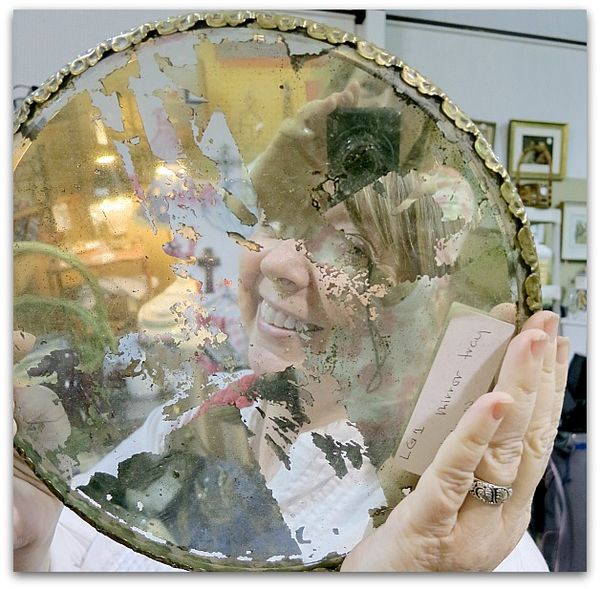


If there is rust on the mirror his face 
cannot be seen in it.  
In the same way, no one who has sin 
within him can see God.


But if you will you can be healed.  Hand yourself over to the doctor, and he will open the eyes of your mind and heart.  Who is to be the doctor? Is it God, who heals and gives life through his Word and wisdom.  

Through his Word and wisdom He created the universe, for by his Word the heavens were established, and by his Spirit all their array.  His wisdom is supreme.  God by wisdom founded the earth, by understanding he arranged the heavens, by his knowledge the depths broke forth and the clouds poured out the dew.

Saint Theophilus of Antioch, bishop

If you understand this, 
and live in purity and holiness and justice, 
you may see God.  

But, before all, 
faith and the fear of God 
must take the first place in your heart, 
and then you will understand all this.  


When you have laid aside mortality and been clothed in immortality, then you will see God according to your merits.  God and then, once made immortal, you will see the immortal One, if you believe in Him now.


Taken from The Liturgy of the Hours

Friday, 21 March 2014

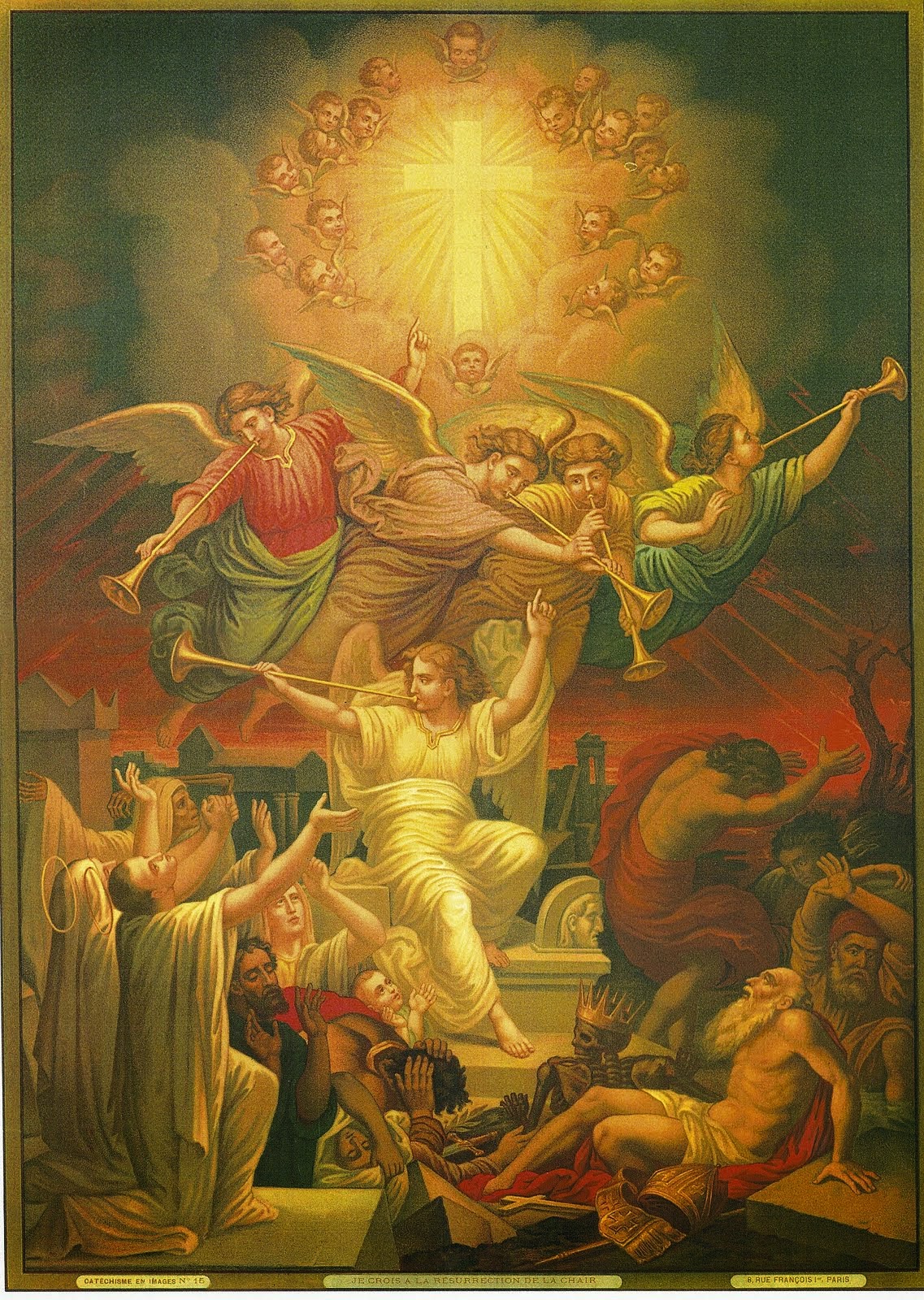
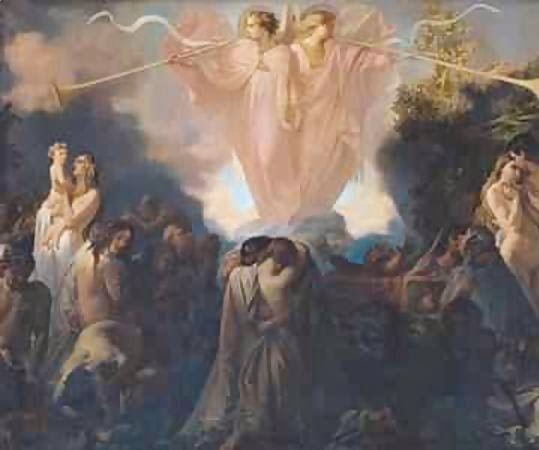
Death and Christ's Promise -- Saint Anastasius sermon


Death is not the End


I work in a funeral home - death is a daily occurrence.  Being Catholic I have the faith in Christ's promise.  And I pray for those who pass through here... and all the dead for the Mercy of God to be upon them.

Many family (and deceased) come through the doors with no faith at all - saying that death is final and there is nothing else.  What a horrible way to live thinking that there is nothing. 

Today is full of unbelievers... it seems to be an epidemic. We must do all in our power to tell the Truth... to all who will listen so that we can save souls.  

I wanted to share with you a sermon on the subject of the Resurrection of the Dead by a great saint.  I hope it inspires you as it has me.


 From a sermon by 
Saint Anastasius of Antioch, bishop


  Christ will change our lowly body

To this end Christ died and rose to life that he might be Lord both of the dead and of the living. But God is not God of the dead, but of the living. That is why the dead, now under the dominion of one who has risen to life, are no longer dead but alive. Therefore life has dominion over them and, just as Christ, having been raised from the dead, will never die again, so too they will live and never fear death again. When they have been thus raised from the dead and freed from decay, they shall never again see death, for they will share in Christ’s resurrection just as he himself shared in their death.


This is why Christ descended into the underworld, with its imperishable prison bars: to shatter the doors of bronze and break the bars of iron and, from decay, to raise our life to himself by giving us freedom in place of servitude.


But if this plan does not yet appear to be perfectly realized — for men still die and bodies still decay in death — this should not occasion any loss of faith. For, in receiving the firstfruits, we have already received the pledge of all the blessings we have mentioned; with them we have reached the heights of heaven, and we have taken our place beside him who has raised us up with himself, as Paul says: In Christ God has raised us up with him, and has made us sit with him in the heavenly places.


And the fulfillment will be ours on the day predetermined by the Father, when we shall put off our childish ways and come to perfect manhood. For this is the decree of the Father of the ages: the gift, once given, is to be secure and no more to be rejected by a return to childish attitudes.


There is no need to recall that the Lord rose from the dead with a spiritual body, since Paul in speaking of our bodies bears witness that they are sown as animal bodies and raised as spiritual bodies: that is, they are transformed in accordance with the glorious transfiguration of Christ who goes before us as our leader.


The Apostle, affirming something he clearly knew, also said that this would happen to all mankind through Christ, who will change our lowly body to make it like his glorious body.


If this transformation is a change into a spiritual body and one, furthermore, like the glorious body of Christ, then Christ rose with a spiritual body, a body that was sown in dishonor, but the very body that was transformed in glory.


Having brought this body to the Father as the first-fruits of our nature, he will also bring the whole body to fulfillment. For he promised this when he said: I, when I am lifted up, will draw all men to myself.


taken from the Liturgy of the Hours
If you don't have the books go on the web  

Thursday, 20 March 2014

St. Joseph, Faithful Foster Father and Guardian


 Feast Day of St. Joseph
March 19th


From a sermon by Saint Bernadine of Siena, priest

The faithful foster-father and guardian


There is a general rule concerning all special graces granted to any human being. Whenever the divine favor chooses someone to receive a special grace, or to accept a lofty vocation, God adorns the person chosen with all the gifts of the Spirit needed to fulfill the task at hand.


This general rule is especially verified in the case of Saint Joseph, the foster-father of our Lord and the husband of the Queen of our world, enthroned above the angels. He was chosen by the eternal Father as the trustworthy guardian and protector of his greatest treasures, namely, his divine Son and Mary, Joseph’s wife. He carried out this vocation with complete fidelity until at last God called him, saying: Good and faithful servant enter into the joy of your Lord.


What then is Joseph’s position in the whole Church of Christ? Is he not a man chosen and set apart? Through him and, yes, under him, Christ was fittingly and honorably introduced into the world. Holy Church in its entirety is indebted to the Virgin Mother because through her it was judged worthy to receive Christ. But after her we undoubtedly owe special gratitude and reverence to Saint Joseph.


In him the Old Testament finds its fitting close. He brought the noble line of patriarchs and prophets to its promised fulfillment. What the divine goodness had offered as a promise to them, he held in his arms.


Obviously, Christ does not now deny to Joseph that intimacy, reverence and very high honor which he gave him on earth, as a son to his father. 


Rather we must say that in heaven Christ completes and perfects all that he gave at Nazareth.


Now we can see how the last summoning words of the Lord appropriately apply to Saint Joseph: Enter into the joy of your Lord. In fact, although the joy of eternal happiness enters into the soul of a man, the Lord preferred to say to Joseph: Enter into joy. His intention was that the words should have a hidden spiritual meaning for us. They convey not only that this holy man possesses an inward joy, but also that it surrounds him and engulfs him like an infinite abyss.


Remember us, Saint Joseph, and plead for us to your foster-child. Ask your most holy bride, the Virgin Mary, to look kindly upon us, since she is the mother of him who with the Father and the Holy Spirit lives and reigns eternally. Amen. 


God has made me a father to the king and master of all his household.

He has raised me up, that he might save many people.


The Lord is my helper and protector; he is my savior.


He has raised me up, that he might save many people. Genesis 45:8; 50:20; Sirach 51:2


Taken from the Liturgy of the Hours.   March 19 http://divineoffice.org/

More info and prayers for St. Joseph can be found at 

Wednesday, 4 December 2013

Mary the Mother of God and Our Mother


Mary Our Mother
By Saint Aelred, abbot

Let us come to his bride, his mother, his perfect handmaid, for the blessed Mary is all of this.

But what are we to do for her? What kind of gifts shall we offer her?  Would that we could at least return what we are in duty bound to do, for we owe her honor and service, we owe her love and praise.  We owe her honor, for she is the mother of our Lord.  He who fails to honor the mother clearly dishonors the son.  

 Also, Scripture says: Honor your father and your mother.

What then, my brothers, shall we say? Is she not our mother?  Yes, my brothers, she is indeed our mother, for through her we have been born, not for the world but for God.

Once we all lay in death, as you know and believe, in sin, in darkness, in misery.  In death, because we had lost the Lord; in sin, because of our corruption; in darkness, for we were without the light of wisdom, and thus had perished utterly.

But then we were born, far better than through Eve, through Mary the blessed, because Christ was born of her.  We have recovered new life in place of sin, immortality instead of mortality, might in place of darkness.

She is our mother—the mother of our life, the mother of our incarnation, the mother of our light.  As the apostle says of our Lord: He became for us by God’s power our wisdom and justice, and holiness and redemption.

She then, as mother of Christ, is the mother of our wisdom and justice, of our holiness and redemption.  She is more our mother than the mother of our flesh.  Our birth from her is better, for from her is born our holiness, our wisdom, our justice, our sanctification, our redemption.
                
Praise the Lord in his holy ones, says the Scriptures.  If our Lord is to be praised in those holy ones through whom he brings deeds of power and miracles, how much more is he to be praised in her in whom he fashioned himself, who is wonderful beyond all wonders.

taken from Liturgy of the Hours, Advent Season

Sunday, 9 December 2012

Advent Prayer


Father in heaven,

The day draws near when the glory of your Son

will make radiant the night of the waiting world.
May the lure of greed not impede us from the joy
which moves the hearts of those who seek him.
May the darkness not blind us
to the vision of wisdom
which fills the minds of those who find him.
We ask this through Christ the Lord.
Amen.

Taken from the Liturgy of the Hours

Tuesday, 30 October 2012

The Word, the Wisdom of God, was made flesh


The Word, the Wisdom of God, was made flesh
From a sermon by Saint Peter Chrysologus, bishop

The holy Apostle has told us that the human race takes its origin from two men, Adam and Christ; two equal in body but unequal in merit, wholly alike in their physical structure but totally unlike in the very origin of their being.  The first man, Adam, he says, became a living soul, the last Adam a life-giving spirit.

The first Adam was made by the last Adam, from whom he also received his soul, to give him life.  The last Adam was formed by His own action; He did not have to wait for life to be given to Him by someone else, but was the only one who could give life to all.  The first Adam was formed from valueless clay, the second Adam came forth from the precious womb of the Virgin.  In the case of the first Adam, earth was changed into flesh; in the case of the second Adam, flesh was raised up to be God.

What more need to be said?  The second Adam stamped His image on the first Adam when He created him.  That is why He took on Himself the role, and the name, of the first Adam, in order that He might not lose what He had made in His own image.  The first Adam, the last Adam; the first had a beginning, the last knows no end.  The last Adam is indeed the first; as He Himself says: I am the first and the last.

I am the first, that is, I have no beginning.  I am the last, that is, I have no end.  But what was spiritual, says the Apostle, did not come first; what was living came first, then what is spiritual.  The earth comes before its fruit, but the earth is not so valuable as its fruit.  The earth exacts pain and toil; its fruit bestow subsistence and life.  The prophet rightly boasted of this fruit: Our earth has yielded its fruit. What is this fruit?  The fruit referred to in another place:  I will place upon your throne one Who is the fruit of your body.  The first man, says the Apostle, was made from the earth and belongs to the earth; the second man is from heaven, and belongs to heaven.


The man made from the earth is the pattern of those who belong to the earth; the man from heaven is the pattern of those who belong to heaven. 
 
How is it that these last, though they do not belong to heaven by birth, will yet belong to heaven, men who do not remain what they were by birth but persevere in being what they become by rebirth?  The reason is, brethren, that the heavenly Spirit, by the mysterious infusion of His Light, gives fertility to the womb of the virginal font.  The Spirit brings forth as men belonging to heaven those whose earthly ancestry brought them forth as men belonging to the earthly ancestry brought them forth as men belonging to the earth, and in a condition of wretchedness; He gives them the likeness of their Creator.  Now that we are reborn, refashioned in the image of our Creator, we must fulfill what the Apostle commands:  So, as we have worn the likeness of the man of earth, let us also wear the likeness of the man of heaven.
 
Now that we are reborn, as I have said, in the likeness of our Lord, and have indeed been adopted by God as His children, let us put on the complete image of our Creator so as to be wholly like Him, not in the glory that He alone possesses, but in innocence, simplicity, gentleness, patience, humility, mercy, harmony, those qualities in which He chose to become, and to be, one with us.

Taken from the Liturgy of the Hours, according to the Roman Rite, Catholic Book Publishing Corp., New York, 1975