Showing posts with label Eternal Salvation. Show all posts
Showing posts with label Eternal Salvation. Show all posts
Sunday, 4 April 2021


Wednesday, 12 April 2017
Death and Resurrection - St. Basil, bishop
 |
| Christ Crucified |
By One Death and Resurrection the World was Saved
From the book On the Holy Spirit by Saint Basil, bishop
When mankind was estranged from him by disobedience, God our
Savior made a plan for raising us from our fall and restoring us to friendship
with himself. According to this plan
Christ came in the flesh, he showed us the gospel way of life, he suffered,
died on the cross, was buried and rose from the dead. He did this so that we could be saved by imitation
of him, and recover our original status as sons of God by adoption.

To attain holiness, then, we must not only pattern our lives
on Christ’s by being gentle, humble and patient, we must also imitate him in
his death.
Taking Christ for his model,
Paul said that he wanted to become like him in his death in the hope that he
too would be raised from death to life.
We imitate Christ’s death by being buried with him in baptism.
If we ask what this kind of burial means and
what benefit we may hope to derive from it, it means first of all making a
complete break with our former way of life, and our Lord himself said that this
cannot be done unless a man is born again.
In other words, we have to begin a new life,
and we cannot do so until
our previous life
has been brought to an end.
When runners reach the turning point on a racecourse, they have to pause
briefly before they can go back in the opposite direction. So also when we wish to reverse the direction
of our lives there must be a pause, or a death, to make the end of one life and
the beginning of another.
Our descent into hell takes place
when we imitate the burial
of Christ by our baptism.
The bodies of
the baptized are in a sense buried in the water as a symbol of their
renunciation of the sins of their unregenerate nature. As the Apostle says: The circumcision you have undergone is not an operation performed by
human hands, but the complete stripping away of your unregenerate nature. This is the circumcision that Christ gave us,
and it is accomplished by our burial with him in baptism. Baptism cleanses the soul from the pollution
of worldly thoughts and inclinations: You
will wash me, says the psalmist, and
I shall be whiter than snow.
We
receive this saving baptism only once
because there was only one death and one
resurrection
for the salvation of the world, and baptism is its symbol.
 |
| Mary Magdalene meets the Risen Christ |
Wednesday, 13 July 2016
Seek First the Kingdom of God
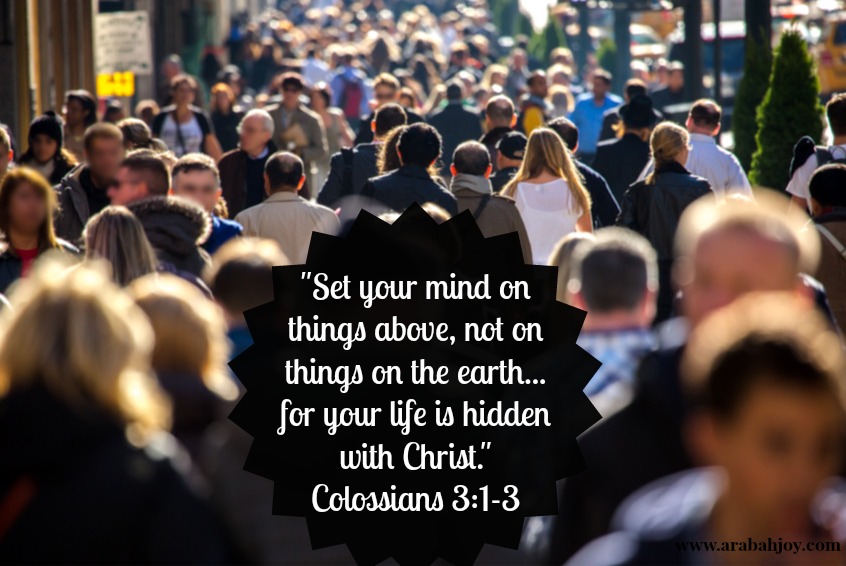
In the world, yet not of it
From a homily on the Gospels by Saint Gregory the Great,
pope
I would like to urge you to forsake everything, but that I
do not presume to do. Yet, if you cannot
give up everything of this world, at least keep what belongs to the world in
such a way that you yourself are not kept prisoner by the world.
Whatever you possess must not possess you;
whatever you own must be under the power of your soul; for if your soul is
overpowered by the love of this world’s goods, it will be totally at the mercy
of its possessions.
In other words,
we make use of temporal things,
but our
hearts are set on what is eternal.
Temporal goods help us on our way, but our desire must be for those
eternal realities which are our goal.
We
should give no more than a side glance
at all that happens in the world,
but
the eyes of our soul
are to be focused right ahead;
for our whole attention
must
be fixed on those realities
which constitute our goal.
Whatever is vicious must be utterly eradicated, wrenched
away not merely from being put into act but even from being so much as thought
of.
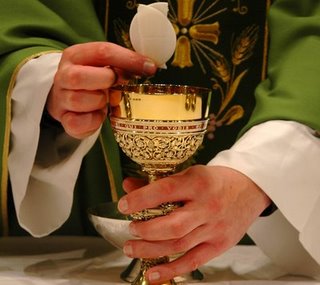
No carnal pleasure, no worldly
curiosity,
no surge of ambition must keep us
from the Lord’s Supper.
But further, our minds should merely skirt
even the good deeds we perform in this life; in this way, the physical things
which give us pleasure will serve our bodily needs without hindering the soul’s
progress.
You see, my brothers, I dare
not say to you, give up everything. Yet,
if you will, you can give everything up even while keeping it, provided you
handle the temporal things in such a way that your whole mind is directed
toward what is eternal.
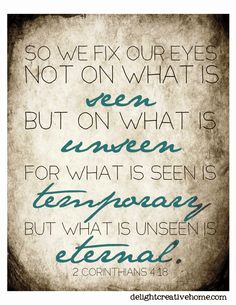
A man can use the
world
as if he were not using it,
if he makes all
external needs
minister to
the support of his life
without allowing them to dominate his soul.
They remain external to him and under his
control, serving him without halting the soul’s drive to higher things. For such men, everything in this world is
there for their use, not to be desired.

Nothing should interfere
with your soul’s longing;
no created pleasure
in the world
should ensnare you.
If the object of love is what is good, then the soul should take
its delight in the higher good, the things of heaven. If the object of fear is what is evil, then
we should keep before ourselves the things that are eternally evil.
In this way, if the soul sees that we should
have a greater love and a greater fear about what concerns the next life, it
will never cling to this life.
To help us achieve all this we have the help of the mediator
between God and man. Through Him we
shall obtain all this the more quickly, the more we burn with a great love for Him, who lives and reigns with the Father and the Holy Spirit, for ever and
ever. Amen.

Tuesday, 18 August 2015
St. Barnabas on the New Law of the Lord
 |
| Christ teaching the Apostles |
The New Law of the Lord
A Letter attributed to St. Barnabas
God has abolished the sacrifices of the old law so that the new law of
our Lord Jesus Christ imposes no yoke of coercion and its sacrifice is not one
made by man. In another place he says to them, Did I command your
fathers when they came out of the land of Egypt to offer me burnt offerings and
sacrifices? No, but I commanded them this: “Let none of you cherish any evil in
his heart against his neighbour, and let none of you be fond of breaking vows.”
If we have any sense then we will understand the loving intention of our
Father. He wants us not to err as these people did but to seek how we may make
our offering to him. And he tells us: the sacrifice for the
Lord is a contrite heart, a heart that glorifies its Maker is a sweet savour to
the Lord.
My brethren, we must look closely
into the matter of our salvation
so that the Evil One does not slyly
enter our hearts and drag us away
from the life that lies before us.
God also says to them, Why are you keeping a fast for me and filling this day with your whinings? I have not decreed this fast, says the Lord, nor this humiliation of man’s soul. Turning to us, he says Here is the fast I decree: relax your iniquitous restrictions, loosen the shackles of your oppressive contracts, let your ruined debtors go free and teat up your unjust agreements. Break your bread and give it to the hungry, if you see a man without clothing, give him clothes of your own. If you see one who is homeless, bring him into your own house.
Let us flee from all vanity, let us hold in aversion the Way of Wickedness and its works.
Do not withdraw into solitude as if you were already considered righteous,
but come together and seek out the common good.
For Scripture says: Woe betide those who
are wise in their own eyes and knowledgeable in their own sight. Let
us be men of the Spirit, let us be a temple consecrated to God. As far as we
can, let us devote ourselves to living in the fear of God, and let us strive to
keep his commandments so that his ordinances become our delight.
When the Lord judges the world he will have no favourites:
each will receive according to his deeds.
If he is good then his righteousness will lead him forward; if he is
evil then the reward of iniquity will be in front of him.
Let us never complacently think of ourselves as ‘called’, let us never doze in our sinfulness, or the Prince of Evil may gain
power over us and thrust us out from the Kingdom of the Lord. And consider this
also, my brethren, you see what great signs and wonders were wrought in Israel
and yet in the end they were finally abandoned –
let us be very careful not to be among those of whom it was written
that many are called but
few are chosen.
About Saint Barnabas
 |
| St. Barnabas |
Barnabas, a Jew of Cyprus, comes as close as anyone outside the Twelve to being a full-fledged apostle. He was closely associated with St. Paul (he introduced Paul to Peter and the other apostles) and served as a kind of mediator between the former persecutor and the still suspicious Jewish Christians.
When a Christian community developed at Antioch, Barnabas was sent as the official representative of the Church of Jerusalem to incorporate them into the fold. He and Paul instructed in Antioch for a year, after which they took relief contributions to Jerusalem.
Later, Paul and Barnabas, now clearly seen as charismatic leaders, were sent by Antioch officials to preach to the Gentiles. Enormous success crowned their efforts. After a miracle at Lystra, the people wanted to offer sacrifice to them as gods—Barnabas being Zeus, and Paul, Hermes—but the two said, “We are of the same nature as you, human beings. We proclaim to you good news that you should turn from these idols to the living God” (see Acts 14:8-18).
But all was not peaceful. They were expelled from one town, they had to go to Jerusalem to clear up the ever-recurring controversy about circumcision and even the best of friends can have differences. When Paul wanted to revisit the places they had evangelized, Barnabas wanted to take along John Mark, his cousin, author of the Gospel (April 25), but Paul insisted that, since Mark had deserted them once, he was not fit to take along now. The disagreement that followed was so sharp that Barnabas and Paul separated, Barnabas taking Mark to Cyprus, Paul taking Silas to Syria. Later, they were reconciled—Paul, Barnabas and Mark.
When Paul stood up to Peter for not eating with Gentiles for fear of his Jewish friends, we learn that “even Barnabas was carried away by their hypocrisy” (see Galatians 2:1-13).
Story:
Barnabas is mentioned by name as one of the generous members of the idyllic and extremely poor Church in Jerusalem: "The community of believers was of one heart and mind, and no one claimed that any of his possessions was his own, but they had everything in common. . . . There was no needy person among them, for those who owned property or houses would sell them, bring the proceeds of the sale, and put them at the feet of the apostles, and they were distributed to each according to need.
"Thus Joseph, also named by the apostles Barnabas (which is translated 'son of encouragement.), a Levite, a Cypriot by birth, sold a pieace of property that he owned, then broguht the moeny and put it at the feet of the apostles" (Acts 4:32, 34-37).
Comment:
Barnabas is spoken of simply as one who dedicated his life to the Lord. He was a man "filled with the Holy Spirit and faith. Thereby large numbers were added to the Lord." Even when he and Paul were expelled from Antioch in Pisidia (modern-day Turkey), they were "filled with joy and the Holy Spirit."
Wednesday, 11 December 2013
Prophesies & Promises of God writing from St. Augustine
 |
| St. Augustine |
God’s
promises are held out to us by His Son
A Discourse
on the Psalms by Saint Augustine, Bishop
God
established a time for his promises and a time for their fulfillment.
The time
for promises was in the time of the prophets, until John the Baptist; from John
until the end is the time of fulfillment.
God, who is
faithful, put Himself in our debt, not by receiving anything but by promising
so much. A promise was not sufficient
for Him; He chose to commit Himself in writing as well, as it were making a
contract of His promises. He wanted us
to be able to see the way in which His promises were redeemed when He began to
discharge them. And so the time of the
prophets was, as we have often said, the foretelling of the promises.
 |
| Heavenly Jerusalem |
He promised
eternal salvation, everlasting happiness with the angels, an immortal
inheritance, endless glory, the joyful vision of His face, His whole dwelling
in heaven, and after resurrection from the dead no further fear of dying. This is as it were His final promise, the
goal of all our striving. When we reach
it, we shall ask for nothing more. But
as to the way in which we are to arrive at our final goal, He has revealed this
also, by promise and prophecy.
He has
promised men divinity, mortals immortality, sinners justification, the poor a rising
to glory.
But,
brethren, because God’s promises seemed impossible to men—equality with the angels
in exchange for mortality, corruption, poverty, weakness, dust and ashes—
God not only made a written
contract with
men,
to win their belief but also established
a mediator of his good faith,
 |
| Jesus Christ is Born to us |
not
a prince or angel or archangel,
but HIS ONLY SON.
He wanted, through His Son, to show us and
give us the way He would lead us to the goal He has promised.
It was not
enough for God to make His Son our guide to the way; He made Him the Way
itself, that you might travel with Him as Leader, and by Him as the Way.
Therefore,
the only Son of God was to come among men, to take the nature of men, and in
this nature to be born as a man. He was
to die, to rise again, to ascend into heaven, to sit at the right hand of the
Father, and to fulfill His promises among the nations, and after that to come
again, to exact now what He had asked for before, to separate those deserving His
anger from those deserving His mercy, to execute His threats against the wicked
, and to reward the just as He had promised.
All this
had therefore to be prophesied, foretold, and impressed on us as an event in
the future, in order that we might wait for it in faith, not find it a sudden
and dreadful reality.

Subscribe to:
Posts (Atom)