Ad

Showing posts with label forgiveness. Show all posts

Thursday, 6 April 2017

Tell the World the GOOD NEWS

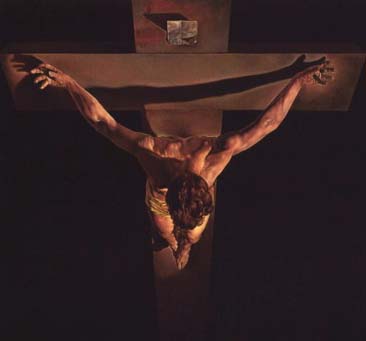
The Crucifixion of Christ


From the Moral Reflections on Job 
by Saint Gregory the Great, pope

The mystery of our new life in Christ

Holy Job is a type of the Church.  At one time he speaks for the body, at another for the head.  As he speaks of its members he is suddenly caught up to speak in the name of their head.  So it is here, where he says: I have suffered this without sin on my hands, for my prayer to God was pure.

Christ suffered without sin on His hands, for He committed no sin and deceit was not found on His lips.  Yet He suffered the pain of the cross for our redemption.  His prayer to God was pure, His alone out of all mankind, for in the midst of His suffering He prayed for His persecutors: Father, forgive them, for they do not know what they are doing.

Is it possible to offer, or even to imagine, a purer kind of prayer than that which shows mercy to one’s torturers by making intercession for them?  It was thanks to this kind of prayer that the frenzied persecutors who shed the blood of the Redeemer drank it afterward in faith and proclaimed Him to be the Son of God.

The text goes on fittingly to speak of Christ’s blood: Earth, do not cover over my blood, do not let my cry find a hiding place in you.  When man sinned, God had said: Earth you are, and to earth you will return.  Earth does not cover over the blood of the Redeemer, for every sinner, as he drinks the Blood that is the price of his redemption, offers praise and thanksgiving, and to the best of his power makes that Blood known to all around him.
Earth has not hidden away His blood, for holy Church has preached in every corner of the world the mystery of its redemption.

Blood of Christ
Notice what follows: Do not let my cry find a hiding place in you.  The Blood that is drunk, the Blood of redemption, is itself the cry of our Redeemer.  Paul speaks of the sprinkled blood that calls out more eloquently than Abel’s.  Of Abel’s blood Scripture had written: The voice of your brother’s blood cries out to me from the earth.  

The Blood of Jesus 
calls out more eloquently than Abel’s, 
for the blood of Abel asked 
for the death of Cain the fratricide, 

while the Blood of the Lord 
has asked for, and obtained, 
life for His persecutors.


If the sacrament of the Lord’s Passion is to work its effect in us, we must imitate what we receive and proclaim to mankind what we revere.  The cry of the Lord finds a hiding place in us if our lips fail to speak of this, though our hearts believe in it.  So that His cry may not lie concealed in us it remains for us all, each in his own measure, to make known to those around us the mystery of our new life in Christ.

Friday, 8 July 2016

Wisdom of Augustine: A Sacrifice to God is a Contrite Spirit

From a sermon by Saint Augustine, Bishop

I acknowledge my transgressions, says David.  

If I admit my fault, then you will pardon it.  

Let us never assume 
that if we live good lives 
we will be without sin; 

our lives should be praised only 
when we continue to beg for pardon.  

But men are hopeless creatures, and the less they concentrate on their own sins the more interested they become in the sins of others.  They seek to criticize, not to correct.  Unable to excuse themselves, they are ready to accuse others.  

This was not the way that David showed us how to pray and make amends to God, when he said: I acknowledge my transgression, and my sin is ever before me. 

He did not concentrate 
on others’ sins;
he turned his thoughts upon himself.  

He did not merely stroke the surface, but he plunged inside and went deep down within himself, and therefore was not impudent in asking to be spared.

Do you want God to be appeased?  
Learn what you are to do that 
God may be pleased with you.  

Consider the psalm again: If you wanted sacrifice, I would indeed have given it; in burnt offerings you will take no delight.  Are you to offer nothing?  Will you please God without offering?  

King David
Consider what you read in the same psalm: If you wanted sacrifice, I would indeed have given it, in burnt offerings you will take no delight.  But continue to listen, and say with David: A sacrifice to God is a contrite spirit; God does not despise a contrite and humble spirit.  

Cast aside your former offerings, for now you have found out what you are to offer.  In the days of your fathers you would have made offerings of cattle—these were the sacrifices.  If you wanted sacrifice, I would indeed have given it.  These then, Lord, you do not want, and yet you do want sacrifice.

You will take no delight in burnt offerings, David says.  If you will not take delight in burnt offerings, will you remain without sacrifice?  Not at all.  

A sacrifice to God is a contrite spirit; 
God does not despise a contrite 
and humble heart.

You now have the offering you are to make.  No need to examine the herd, no need to outfit ships and travel to the most remote provinces in search of incense.  


Search within your heart 
for what is pleasing to God.  
Your heart must be crushed.  

Are you afraid that it might perish so?  You have to reply: Create a clean heart in me, O God.  


For a clean heart to be created, 
the unclean one must be crushed.


We should be displeased with ourselves when we commit sin, for sin is displeasing to God.  

Sinful though we are, 
let us at least be like God in this, 
that we are displeased at what displeases Him. 

In some measure than you will be  in harmony with God’s Will, because you find displeasing in yourself what is abhorrent to your Creator.

Beg His Mercy and He will come and lift you up.

Friday, 21 August 2015

Prayer for Healing your Family Tree


Prayer for Healing the Family Tree

By Fr. John Hampsch

Heavenly Father, I come before You as Your child, in great need of Your help; I have physical health needs, emotional needs, spiritual needs, and interpersonal needs.  Many of my problems have been caused by my own failures, neglect, and sinfulness, for which I humbly beg Your forgiveness, Lord.  But I also ask You to forgive the sins of my ancestors whose failures have left their effects on me in the form of unwanted tendencies, behaviour patterns, and defects in body, mind, and spirit.  Heal me, Lord, of all these disorders.

With Your help I sincerely forgive everyone, especially living or dead members of my family tree, who have directly offended me or my loved ones in any way, or those whose sins have resulted in our present sufferings and disorders.  In the name of Your Divine Son, Jesus, and in the power of His Holy Spirit, I ask You, Father, to deliver me and my entire family tree from the influence of the evil one.  Free all living and dead members of my family tree, including those in adoptive relationships and those in extended family relationships, from every contaminating form of bondage.  By Your loving concern for us, Heavenly Father, and by the shed blood of Your Precious Son, Jesus, I beg You to extend Your blessing to me and to all my living and deceased relatives.  Heal every negative effect transmitted through all past generations, and prevent such negative effects in future generations of my family tree.

I symbolically place the cross of Jesus over the head of each person in my family tree and between each generation; I ask You to let the cleansing blood of Jesus purify the bloodlines in my family lineage.  Set Your protective angels to encamp around us, and permit Archangel Raphael, the patron of healing, to administer Your divine healing power to all of us, even in areas of genetic disability.  Give special power to our family members’ guardian angels to heal, protect, guide, and encourage each of us in all our needs.  Let Your healing power be released at this very moment, and let it continue as long as Your sovereignty permits.

In our family tree, Lord, replace all bondage with a holy bonding in family love.  And let there be an ever-deeper bonding with You, Lord, by the Holy Spirit, to Your Son, Jesus.  Let the family of the Holy Trinity pervade our family with its tender, warm, loving presence, so that our family may recognize and manifest that love in all our relationships.  All of our unknown needs we include with this petition that we pray in Jesus’ precious name.  Amen.

St. Joseph, patron of family life, pray for us.


Excerpt from Church Militant Field Manual, Special Forces Training for the Life in Christ by Father Richard M. Heilman.  I HIGHLY RECOMMEND THIS BOOK.  You can purchase online on the Church Militant.com website. 

Wednesday, 18 March 2015

God's Mercy for Sinners


Remember to pray the Divine Mercy Chaplet at least on Good Friday through to 2nd Sunday of Easter (Divine Mercy Sunday) 
as Christ requested.

Divine Mercy article separate. But here is the link to the Chaplet that I spoke of

http://thedivinemercy.org/message/devotions/praythechaplet.php


The Mercy of God to the Penitent
From a letter by Saint Maximus the Confessor, abbot


Christ forgives sinner
God’s will is to save us, and nothing pleases him more than our coming back to him with true repentance.  The heralds of truth and the ministers of divine grace have told us this form the beginning, repeating it in every age. Indeed, God’s desire for our salvation is the primary and preeminent sign of his infinite goodness.  It was precisely in order to show that there is nothing closer to God’s heart that the divine Word of God the Father, with untold condescension lived among us in the flesh, and did, suffered, and said all that was necessary to reconcile us to God the Father, when we were at enmity with him, and to restore us to the life of blessedness from which we had been exiled.  He healed our physical infirmities by miracles; he freed us from our sins, many and grievous as they were, by suffering and dying, taking them upon himself as if he were answerable for them, sinless though he was.  He also taught using many different ways that we should wish to imitate him by our own kindness and genuine love for one another.
So is was that Christ proclaimed that he had come to call sinners to repentance, not the righteous, and that it was not the healthy who required a doctor, but he sick.  He declared that he had come to loof for the sheep that was lost, and that is was to the lost sheep of the house of Israel that he had been sent.  Speaking more obscurely in the parable of the silver coin, he tells us that the purpose of his coming was to reclaim the royal image, which had been coated with the filth of sin.  You can be sure there is joy in heaven, he said, over one sinner who repents.

To give the same lesson he revived the man who, having fallen into the hands of the brigands, had been left stripped and half-dead from his wound; he poured wine and oil on the wounds, bandaged them, placed the many on his own mule and brought him to an inn, where he left sufficient money to have him cared for, and promised to repay any further expense on his return.

Again, he told of how the Father, who is goodness itself, was moved with pity for his profligate son who returned and made amends by repentance; how he embraced him, dressed him once more in the fine garments that befitted his own dignity, and did not reproach him for any of his sins.

So too, when he found wandering in the mountains and hills the one sheep that had strayed from God’s flock of a hundred, he brought it back to the fold, but he did not exhaust it by driving it ahead of him.  Instead, he placed it on his own shoulders and so, compassionately, he restored it safely to the flock.

So also he cried out: Come to me, all you that toil and are heavy of heat.  Accept my yoke, he said, by which he meant his commands, or rather, the whole way of life that he taught us in the Gospel.  He then speaks of a burden, but that is only because repentance seems difficult.  In fact, however, my yoke is easy, he assures us, and my burden is light.

Then again he instructs us in divine justice and goodness, telling us to be like our heavenly Father, hold, perfect and merciful.  


Forgive, he says, and you will be forgiven.  
Behave toward other people 
as you would wish them 
to behave toward you.


taken from the Liturgy of the Hours Wednesday, 3rd Week of Lent


Friday, 7 September 2012

Why we say the Act of Contrition


My sins nailed you to that cross

Lord Forgive me for I have sinned....

The Act of Contrition is usually associated with the Sacrament of Confession, but Catholics should also pray it every day as part of their normal prayer life. In it, we acknowledge our sins, ask God for forgiveness, and express our desire to repent. Does sorry seem to be your hardest word? It shouldn’t be! The Act of Contrition is a prayer in which we ask God to forgive our sins. We say it in the sacrament of reconciliation, or penance (otherwise known as confession). Our Lord thought so much of this sacrament he made it one of seven He instituted to give us grace! The Act of Contrition acknowledges our need to stay close to God for His help in dealing with our sinful nature.
 There are two types of contrition: perfect (where we are truly sorry for our sins out of our love for God) and imperfect (where our sorrow comes more out of fear of God’s punishments or perhaps from the dreadful nature of the sin itself). Both are reflected in this version of the Act of Contrition:

 O my God, I am heartily sorry for having offended Thee, and I detest all my sins, because I dread the loss of Heaven and the pains of Hell, but most of all because they offend Thee, my God, Who art all-good and deserving of all my love. I firmly resolve, with the help of Thy grace to confess my sins, to do penance and to amend my life. Amen.

Note that there are several other versions of this prayer. The one above is perhaps best known, however. You can say the Act of Contrition any time. (It is often used in night prayers, for example.)
There are two main types of sin, venial and mortal. Venial sins can weaken our relationship with God while mortal sins can kill it! (Hence the name.) Note there are three main conditions for a sin to be mortal: the sin itself must be grave, we must know it is so, and yet still freely consent to committing it anyway. A mortal sin, if not forgiven through confession, can lead to our eternal separation from God (that is to say, our damnation) for eternity!

When we sin we turn away from God and His will for us. However, when we recite the Act of Contrition, especially after confession, we turn back to Him acknowledging our need for His healing power in our lives. His mercy is there for us as long as we approach him with humility and make a sincere effort not to repeat our sins.

Jesus, please forgive me.

Tuesday, 7 August 2012


The Hurt and the Healer

Music and lyrics Mercy Me

Why?
The question that is never far away
But healing doesn’t come from the explained
Jesus, please don’t let this go in vain
You’re all I have
All that remains

So here I am
What’s left of me
Where glory meets
My suffering
I’m Alive!!

Even though a part of me has died
You take my heart and breathe it back to life
I fall into Your arms open wide
When the hurt and the healer collide

Sometimes I feel it’s all that I can do
Pain so deep that I can hardly move
Just keep my eyes completely fixed on YOU
Lord take hold and pull me through

So here I am What’s left of me
Where glory meets my suffering
I’m Alive!!

Even though a part of me has died
You take my heart and breathe it back to life
I fall into Your arms open wide
When the hurt and the healer collide

It’s the moment when humanity
Is overcome by majesty
When grace is usher in for good
And all the scars are understood
When mercy takes the rightful place
And all these questions fade away
When out of weakness we must bow
And hear You say
“It’s over now”
I’m Alive
Even though a part of me has died
You take my heart and breathe it back to life
I fall into Your arms open wide
When the hurt and the healer collide

Jesus come and break my fear
Awake my heart
And take my tears
Find Your glory even here
When the hurt and the healer collide