Ad

Thursday, 25 January 2018

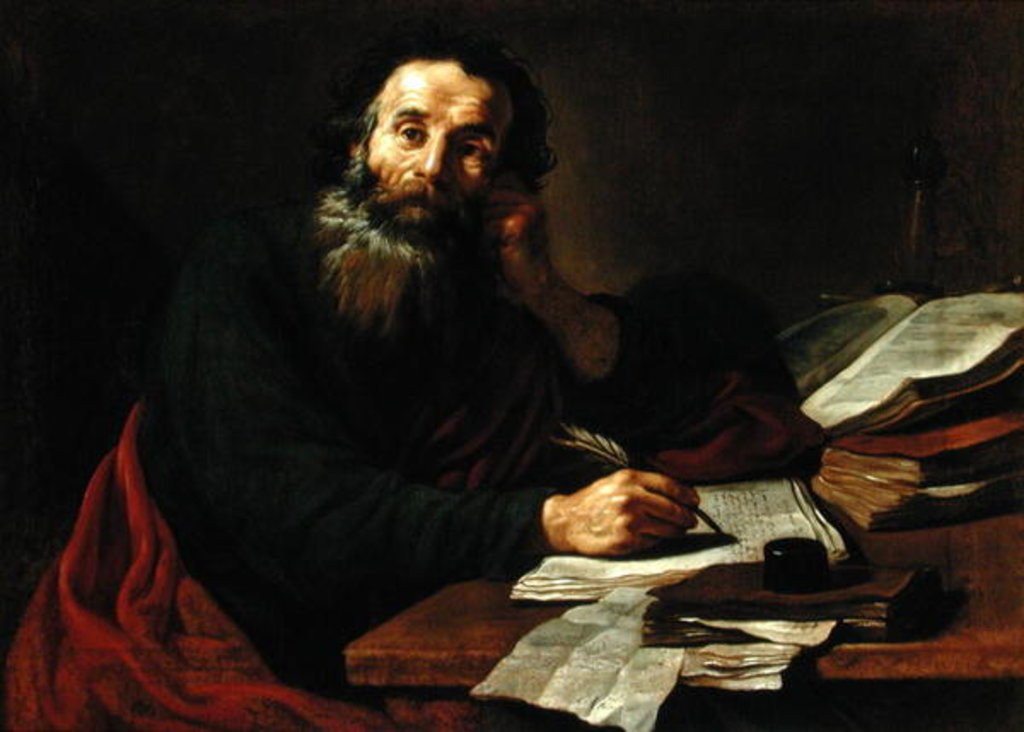
St. Paul the Apostle homily by St. John Chrysostom


For Love of Christ, 
Paul  bore every burden


From a homily by 
Saint John Chrysostom, bishop

Paul, more than anyone else, has shown us what man really is, and in what our nobility consists and of what virtue this particular animal is capable.  Each day he aimed ever higher; each day he rose up with greater ardor and faced with new eagerness the dangers that threatened him.  

He summed up his attitude in the words:   I forget what is behind me and push on to what lies ahead.  When he saw death imminent, he had others share his joy:   Rejoice and be glad with me!  And when danger, injustice and abuse threatened, he said: I am content with weakness, mistreatment and persecution.  These he called the weapons of righteousness, thus telling us that he derived immense profit from them.

Thus, amid the traps set for him by his enemies, with exultant heart he turned their every attack into a victory for himself; constantly beaten, abused and cursed, he boasted of it as though he were celebrating a triumphant procession and taking trophies home, and offered thanks to God for it all: Thanks be to God who is always victorious in us!  
This is why he was far more eager for the shameful abuse that his zeal in preaching brought upon him than we are the most pleasing honors, more eager for death than we are for life, for poverty than we are for wealth; he yearned for toil far more than others yearn for rest after toil.  

The one thing he feared, indeed dreaded, 
was to offend God; 
nothing else could sway him. 
Therefore, the only thing 
he really wanted was always to please God.

The most important thing of all to him, however, was that he knew himself to be loved by Christ.  Enjoying this love, he considered himself happier than anyone else; were he without it, it would be no satisfaction to be the friend of principalities and powers.  He preferred to be thus loved and be the least of all, or even to be among the damned, than to be without that love and be among the great and honored.

To be separated from that love 
was, in his eyes, 
the greatest and most 
extraordinary of torments; 
the pain of that loss 
would alone have been hell, 
and endless, unbearable torture.

So too, in being loved by Christ he thought of himself as possessing life, the world, the angels, present and future, the kingdom, the promise and countless blessings.  Apart from that love nothing saddened or delighted him;  for nothing earthly did he regard as bitter or sweet.

Paul set no store by the things that fill our visible world, any more than a man sets value on the withered grass of the field.  As for tyrannical ruler or the people enraged against him, he paid them no more heed than gnats.

Death itself and pain and whatever torments might come were but child’s play to him, provided that thereby he might bear some burden for the sake of Christ.

Taken from the Liturgy of the Hours, Conversion of Paul January 25

St. Paul preaching in Athens by Raphael

St. Paul Teaches Us That ...

1 Cor. 1:23- Paul preaches a Christ crucified, not just risen. Catholic spirituality focuses on the sacrifice of Christ which is the only means to the resurrection. This is why Catholic churches have crucifixes with the corpus of Jesus affixed to them. Many Protestant churches no longer display the corpus of Jesus (only an empty cross). Thus, they only preach a Christ risen, not crucified.

1 Cor. 2:2 – Paul preaches Jesus Christ and Him crucified. While the cross was the scandal of scandals, and is viewed by the non-Christian eye as defeat, Catholic spirituality has always exalted the paradox of the cross as the true tree of life and our means to salvation.

2 Cor. 1:5-7- if we share abundantly in Christ’s sufferings, so through Christ we share abundantly in comfort as well. If we unite our sufferings with His, we will be comforted by Him.

2 Cor. 4:10 – Paul writes that we always carry in the body the death of Jesus so that the life of Jesus may also be manifested in our bodies. Christ has allowed room in His Body for our sufferings, and our sufferings allow room for Christ to bring us to life.

2 Cor. 4:11 – while we live we are always being given up to death for Jesus’ sake so that His life may be manifested in our flesh. This proves the Catholic position that our sufferings on earth are united with Jesus in order to bring about Jesus’ life in us.

Phil. 1:29 for the sake of Christ we are not only to believe in Him but also to suffer for His sake. Growing in holiness requires more than having faith in God and accepting Jesus as personal Lord and Savior. We must also willfully embrace the suffering that befalls us as part of God’s plan. Thus, Christ does not want our faith alone, but our faith in action which includes faith in suffering.

Phil. 3:10 – Paul desires to share in Christ’s sufferings in order to obtain the resurrection. Paul recognizes the efficacy of suffering as a means of obtaining holiness which leads to resurrection and eternal life. 
There is no Easter Sunday 
without Good Friday.

Excerpts from Scripture Catholic https://www.scripturecatholic.com/suffering/


Tuesday, 4 July 2017

St. John the Baptist Precursor by St. Augustine


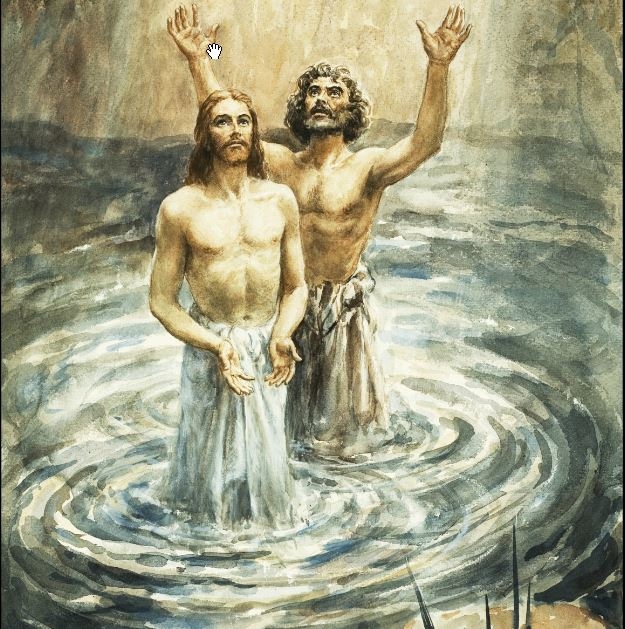
St. John the Baptist and Christ Matthew 3:13-17

From a sermon by Saint Augustine, bishop

The Voice of one crying in the wilderness

The Church observes the birth of John as a hallowed event. (Birth of St. John the Baptist Feast Day June 24th).  

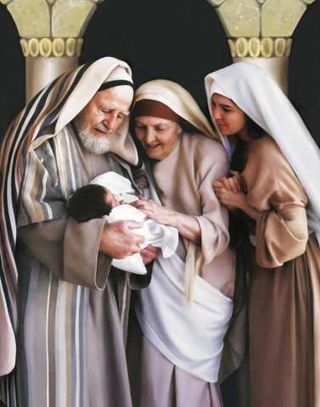
John the Baptist's birth
We have no such commemoration for any other fathers; but it is significant that we celebrate the birthdays of John and Jesus.  This day cannot be passed by.  And even if my explanation does not match the dignity of the feast, you may still meditate on it with great depth and profit.

John was born of a woman too old for childbirth; Christ was born of a youthful virgin.  The news of John’s birth was met with incredulity, and his father was struck dumb.  Christ’s birth was believed, and he was conceived through faith.

Such is the topic, as I have presented it, for our inquiry and discussion.  But as I said before, if I lack either the time or the ability to study the implications of so profound a mystery, he who speaks within you even when I am not here will teach you better; it is he whom you contemplated with devotion, whom you have welcomed into your hearts, whose temples you have become.

John, then, appears as the boundary 
between the two testaments, 
the old and the new.  

That he is a sort of boundary the Lord himself bears witness, when he speaks of the law and the prophets until John the Baptist.  Thus he represents times past and is the herald of the new era to come.  

As a representative of the past, he is born of aged parents; as a herald of the new era, he is declared to be a prophet while still in his mother’s womb at the arrival of blessed Mary.  

The Visitation

In that womb 
he has already been designated a prophet, 
even before he was born, 
it is revealed that he was to be Christ’s precursor, before they ever 
saw one another.  

These are divine happenings going beyond the limits of our human frailty.  Eventually he is born, he receives his name, his father’s tongue is loosened.  See how these events reflect reality.


Zechariah is silent and loses his voice until John, the precursor of the Lord, is born and restores his voice.  

The silence of Zechariah is nothing 
but the age of prophecy lying hidden, 
obscured, as it were, and concealed 
before the preaching of Christ.  

Zechariah regains his voice 
At St. John’s arrival Zechariah’s voice is released, and it becomes clears at the coming of the one who was foretold.  The release of Zechariah’s voice at the birth of John is a parallel to the rending of the veil of Christ’s crucifixion.  

If John were announcing his own coming, Zechariah’s lips would not have been opened.  The tongue is loosened because a voice is born.  For when John  was preaching the Lord’s coming he was asked: Who are you?  And he replied:  I am the voice of one crying in the wilderness.   

The voice is John, but the Lord in the beginning was the Word.   

St. John the Baptist preaching

John was a voice that lasted 
only for a time; 
Christ, the Word in the beginning, is eternal.

St. Thomas the Apostle by St. Gregory the Great

St. Thomas the Apostle - John 20:24-29

St. Thomas, Apostle Feast Day July 3rd

From the homily on the Gospels by Saint Gregory the Great, pope

My Lord 
and my God

Thomas, one of the twelve, called the Twin, was not with them when Jesus came.

He was the only disciple absent; on his return he heard what had happened but refused to believe it.  The Lord came a second time; he offered his side for the disbelieving disciple to touch, held out his hands, and showing the scars of his wounds, healed the wound of his disbelief.

Dearly beloved, what do you see in these events?  Do you really believe that it was by chance that this chosen disciple was absent, then came and heard, heard and doubted, doubted and touched, touched and believed?  It was not by chance but in God’s providence.  

In a marvelous way God’s mercy 
arranged that the disbelieving disciple, 
in touching the wounds of 
his master’s body, 
should heal our wounds of disbelief.  

The disbelief of Thomas has done more for our faith than the faith of the other disciples.  As he touches Christ and is won over to belief, every doubt is cast aside and our faith is strengthened.  So the disciple who doubted, then felt Christ’s wounds, becomes a witness to the reality of the resurrection.

Because you have seen Me, you believed.
Touching Christ, he cried out: My Lord and my God!  Jesus said to him: Because you have seen me, Thomas, you believed.  Paul said: Faith the guarantee of things hoped for, the evidence of things unseen.  

It is clear, then, that faith is the proof of what cannot be seen.  What it seen gives knowledge, not faith. 

When Thomas saw and touched, why was he told: You have believed because you have seen me? Because what he saw and what he believed were different things.  

God cannot be seen by mortal men.  

Thomas saw a human being, whom he acknowledged to be God, and said: 
My Lord and my God. 

Seeing, he believed; 
looking at one who was true man, 
he cried out that this was God, 
the God he could not see.


What follows is reason for great joy: Blessed are those who have not seen and have believed.  

There is here a particular reference to ourselves; we hold in our hearts one we have not seen in the flesh.  We are included in these words, but only if we follow up our faith with good works.  The true believer practices what he believes.  But of those who pay only lip service to faith, Paul has this to say: They profess to know God, but they deny him in their works.  Therefore James says: Faith without works is dead.

Monday, 26 June 2017

Sacred Heart of Jesus Meditation

Sacred Heart of Jesus


Sacred Heart of Jesus

Meditation

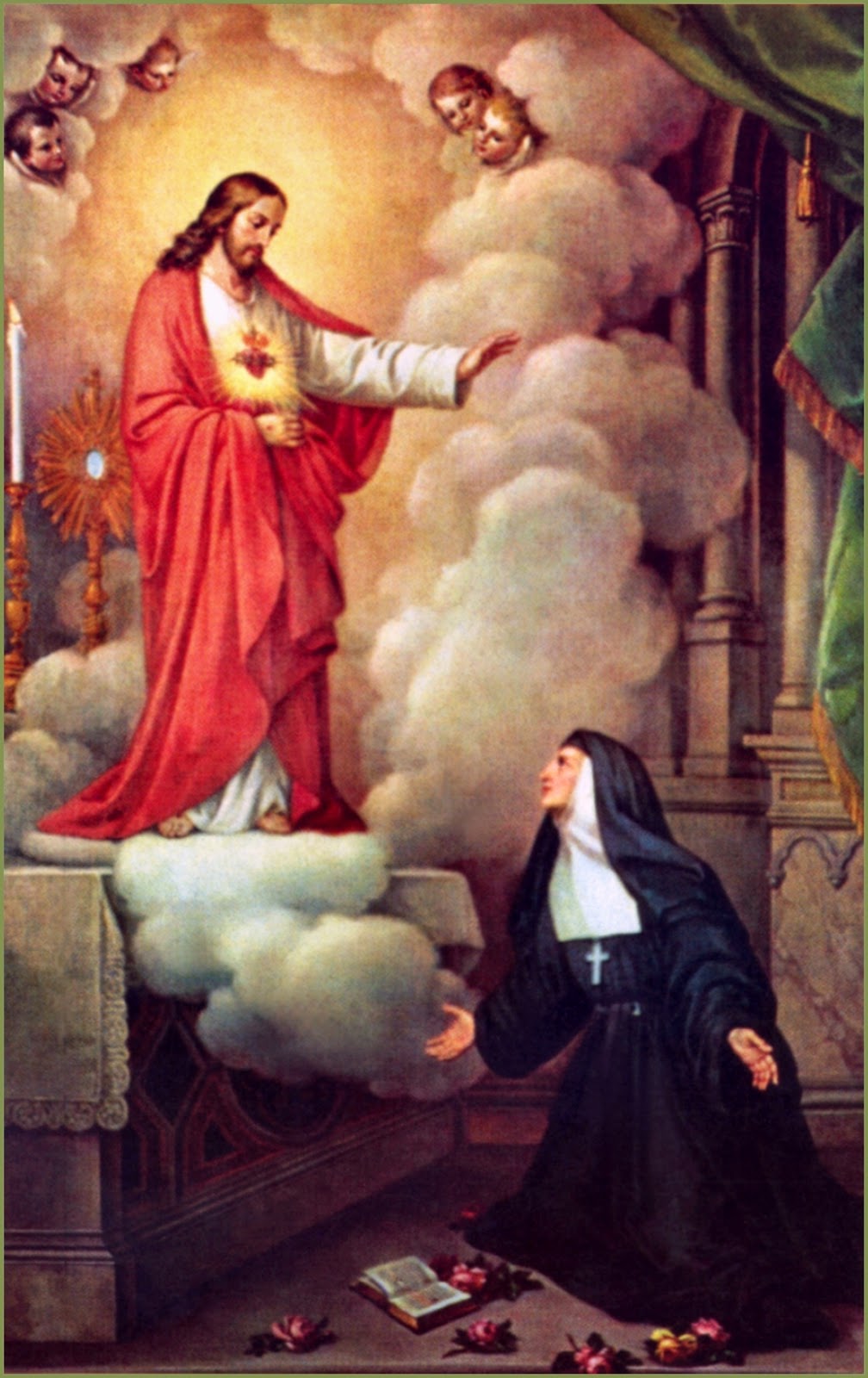
Devotion to the Sacred Heart, as we know it, began about the year 1672.  On repeated occasions, Jesus appeared to Saint Margaret Mary Alacoque, a Visitation nun, in France, and during these apparitions He explained to her the devotion to His Sacred Heart as He wanted people to practice it.  He asked to be honored in the symbol of His Heart of flesh; he asked for acts of reparation, for frequent Communion, Communion on the First Friday of the month, and the keeping of the Holy Hour.

Jesus Sacred Heart St. Margaret Mary Alacoque
When the Catholic Church approved the devotion to the Sacred Heart of Jesus, she did not base her action only on the visions of St. Margaret Mary.  The Church approved the devotion on its own merits.

There is only one Person in Jesus, and that Person was at the same time God and Man.  His Heart, too, is Divine—it is the Heart of God.

There are two things that must always be found together in the devotion to the Sacred Heart:  Christ’s Heart of flesh and Christ’s love for us.  True devotion to the Sacred Heart means devotion to the Divine Heart of Christ in so far as His Heart represents and recalls His love for us.

In honoring the Heart of Christ, our homage lingers on the Person of Jesus in the fullness of His Love.  

This love of Christ for us was the moving force of all He did and suffered for us—in Nazareth, on the Cross, in giving Himself in the Blessed Sacrament,  in His teaching and healing, in His praying and working.  When we speak of the Sacred Heart, we mean Jesus showing us His Heart, Jesus all love for us and all lovable.

The Most Sacred Heart of Jesus
Jesus Christ is the incarnation of God’s infinite love.  The Human Nature which the Son of God took upon Himself was filled with love and kindness that has never found an equal.  He is the perfect model of love of God and neighbor.

Every day of His life was filled with repeated proofs of  “Christ’s love which surpasses all knowledge” (Eph 3:19).  Jesus handed down for all times the fundamental feature of His character:  “Take My yoke upon your shoulders and learn from Me, for I am gentle and humble of Heart.” (Mt 11:29).  He invited all, refusing none, surprising friends and rivals by His unconditional generosity.  He called out, “Come to Me, all you who are weary and find life burdensome, and I will refresh you.” (Mt 11:28).

The meaning of love in the life of Jesus was especially evident in His sufferings.  Out of love for His Father He willed to undergo the death of the Cross.  “The world must know what I love the Father and do as the Father has commanded Me” (Jn 14:31).

The love that Jesus bore toward us also urged Him to undergo the death of the Cross.  As the Last Supper, He said, “There is no greater love than this: to lay down one’s life for one’s friends.” (Jn 15:13).

What enhances Christ’s love is the sovereign liberty with which He offered Himself.  He said, “The Father loves Me for this: that I lay down My life to take it up again.  No one takes it from Me; I lay it down freely.  I have power to lay it down, and I have power to take it up again.  This command I received from My Father” (Jn 10:17-18).

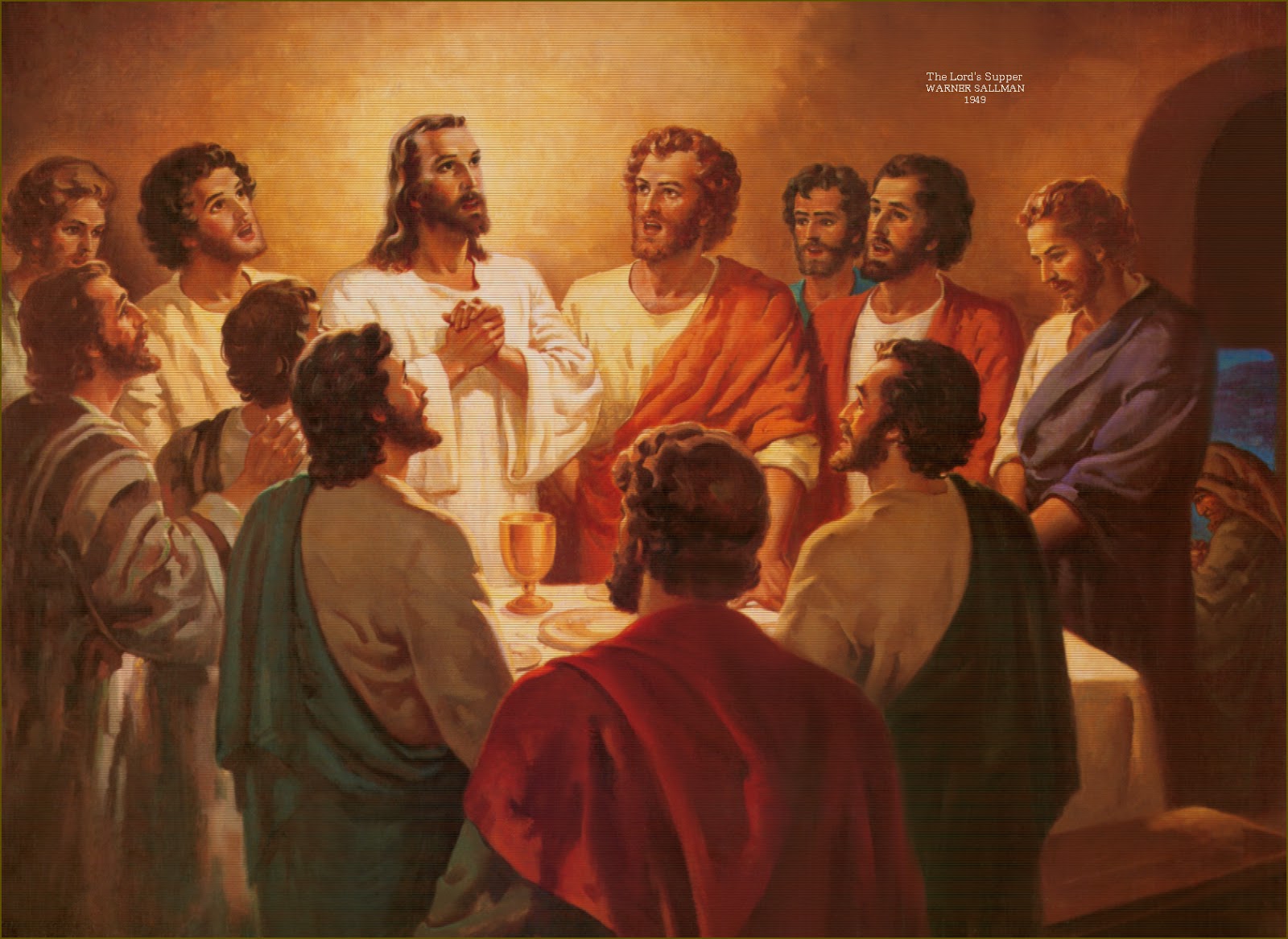
Christ praying at the Last Supper
Jesus loved people because they belonged to His Father.  Before He died He prayed, “For these I pray—not for the world but for these You have given Me, for they are really Yours” (Jn 17:9).  He did mankind much good for God’s sake, seeing in every person a child of God and the image of His Father.

He loved people for His own sake, because they were really so much in need of help, and because He wished to win them over to  His teaching by His innumerable favors.

When we see Jesus lavishly offering inexhaustible treasures of compassion and mercy, we are able to conceive something of the immensity of that ocean of Divine kindness and love from which the Sacred Heart of draws these treasures for us.

The Heart of Jesus never ceases to love us in heaven.  He sanctifies us through the sacraments.  These are inexhaustible fountains of grace and holiness which have their source in the boundless ocean of the Sacred Heart of Jesus.

The Solemnity of the Sacred Heart of Jesus is celebrated on the Friday following the Second Sunday after Pentecost.

The Word of God

“This is the covenant which I will make with the house of Israel after those days, says the Lord.  I will place My law within them, and write it upon their hearts; I will be their God, and they shall be My people.”  -- Jeremiah 31:33

“Take My yoke upon your shoulders and learn from Me, for I am gentle and humble of Heart.” – Matthew 1:28

“I have come to light a fire on the earth.  How I wish the blaze were ignited!” – Luke 12:49

Christ pierced by a lance


“When they came to Jesus and saw that He was already dead, they did not break His legs.  One of the soldiers thrust a lance into His side, and immediately blood flowed out.” – John 19:34


Taken from Treasury of Novenas,  by Rev. Lawrence G. Lovasik, SVD, Catholic Book Publishing Company, New York USA

Saturday, 17 June 2017

Educate Yourself -- These Videos will Help!! Watch them!!

St. Bernard of Clairvaux


The anti-Church has come. But, don't be afraid: Fr. Linus Clovis

Fatima foretold ‘diabolical forces’ that would enter Church in our time: Cardinal Burke

Fatima Reveals Hell is for Real: Cardinal Arinze


Fr. Corapi ~ FATIMA TODAY (6pts) ~ Pt.1: The Angels: Messengers & the Message

Fr. Corapi ~ FATIMA TODAY (6pts) ~ Pt.2: Rosary & Brown Scapular

FATIMA TODAY (6 Pts) ~ Pt.3 : Reality, Sin , Grace, Heaven or Hell ... Fr.J. Corapi


Father John Corapi ~ FATIMA TODAY ~ Pt. 4: Penance, Penance, Penance!

FATIMA TODAY ~ Pt.5: The Triumph of the Immaculate Heart of Mary..

FATIMA TODAY ~ Pt. 6: The Eucharist:Life For A Dying World..
https://www.youtube.com/watch?v=fYdefIGTQz8


AS A HOLY PRIEST SAID
"WAKE UP AND SMELL THE SULPHUR!!"


Friday, 16 June 2017

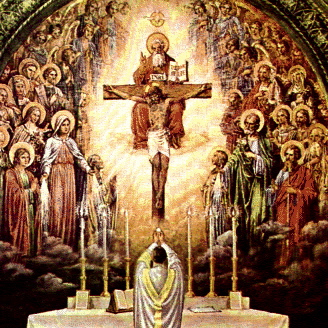
Corpus Christi - Body and Blood of Christ

Body and Blood of Christ

O precious 
and wonderful banquet!

From the work by Saint Thomas Aquinas, priest

Since it was the will of God’s only-begotten Son that men should share in his divinity, he assumed our nature in order that by becoming man he might make men gods.  Moreover, when he took our flesh he dedicated the whole of its substance to our salvation.  He offered his body to God the Father on the altar of the cross as a sacrifice  for our reconciliation.  He shed his blood for our ransom and purification, so that we might be redeemed from our wretched state of bondage and cleansed from all sin.  But to ensure that the memory of so great a gift would abide with us for ever, he left his body as food and his blood as drink for the faithful to consume in the form of bread and wine.

O precious and wonderful  banquet, that brings us salvation and contains all sweetness!  Could anything be of more intrinsic value?  Under the old law it was the flesh of calves and goats that was offered, but here Christ himself, the true God, is set before us as our food.  What could be more wonderful than this.  

No other sacrament has greater healing power; through it sins are purged away, virtues are increased, and the soul is enriched with an abundance of every spiritual gift.  

It is offered in the Church for the living and the dead, so that what was instituted for the salvation of all may be for the benefit of all.  

Yet, in the end, no one can fully express the sweetness of this sacrament, in which spiritual delight is tasted at its very source, and in which we renew the memory of that surpassing love for us which Christ revealed in his passion.


It was to impress the vastness of this love more firmly upon the hearts of the faithful that our Lord instituted this sacrament at the Last Supper.  

As he was on the point of leaving the world to go to the Father, after celebrating the Passover with his disciples, he left it as a perpetual memorial of his passion.  

It was the fulfillment of ancient figures and the greatest of all his miracles, which for those who were to experience the sorrow of his departure,  it was destined to be a unique and abiding consolation.

Prayer of St. Ambrose 


Preparing to Receive 
Christ in the Eucharist

Lord Jesus Christ, I approach Thy banquet table in fear and trembling, for I am a sinner, and dare not rely on my own worth, but only on Thy goodness and mercy.  

I am defiled by my many sins in body and soul, and by my unguarded thoughts and words. 

Gracious God of majesty and awe, I seek Thy protection, I look for Thy healing.  Poor troubled sinner that I am, I appeal to Thee, the fountain of all mercy.  I cannot bear Thy judgment, but I trust in Thy salvation.  

Lord, I show my wounds to Thee and uncover my shame before Thee.  I know my sins are many and great, and they fill me with fear, but I hope in Thy mercies, for they cannot be numbered.  

Lord Jesus Christ, Eternal King, God and man, crucified for mankind, look upon me with mercy and hear my prayer, for I trust in Thee.  Have mercy on me, full of sorrow and sin, for the depth of Thy compassion never ends.  

Praise to Thee, Saving Sacrifice, offered on the wood of the cross for me and for all mankind!

Praise to the noble and precious Blood, flowing from the wounds of my crucified Lord Jesus Christ and washing away the sins of the whole world!

Remember, Lord, Thy creature, whom Thou has redeemed with Thy Blood; I repent my sins, and I long to put right what I have done. 

Merciful Father, take away all my offenses and sins; purify me in body and soul, and make me worthy to taste the Holy of Holies.  

May Thy Body and Blood, which I intend to receive, although I am unworthy, be for me the remission of my sins, the washing away of my guilt, the end of my evil thoughts, and the rebirth of my better instincts.  

May it incite me to do the works pleasing to Thee and profitable to my health in body and soul, and be a firm defense against the wiles of my enemies.  

Amen.

Prepare your Soul to receive Christ in the Eucharist

Explanations of the Psalms by St. Ambrose

From the Explanations of the Psalms 
by St. Ambrose, bishop


The Appeal of the Book of Psalms

Though all Scripture is fragrant with God’s grace, the Book of Psalms has a special attractiveness.

Moses and the parting of the Red Sea
Moses wrote the history of Israel’s forefathers in prose, but after leading the people through the Red Sea—a wonder that remained in their memory—he broke into song of triumph in praise of God when he saw King Pharaoh drowned along with his forces.  His genius soared to a higher level, to match an accomplishment beyond his own powers.

Miriam too raised her timbrel and sang encouragement for the rest of the women, saying: Let us sing to the Lord, for he has triumphed gloriously; he has cast horse and rider into the sea.

Miriam praising God
In the Book of Psalms there is profit for all, with healing power for our salvation.  There is instruction from history, teaching from the law, prediction form prophecy, chastisement from denunciation, persuasion from moral preaching.  All who read it may find the cure for their own individual failings.  

All with eyes to see can discover in it a complete gymnasium for the soul, a stadium for all the virtues, equipped for every kind of exercise; it is for each to choose the kind he judges best to help him gain the prize.

King David
If you wish to read and imitate the deeds of the past, you will find the whole history of the Israelites in a single psalm; in one short reading you can amass a treasure for the memory.  

If you want to study the power of the law, which is summed up in the bond of charity (Whoever loves his neighbor has fulfilled the law), you may read in the psalms of the great love with which one man faced serious dangers single-handedly in order to remove the shame of the whole people.  You will find the glory of charity more than a match for the parade of power.

Jesus Christ, Son of the Living God
What I am to say of the grace of prophecy?  We see that what others hinted at in riddles was promised openly and clearly to the psalmist alone: the Lord Jesus was to be born of his seed, according to the word of the Lord, I will place upon your throne one who is the fruit of your flesh.

In the psalms, then, not only is Jesus born for us, he also undergoes his saving passion in his body, he lies in death, he rises again, he ascends into heaven, he sits at the right and of the Father.  

What no man would have dared to say was foretold by the psalmist alone, and afterward proclaimed by the Lord himself in the Gospel.

St. Ambrose, 4th Century Church Father


 Taken from the Liturgy of the Hours for Friday, 10th Week in Ordinary Times